
5 Important Flying Mistakes Seniors Should Never Make
Flying mistakes seniors should never make are more common than most people think, and they can turn an exciting journey into a stressful or even dangerous experience. I’m Khushi Vaid, and as someone who has traveled extensively and covered senior travel on Traveller Scoop, I’ve seen firsthand how a little knowledge can make all the […]

Flying mistakes seniors should never make are more common than most people think, and they can turn an exciting journey into a stressful or even dangerous experience. I’m Khushi Vaid, and as someone who has traveled extensively and covered senior travel on Traveller Scoop, I’ve seen firsthand how a little knowledge can make all the difference between a smooth flight and a nightmare at 35,000 feet.
Flying mistakes seniors should never make include everything from skipping pre-travel doctor visits to ignoring the risk of deep vein thrombosis (DVT) on long-haul flights.
According to the CDC, over 54 million Americans aged 65 and older travel by air every year, and a significant number of them encounter entirely preventable health complications.
Air travel tips for elderly passengers are not just nice-to-haves; they are essential for safety, comfort, and peace of mind.
Flying mistakes seniors should never make range from poor medication management to arriving at the airport without the right documents.
In this article, I’m going to walk you through the 5 most critical mistakes, explain exactly why they matter, and give you real, actionable solutions so that your next flight is your best one yet.
What Are the Most Dangerous Flying Mistakes Seniors Should Never Make?
Before we dive in, let’s be clear: flying as a senior is absolutely safe when done right. The problems arise when older travelers apply habits that worked in their younger years without adjusting for their current health needs.
Flying mistakes seniors should never make are often rooted in overconfidence, poor planning, or simply not knowing what’s changed about modern air travel.
Let me break down the top 5.
1. Not Consulting a Doctor Before Flying
One of the most serious flying mistakes seniors should never make is skipping a pre-travel medical consultation.
If you are over 65, especially if you have a chronic condition such as diabetes, cardiovascular disease, or respiratory problems, your doctor needs to clear you for air travel before you book that ticket.
Why it matters:
- Cabin air pressure during a flight is equivalent to being at an altitude of 6,000–8,000 feet. This can reduce blood oxygen levels by up to 15%, a risk for seniors with heart or lung conditions.
- Seniors with pacemakers need to inform their doctor about travel plans, as airport security equipment can sometimes interfere with certain devices.
- Recent surgery is a red flag: traveling too soon post-operation dramatically increases your DVT risk.
What you should do instead:
- Schedule a doctor’s visit at least 4–6 weeks before your flight.
- Get vaccinated; flu, pneumonia, COVID-19, and RSV vaccines are especially important for seniors traveling internationally.
- Get a travel clearance letter from your physician if you have a heart condition, recent surgery, or respiratory illness.
Air travel tips for elderly passengers always start with this foundational step. Senior flight safety mistakes to avoid begin long before you even reach the airport; they start in your doctor’s office.
2. Mismanaging Medications While Traveling
This is one of the flying mistakes seniors should never make and one of the most frequently reported problems I’ve come across in senior travel.
According to the CDC’s National Health Statistics Report (2024), over 90% of adults aged 65 and older take at least one prescription medication, and nearly 41% take five or more.
Yet, a shocking number of seniors pack their medications in checked luggage. If your bag is lost or delayed, and airline baggage mishandling affected over 2.86 bags per 1,000 passengers in 2023, you could find yourself in a foreign country without life-saving medication.
Flying mistakes seniors should never make when managing medication:
- Packing meds in checked bags
- Forgetting to carry documentation for controlled substances
- Not accounting for time zone changes when scheduling doses
- Carrying medications in unmarked containers
The right way to handle medication as a senior flyer:
- Always carry all medications in your carry-on bag in their original, labeled containers.
- Place liquids and medications in a clear, resealable zip-lock bag for easy TSA screening. Seniors can carry necessary medications beyond typical liquid limits under TSA rules.
- Download a TSA Disability Card if you have conditions you prefer to communicate discreetly to security staff.
- Carry a written list of all medications, dosages, and the name/contact of your prescribing physician.
- Talk to your doctor about adjusting medication timing if you’re crossing multiple time zones.
How to fly safely as a senior citizen means having a medication system so foolproof that nothing can go wrong, even if your bag doesn’t make it to the carousel.
3. Ignoring the Risk of DVT and Blood Clots
Deep Vein Thrombosis (DVT) is one of the leading mistakes seniors should never make, or rather, one of the health risks they should never ignore.
Research published in the Annals of Internal Medicine estimates the absolute risk of symptomatic DVT is approximately 1 in 4,500 flights for long-haul travel, and that risk increases twofold to fourfold on flights lasting four hours or more.
Seniors are at even higher risk because of reduced circulation, dehydration tendency, and often having pre-existing conditions. Studies show that DVT risk is up to 20 times higher in passengers who have recently undergone surgery and up to 18 times higher in those with active cancer.
Warning signs of DVT during or after a flight:
- Swelling, pain, or warmth in one leg (usually the calf)
- Skin redness or discoloration
- Shortness of breath (could indicate a clot traveled to the lungs — pulmonary embolism)
How to prevent DVT: common mistakes older adults make at the airport and on planes:
- Sitting completely still for 3+ hours without moving
- Wearing tight clothing or crossing legs for extended periods
- Drinking alcohol or coffee, which dehydrates you and thickens the blood
- Not wearing compression stockings on long flights
Smart prevention strategies:
- Walk the aisle for at least 5 minutes every hour on long-haul flights.
- If you must stay seated, do ankle circles, flex your calves, and hug your knees periodically.
- Wear properly fitted below-knee compression stockings; clinical studies showed these reduced travel-related DVT significantly (P<0.05 in 4 of 6 studies).
- Stay well-hydrated with water throughout the flight.
- Talk to your doctor about whether you need a prophylactic dose of low-molecular-weight heparin (LMWH) if you are considered high-risk.
Flying mistakes seniors should never make absolutely include ignoring DVT prevention; it’s a silent risk that compression stockings and movement can dramatically reduce.

4. Dehydration: Forgetting to Drink Enough Water on the Plane
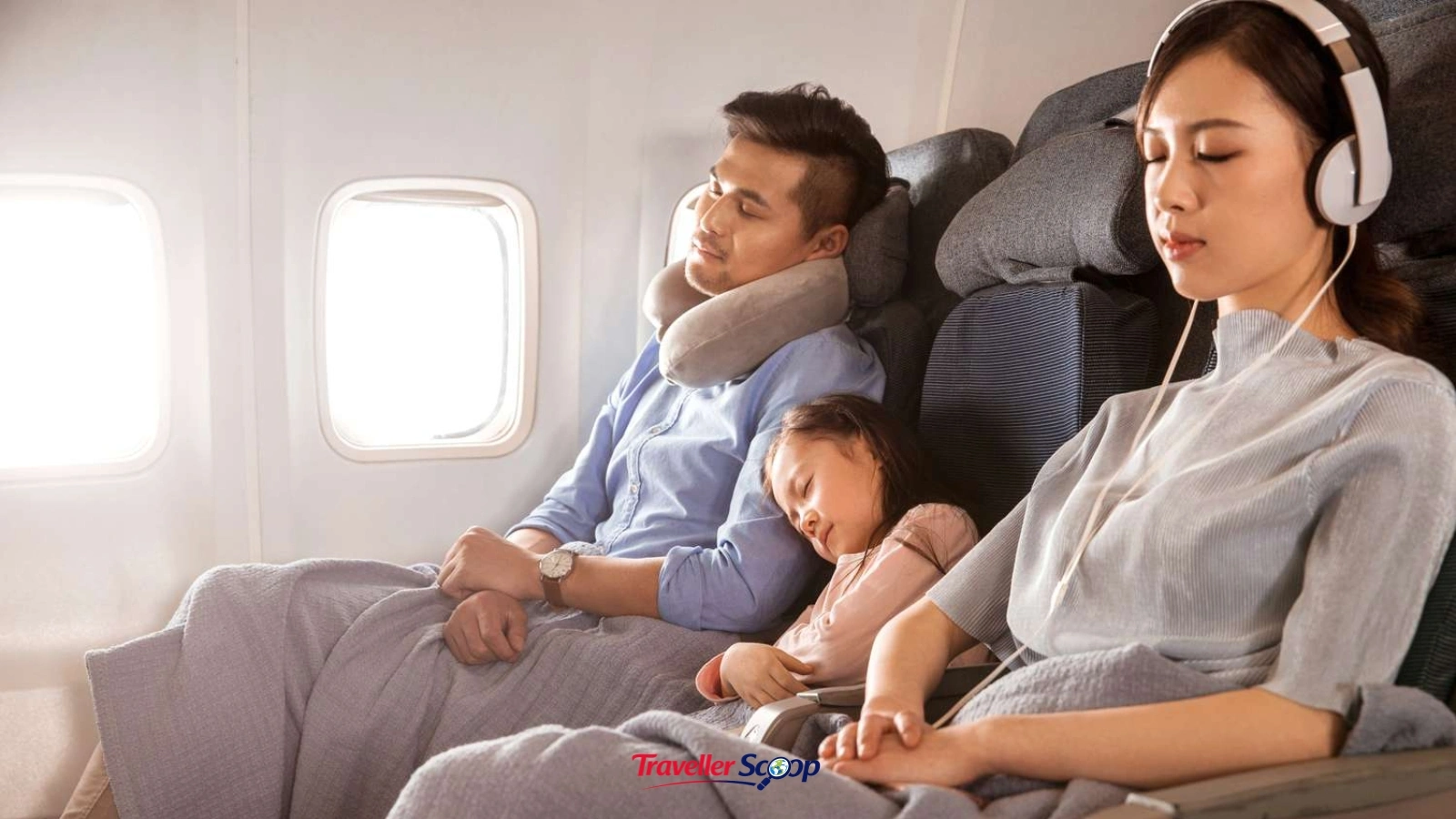
Dehydration is one of the most underrated flying mistakes seniors should never make. The air inside an aircraft cabin has humidity levels of just 10–20%, which is drier than most deserts (the Sahara averages about 25%).
For seniors, whose bodies are naturally less efficient at retaining water and signaling thirst, this is a serious concern.
Dehydration on a flight caused:
- Dizziness and confusion (dangerous if you need to navigate a large airport post-flight)
- Increased DVT risk (thicker blood = more clotting potential)
- Dry and irritated sinuses, which make seniors more susceptible to airborne infections
- Worsening of pre-existing kidney or heart conditions
Senior flight safety mistakes to avoid around hydration:
- Drinking alcohol on the plane (it’s a diuretic and worsens dehydration)
- Relying on coffee or tea as your primary fluid (also diuretics)
- Not bringing a refillable water bottle through security
- Assuming that eating meals covers your hydration needs
Best practices:
- Drink at least 250ml (8 oz) of water for every hour of flight time.
- Bring an empty, TSA-approved reusable bottle and fill it at the gate.
- Use a light saline nasal spray to combat dry cabin air.
- Apply a hydrating lip balm and travel-sized moisturizer.
- Avoid alcohol entirely or limit it to one small drink maximum.
How to fly safely as a senior citizen means treating hydration with the same seriousness as medication management.
5. Poor Planning: Wrong Seat, Wrong Timing, Wrong Documents
The final category of flying mistakes seniors should never make is all about planning, specifically, the avoidable logistical errors that cause real problems at the airport and on the plane.
Wrong seat selection: Many seniors book the cheapest available seat without considering their mobility needs. This is a costly mistake. Common mistakes older adults make at the airport include failing to request assistance in advance and choosing window seats on long flights when they need regular aisle access.
- Request an aisle seat so you can stand and walk freely.
- Ask for bulkhead seats (extra legroom) or front-row seats if you have mobility challenges.
- Request a wheelchair or airport assistance at least 48 hours in advance; airlines are legally required to accommodate you.
Wrong flight timing: Flying mistakes seniors should never make include booking the cheapest early-morning flight without considering physical readiness. Many seniors wake up feeling stiff, sore, or slow. A 5 AM departure forces an exhausting 2–3 AM wake-up call.
- Opt for mid-morning or early afternoon flights when your body is at its best.
- Avoid connecting flights where possible; direct flights eliminate extra boarding/deboarding stress.
- Build in at least 2–3 buffer days upon arrival before any major activities.
Wrong documents: Since May 2025, all domestic US travelers are required to have a REAL ID-compliant driver’s license or passport. This is one of the flying mistakes seniors should never make: showing up at the airport without proper documentation.
- Double-check your ID is REAL ID compliant (look for a star in the upper corner).
- Carry a photocopy of your passport, travel insurance, and physician’s letter in a separate bag.
- Save digital copies of all documents on your phone.
Air travel tips for elderly passengers always emphasize that the best flight is a planned flight.
Conclusion
Flying mistakes seniors should never make can truly make or break a travel experience, but the good news is that every single mistake on this list is entirely preventable with the right knowledge and a little planning.
Flying mistakes seniors should never make include skipping your pre-flight doctor visit, mismanaging medication, ignoring DVT risk, letting yourself get dehydrated in the dry cabin air, and poor planning around seats, timing, and documents.
Air travel tips for elderly passengers don’t have to be complicated; they just need to be followed consistently.
I wrote this guide specifically for Traveller Scoop readers who believe that age should never be a barrier to adventure. Whether you’re heading to Bali, Rome, or just flying across the country to see your grandchildren, you deserve a safe, comfortable, and joyful experience in the sky.
Flying mistakes seniors should never make are avoidable. You’ve got this. Happy travels!
FAQs
What is the best seat for senior passengers on a plane?
Aisle seats near the front of the plane are ideal for seniors. They allow easy access to the restroom, reduce boarding and deplaning effort, and make it easier to stand and walk, reducing DVT risk. Bulkhead seats are a great option for those needing extra legroom.
What are the most common flying mistakes seniors should never make?
The top flying mistakes seniors should never do include skipping a pre-travel medical checkup, packing medications in checked luggage, sitting still for too long and risking DVT, not staying hydrated, and failing to request mobility assistance in advance.
Is it safe for seniors over 70 to fly long distances?
Yes, but only with proper preparation. Seniors over 70 should consult their physician before long-haul flights, wear compression stockings, stay hydrated, and move regularly. Airlines also offer wheelchair assistance and priority boarding.
What documents should seniors carry on a flight?
Seniors should carry a REAL ID-compliant driver's license or passport, a list of all medications with dosages, a physician's clearance letter (for chronic conditions), travel insurance documents, and photocopies of all key documents in a separate bag
Can seniors with heart conditions fly safely?
Many seniors with heart conditions fly safely every day, but it requires a doctor's clearance, careful seat selection (aisle seats, no cramped spaces), careful hydration, and awareness of cabin pressure effects. Always consult your cardiologist before booking.

Khushi Vaid
Senior Travel EditorI’m Khushi Vaid, a travel writer with over 2 years of experience creating destination guides, travel tips, and travel planning content. At Traveller Scoop, I write about destinations, travel trends, and practical advice to help readers explore the world with confidence.