
Rishikesh vs Mussoorie: Which Is the Better Weekend Getaway?
Rishikesh vs Mussoorie, if you’ve been stuck on this question every time a long weekend pops up on the calendar, trust me, you are not alone. I’ve had this exact debate with myself more times than I can count.Both destinations are nestled in the lap of Uttarakhand, both are within driving distance of Delhi, and […]
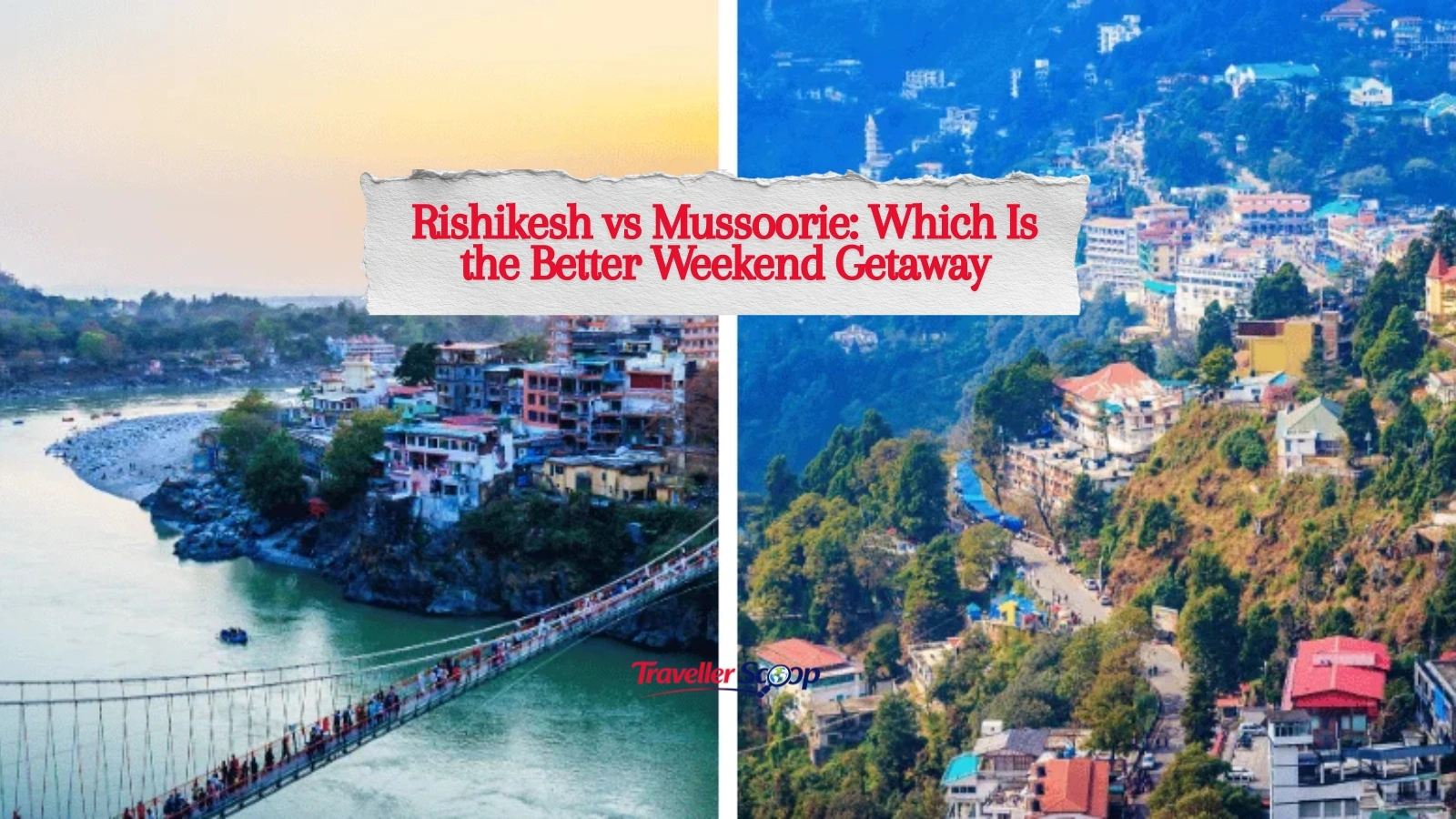
Rishikesh vs Mussoorie, if you’ve been stuck on this question every time a long weekend pops up on the calendar, trust me, you are not alone. I’ve had this exact debate with myself more times than I can count.
Both destinations are nestled in the lap of Uttarakhand, both are within driving distance of Delhi, and both are wildly popular, yet they couldn’t be more different from each other.
I’m Khushi Vaid, travel writer at Traveller Scoop, and I’ve personally visited both places multiple times across different seasons.
So in this guide, I’m going to break down the Rishikesh vs Mussoorie debate honestly, category by category, no fluff, no sponsored bias, just real travel experience mixed with data, so you can walk away knowing exactly which one is right for your kind of trip.
Whether you’re a thrill-seeker craving white-water rafting, a couple looking for misty mountain romance, a solo backpacker on a tight budget, or a family wanting a peaceful escape, the Rishikesh vs Mussoorie comparison has a clear answer for each of you. Let’s find yours.
Why Is the Rishikesh vs Mussoorie Debate So Popular?
Both Rishikesh and Mussoorie sit roughly 250–280 km from New Delhi, and their street food is a comfortable 5–6-hour drive. Both fall under Uttarakhand and are accessible from Dehradun. But that’s where the similarities end.
Rishikesh is a riverbank town set at an elevation of approximately 372 meters above sea level, where the holy Ganga rushes through forests, and the air buzzes with chants, adventure sports, and yoga nidra sessions.
Mussoorie, on the other hand, perches at 2,005 meters above sea level in the Garhwal Himalayas, draped in colonial-era charm, misty viewpoints, and pine-scented walks.
On Google Trends data, searches for “Rishikesh vs Mussoorie” spike consistently every October–November and March–April, the two key pre-long-weekend windows in India. This tells you one thing: millions of people face this exact dilemma before every holiday.
Rishikesh vs Mussoorie: Location & Accessibility
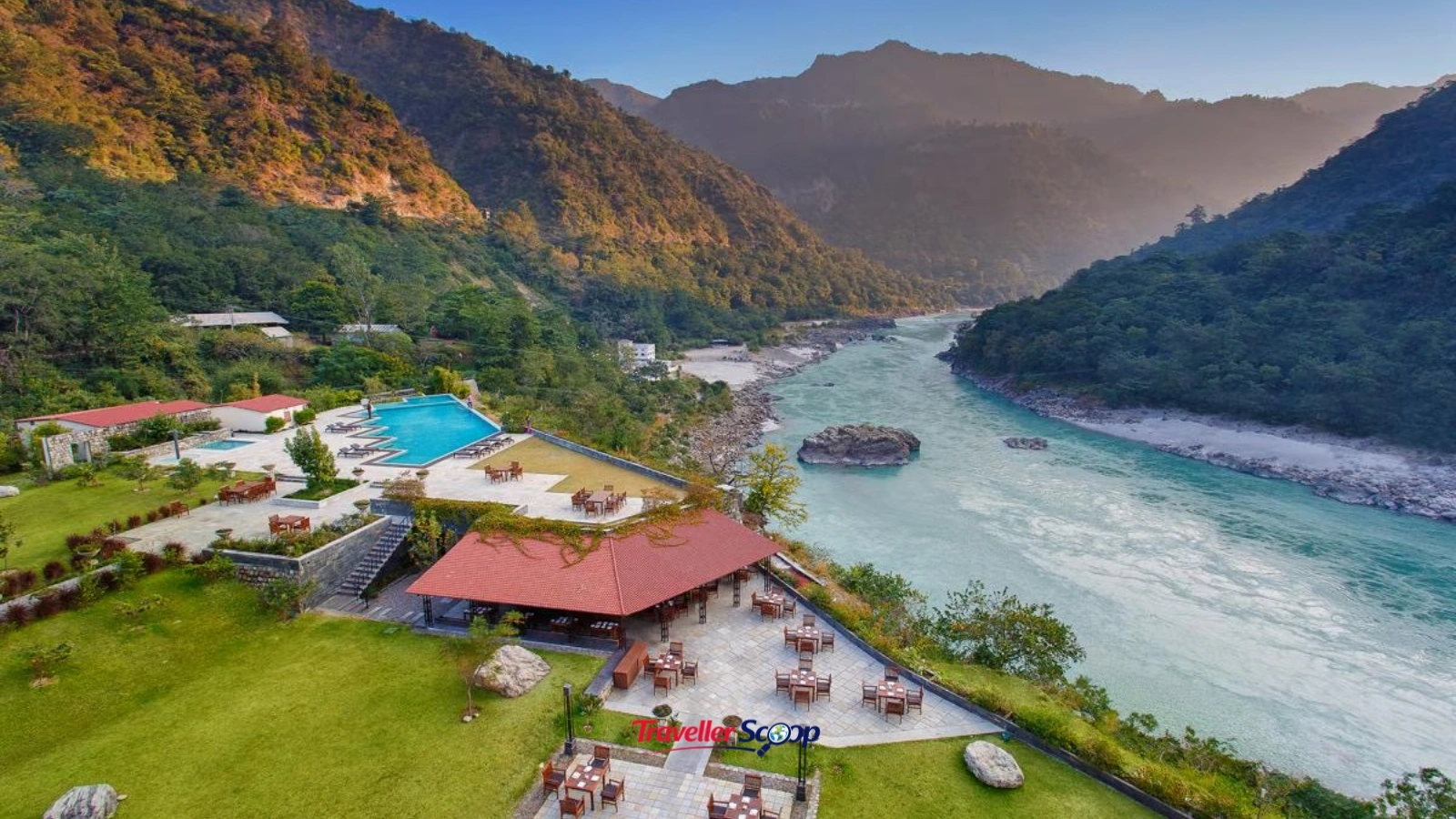
When comparing Rishikesh vs Mussoorie, location and accessibility play an important role. Rishikesh is located in the foothills of the Himalayas and is easily accessible by road, rail, and air, while Mussoorie sits higher in the mountains near Dehradun and requires a scenic hill drive to reach
Rishikesh:
- Distance from Delhi: ~235 km via NH 334
- Drive time: ~5–5.5 hours
- Nearest railway: Rishikesh Railway Station (limited trains); Haridwar Junction (25 km) is better connected
- Nearest airport: Jolly Grant Airport, Dehradun (~20 km from Rishikesh)
- Best road route: Delhi → Meerut Expressway → Muzaffarnagar → Roorkee → Haridwar → Rishikesh
Mussoorie:
- Distance from Delhi: ~290 km via NH 334 + Dehradun–Mussoorie road
- Drive time: ~6–6.5 hours
- Nearest railway: Dehradun Railway Station (35 km from Mussoorie)
- Nearest airport: Jolly Grant Airport, Dehradun (~55 km from Mussoorie)
- Best road route: Delhi → Haridwar → Dehradun → Mussoorie
Rishikesh vs Mussoorie: Weather & Best Time to Visit
| Season | Rishikesh | Mussoorie |
|---|---|---|
| Summer (Mar–Jun) | Hot weather (30–38°C), ideal for river rafting and adventure activities | Cool and pleasant (15–25°C), perfect for sightseeing and relaxing |
| Monsoon (Jul–Sep) | Not recommended due to heavy rain, rafting bans, and flood risks | Green and misty landscapes, but occasional landslides may occur |
| Autumn (Oct–Nov) | Best time to visit with clear skies and comfortable temperatures (18–28°C) | Crisp weather and beautiful Himalayan views |
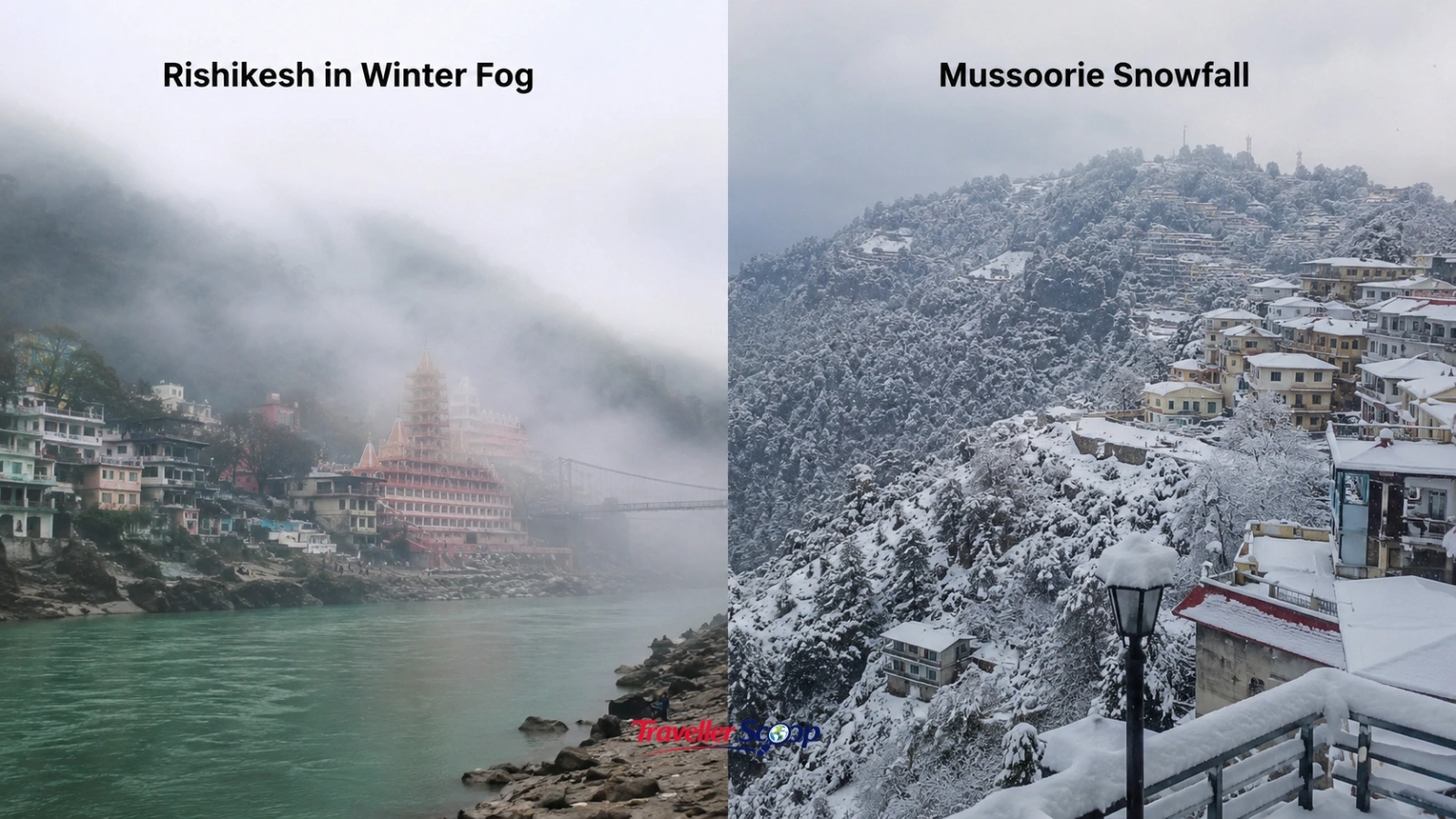
| Winter (Dec–Feb) | Cool and peaceful (8–15°C), great for spiritual retreats | Cold weather (2–10°C) with chances of snowfall |
Verdict for Best Time:
- Go to Rishikesh in October–November or February–March for the perfect mix of adventure and pleasant weather.
- Go to Mussoorie in April–June if you’re escaping Delhi’s brutal summer heat, or in January for snowfall.
In the Rishikesh vs Mussoorie debate for summer specifically, Mussoorie wins hands down; its temperature can be 10–15°C cooler than Delhi, making it an ideal escape when the plains are scorching.
Rishikesh vs Mussoorie: Things to Do
This is where the Rishikesh vs Mussoorie comparison gets the most interesting, because they serve two completely different types of travelers.
Things to Do in Rishikesh
Rishikesh is famously called the Yoga Capital of the World and the Adventure Capital of India, two identities that rarely coexist in one place.
- White Water Rafting: The 16 km Marine Drive to Rishikesh stretch is the most popular; costs ₹600–₹1,200 per person
- Bungee Jumping: At Jumpin Heights (India’s highest fixed bungee at 83 metres); costs ₹3,500–₹4,000 per jump
- Laxman Jhula & Ram Jhula: The iconic suspension bridges over the Ganga; free to walk
- Evening Ganga Aarti: At Triveni Ghat, one of the most spiritually moving experiences I’ve had
- Beatles Ashram (Chaurasi Kutia): Where The Beatles stayed with Maharishi Mahesh Yogi in 1968; entry ₹150 for Indians
- Camping in Shivpuri: Riverside camps available from ₹1,500–₹3,000 per person per night (including meals)
- Yoga & Meditation Retreats: Hundreds of ashrams; free community classes available at Parmarth Niketan
- Trekking to Kunjapuri: 9 km trek; one of the most rewarding sunrise views in Uttarakhand

Things to Do in Mussoorie
- Mall Road: 2 km promenade with cafes, shops, and Himalayan views; perfect for evening walks
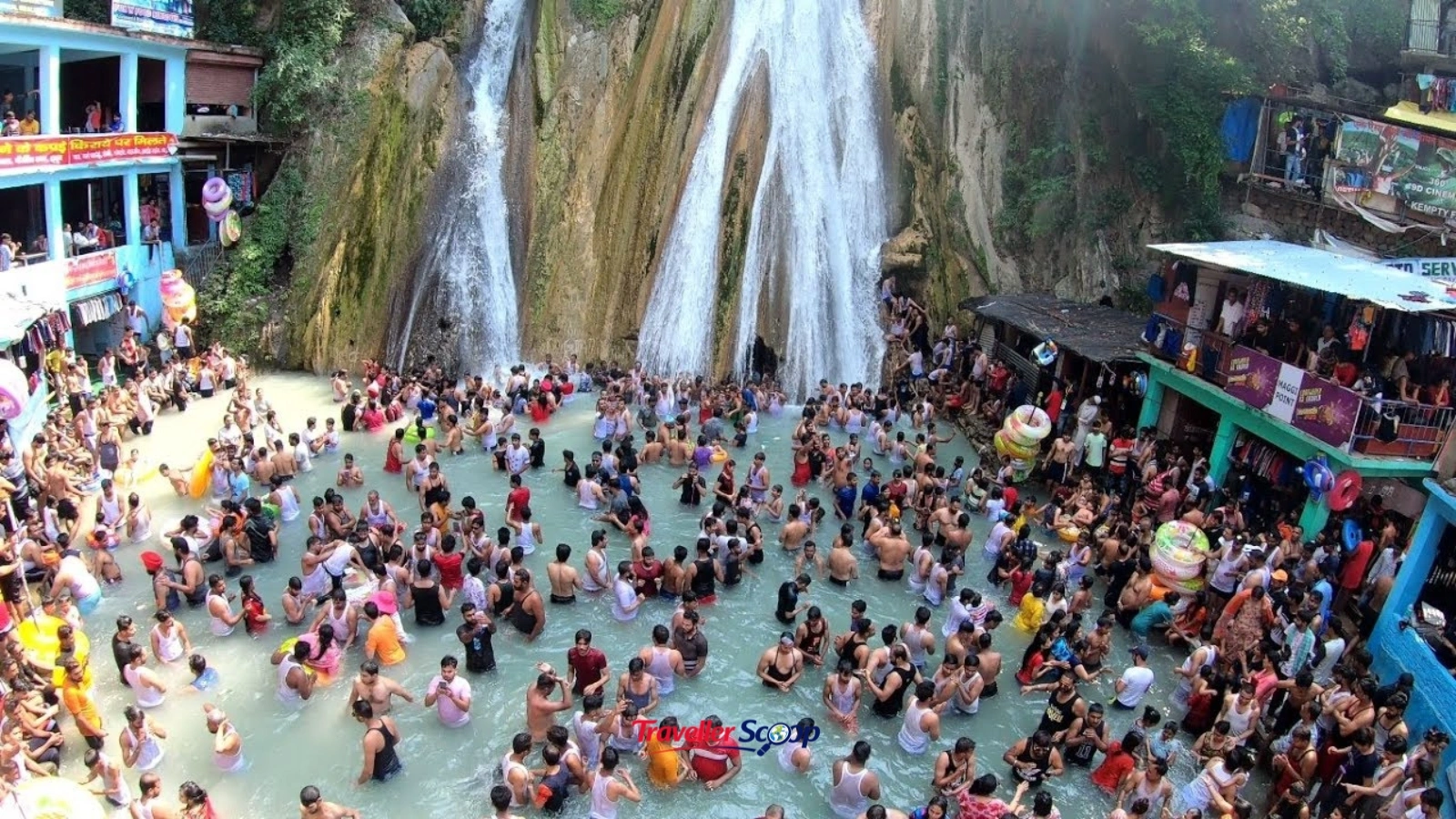
- Kempty Falls: Popular waterfall, 15 km from Mussoorie; entry ₹50
- Lal Tibba: Highest point in Mussoorie at 2,275 m; stunning 360° Himalayan view
- Gun Hill via Cable Car: Second-highest point; cable car costs ₹75 one way
- Camel’s Back Road: A 3 km peaceful heritage walk, named for a camel-shaped rock formation
- George Everest Peak: 6 km from Mall Road; offers views into the Doon Valley; entry ₹50
- Landour Bazaar: The quiet, charming upper neighbourhood; home to the famous Char Dukan chai point
- Mussoorie Lake: A small lake with paddle boating; great for families
In the Rishikesh vs Mussoorie debate for adventure lovers, Rishikesh wins convincingly. For families, honeymooners, and leisurely sightseers, Mussoorie is the better pick.
Rishikesh vs Mussoorie: Food Scene
When it comes to food, Rishikesh is famous for its vegetarian cafés, healthy meals, and riverside dining, while Mussoorie offers a mix of North Indian, Tibetan, and local hill cuisine with scenic mountain views.
Rishikesh is almost entirely vegetarian (no meat or alcohol near the ghats), which surprises many first-time visitors.
But the food is delightful; think fresh fruit bowls, momos, banana pancakes, masala chai, and creamy lassis. Cafes like Chotiwala and Little Buddha Café are institutions.
Mussoorie has a more diverse food scene. From hot Maggi on Mall Road on a foggy evening to proper sit-down restaurants serving everything from Chinese to Continental, Mussoorie caters to wider tastes.
Landour’s Char Dukan, with its rustic chai and omelettes, is legendary.
For vegetarians, Rishikesh is a paradise. For those who enjoy meat and alcohol, Mussoorie gives more options.
Rishikesh vs Mussoorie: Budget Comparison
Here’s the honest cost breakdown for a 2-night, 3-day trip per person:
| Category | Rishikesh | Mussoorie |
|---|---|---|
| Budget Stay (Per Night) | ₹500–₹1,500 | ₹800–₹2,000 |
| Mid-Range Hotel (Per Night) | ₹2,000–₹5,000 | ₹3,000–₹7,000 |
| Meals (Per Day) | ₹400–₹800 | ₹500–₹1,200 |
| Transport Within City | ₹50–₹200 per ride | ₹100–₹300 per ride |
| Activities | ₹600–₹4,000 (rafting, bungee jumping, camping, etc.) | ₹50–₹500 (ropeway, sightseeing, local attractions) |
| Average 2N/3D Trip Cost (Budget Traveler) | ₹4,000–₹7,000 |
Verdict on Budget
In the Rishikesh vs Mussoorie comparison for budget travellers, Rishikesh is clearly more affordable, especially with the hostel culture and free spiritual activities (Ganga Aarti, ashram visits).
Mussoorie, being a popular hill station, tends to have slightly higher accommodation costs, especially during peak summer season.
Rishikesh vs Mussoorie for Different Types of Travellers
- For Solo Travellers: Rishikesh is the go-to. It has a thriving backpacker community, affordable hostels, and easy conversation starters, yoga classes, rafting groups, and evening aarti all of which naturally bring people together.
- For Couples / Honeymoon: Mussoorie edges ahead. The misty mountains, candlelit cafes, scenic drives to Landour, and the overall colonial-era romance make it ideal. But Rishikesh’s riverside camps under the stars are a close second.
- For Families with Kids: Mussoorie is more family-friendly, has easier terrain, more hotel amenities, and calm weather. Rishikesh is fine too, but adventure activities may not suit very young children.
- For Spiritual Seekers: Rishikesh, without question. The Ganga Aarti, ashrams, yoga retreats, and meditative ghats are unlike anywhere else in India.
- For First-Time Hill Station Visitors: Mussoorie is a classic introduction, structured, well-maintained, and quintessentially “hill station India.”
- For Repeat Travelers Looking for Something Deeper: Rishikesh keeps revealing new layers, hidden treks, new ashrams, and sunrise kayaking; and every visit feels different.
Rishikesh vs Mussoorie: Crowd & Vibe
Mussoorie during peak season (May–June) can get uncomfortably crowded — Mall Road on a May Sunday can feel like Connaught Place in slow motion. Hotel rates spike by 40–60% during this window.
Rishikesh also gets busy, especially around Shivaratri and during yoga festivals like the International Yoga Festival (held every February/March), but its layout along the river means the crowd disperses naturally.
For a quieter, more peaceful trip: Go to Rishikesh in November or to Mussoorie in October/early November.
Can You Visit Both Rishikesh and Mussoorie in One Trip?
Yes absolutely, and it’s actually a very rewarding combination if you have 4–5 days.
Suggested Itinerary:
- Day 1: Delhi → Rishikesh (evening Ganga Aarti)
- Day 2: Rafting, Laxman Jhula, ashram visit
- Day 3: Rishikesh → Mussoorie via Chamba–Dhanaulti route (scenic 3.5 hr drive)
- Day 4: Mussoorie sightseeing — Mall Road, Lal Tibba, Kempty Falls
- Day 5: Mussoorie → Delhi
The Rishikesh to Mussoorie route via Chamba and Dhanaulti (rather than going back through Dehradun) is one of the most beautiful drives in Uttarakhand, I highly recommend it.
Rishikesh vs Mussoorie: Quick Verdict
| Parameter | Rishikesh | Mussoorie |
|---|---|---|
| Accessibility from Delhi | Closer and easier to reach | Slightly farther from Delhi |
| Adventure Activities | Excellent (rafting, bungee jumping, camping, trekking) | Limited compared to Rishikesh |
| Family-Friendliness | Moderate | Better for families |
| Spiritual Experience | Unmatched with temples, ashrams, and Ganga Aarti | Minimal |
| Budget | More affordable | Slightly pricier |
| Best Summer Escape | Hot during peak summer | Cool and pleasant weather |
| Scenic Beauty | Rivers, forests, and foothills | Mountains, valleys, and panoramic views |
| Nightlife & Food Variety | Limited (mostly vegetarian, no alcohol near ghats) | Better café culture and dining options |
| Solo Travel | Great for backpackers and spiritual travelers | Good for relaxed solo trips |
| Romance / Honeymoon | Good | Better, thanks to mountain views and cozy stays |
Conclusion
If I had to choose one winner in the Rishikesh vs Mussoorie debate, I’d choose based on what you need right now.
Go to Rishikesh if you want to feel alive, get adrenaline, experience spirituality, hear river sounds, sit by campfires, make new friends from around the world, and take a trip that changes your perspective a little.
Go to Mussoorie if you want to slow down, sip chai on a foggy balcony, walk quiet trails, hold hands with your partner, watch clouds roll over Himalayan peaks, and exhale.
Personally? I try to sneak both into the same trip whenever I can. The Rishikesh vs Mussoorie question doesn’t always need a single answer; sometimes, the best getaway is one that gives you both worlds.
FAQs
When should I avoid going to Rishikesh or Mussoorie?
Avoid Rishikesh during the July–August monsoon, as rafting is suspended and flooding risk increases. Avoid Mussoorie during the peak May–June rush if you dislike large crowds and inflated hotel prices.
Which is better for a 2-day trip Rishikesh or Mussoorie?
For a 2-day trip, Rishikesh is slightly better because it offers more activities per day (rafting, aarti, jhula walks, ashrams) and it's quicker to reach from Delhi. Mussoorie is also doable in 2 days but you'll spend more travel time.
Is Rishikesh or Mussoorie better for families with children?
Mussoorie is generally considered more family-friendly with its Cable Car, boating at Mussoorie Lake, and safer terrain for kids. Rishikesh is also good for older children interested in rafting or nature walks.
Which is cheaper Rishikesh or Mussoorie?
Rishikesh is more budget-friendly. You can manage a 2-night trip starting from ₹4,000–₹7,000 per person, including accommodation, food, and activities. Mussoorie tends to be pricier, especially during peak summer season.
Can I visit both Rishikesh and Mussoorie in one trip?
Yes! With 4–5 days, you can comfortably visit both. A great route is Delhi → Rishikesh (2 nights) → Mussoorie via Chamba–Dhanaulti (2 nights) → Delhi.

Khushi Vaid
Senior Travel EditorI’m Khushi Vaid, a travel writer with over 2 years of experience creating destination guides, travel tips, and travel planning content. At Traveller Scoop, I write about destinations, travel trends, and practical advice to help readers explore the world with confidence.