Shocking Thailand Visa Rule Change: Indians Lose 60-Day Visa-Free Stay
Thailand Visa Rule Change for Indians is the update every Indian traveler with a Bangkok, Phuket, or Pattaya trip on their mind needs to read carefully before booking another ticket. I have been tracking this story since the first Cabinet announcement in May, and honestly, the back-and-forth over the last two months has confused even […]
Thailand Visa Rule Change for Indians is the update every Indian traveler with a Bangkok, Phuket, or Pattaya trip on their mind needs to read carefully before booking another ticket. I have been tracking this story since the first Cabinet announcement in May, and honestly, the back-and-forth over the last two months has confused even seasoned travelers.
One week the news said Indians were losing visa-free access completely. The next week it said something else. So I sat down, went through the official Royal Thai Embassy statements, the Ministry of Foreign Affairs releases, and the July Cabinet decision line by line, and I am laying out the entire Thailand Visa Rule Change for Indians here in one place, in plain language, with real numbers.
Here is the short version before we go deep: the old 60-day visa-free scheme for Indians is gone. It has been replaced, but not in the way most people feared. Instead of being pushed into a paid, 15-day Visa on Arrival, Indian passport holders will get a fresh 30-day visa-free exemption once the new rule is officially published.
That is the core of the Thailand Visa Rule Change for Indians, and I will walk you through the timeline, the numbers, the documents you will need, and what to do if you are flying out in the next few weeks.
Timeline: How the Thailand Visa Rule Change for Indians Unfolded
Numbers and dates matter here, so here is the full sequence:
- July 2024: Thailand launches the 60-day visa exemption for 93 countries, including India, extendable once by 30 more days.
- 19 May 2026: Thai Cabinet approves scrapping the 60-day scheme entirely, citing security concerns and misuse of long tourist stays for unofficial work or extended living.
- 21 May 2026: Tourism Authority of Thailand confirms the revision is pending and that the current 60-day entry rules stay in force until the new measures are published in the Royal Gazette.
- Late May to June 2026: Reports circulate that India would be moved to a 15-day paid visa on Arrival, alongside only Azerbaijan, Belarus, and Serbia.
- 14 July 2026: Cabinet approves a revised framework. India is pulled out of the VOA tier and placed into a 30-day visa-free exemption tier instead, alongside 54 other nations.
- Pending: The five related Ministry of Interior announcements will take effect 15 days after publication in the Royal Gazette. As of this writing, that exact date has not been confirmed.
This is exactly why the Thailand Visa Rule Change for Indians has felt so chaotic for travelers trying to plan trips. The good news is that the direction has settled in India’s favor.
Old 60-Day Rule vs New 30-Day Rule: A Side-by-Side Look
| Detail | Old Rule (July 2024–2026) | New Rule (After Royal Gazette Publication) |
|---|---|---|
| Entry Type | Visa exemption (visa-free) | Visa exemption (visa-free) |
| Maximum Stay | 60 days | 30 days |
| Extension | Up to 30 additional days at a Thai immigration office (Fee: THB 1,900) | Not yet confirmed; travelers should check the latest official updates |
| Visa Fee | None | None |
| Thailand Digital Arrival Card (TDAC) | Mandatory | Mandatory |
| Average Stay of Indian Tourists | Around 7.17 days per trip (Thai tourism data) | The average stay remains around 7.17 days, so most Indian tourists are unlikely to be affected by the new 30-day limit. |
That last row is worth sitting with for a second. Thai officials themselves noted that the average Indian visitor only stays around 7 days per trip.
A 30-day allowance comfortably covers the overwhelming majority of Indian holidaymakers, honeymooners, and short business travelers, which is exactly why the Thailand Visa Rule Change for Indians was adjusted upward instead of down to 15 days.

Why Did Thailand Make This Visa Rule Change for Indians?
Three main reasons came up repeatedly in official statements:
- Security and misuse concerns: Authorities flagged a rise in foreign nationals using long tourist stays for unofficial remote work, informal business, or extended residence rather than tourism.
- The “one country, one entitlement” principle: Thailand wanted to end the overlap where a traveler could technically qualify for both a 60-day visa exemption and a separate visa on Arrival. The new system assigns each nationality exactly one clear category.
- Economic pressure from India specifically: Tourism Minister Surasak Phancharoenworakul stated plainly that the Cabinet approved the 30-day exemption “to align with the travel behavior of Indian tourists, who represent a large market for Thailand.” In other words, arrivals from India dropped enough after the May scare that the 15-day VOA plan for India was quietly abandoned.
If you are researching Thailand visa-free for Indians as a search term, this is the part that actually answers the question: yes, visa-free entry continues, just with a shorter ceiling than before.
What Is the Thailand Digital Arrival Card (TDAC), and Why It Still Matters
Regardless of which stay duration applies to you, the Thailand Digital Arrival Card (TDAC) is not optional. Every foreign traveler, including Indians entering visa-free, on a visa on arrival, or on an e-Visa, must complete the TDAC online before arrival. A few numbers worth noting:
- The TDAC must be submitted within 3 days of arrival.
- It is completely free; never pay a third party for TDAC submission.
- It replaces the old paper arrival card entirely.
- It feeds into Thailand’s immigration screening system, which authorities are actively upgrading alongside this Thailand visa rule change for Indians.
Skipping or mishandling the TDAC is one of the most common reasons Indian travelers face delays at Suvarnabhumi and Phuket immigration counters right now.
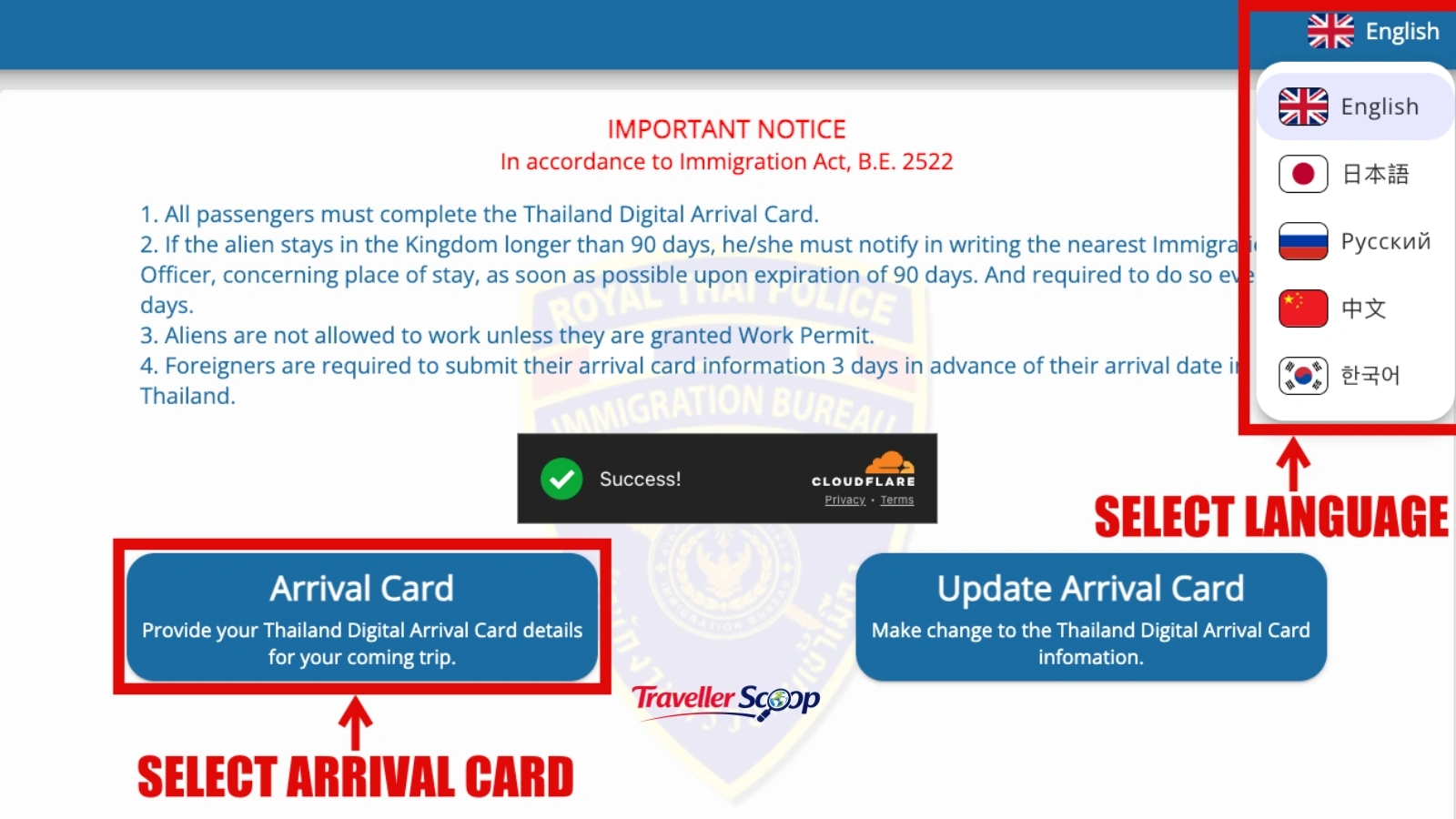
Thailand Digital Arrival Card TDAC form required for Indian travelers in 2026"
If you already have a Thailand trip booked in the next few weeks, here is what actually changes for you in practice:
- If you enter before the Gazette publication date + 15 days: you still get processed under the current rules in effect on your arrival date, and you get to complete your originally granted stay even if the rule changes mid-trip.
- If you enter after the new rule takes effect: expect the 30-day visa-free stamp instead of 60 days, so plan return flights and itineraries around a shorter window.
- If you are a frequent visitor, digital nomad, or long-stay traveler: repeated visa-free entries will likely draw more scrutiny. If your Thailand plans genuinely need more than 30 days, an e-Visa tourist visa (up to 60 days, extendable by 30 more) is the safer route.
- Documentation matters more now: carry proof of onward or return tickets, hotel confirmations, and proof of funds (commonly cited around USD 750 equivalent), since immigration officers are applying closer checks under the revised system.
For a broader look at how Thailand’s changes compare with what’s happening elsewhere in Asia and Europe, our guide on Schengen countries rejecting Indian visa applications is a useful companion read if you’re weighing multiple destinations this year
Step-by-Step: How Indians Should Prepare to Travel to Thailand Right Now
- Check the current status before booking. Rules only change 15 days after Royal Gazette publication, and that exact date keeps shifting, so verify directly with the Royal Thai Embassy in New Delhi or Thai Consulate before you fly.
- Decide your stay length honestly. If your trip is under 30 days, the visa-free exemption route (old or new) comfortably covers you.
- Complete your TDAC within 3 days of arrival, not earlier.
- Carry printed and digital copies of your return ticket, hotel bookings, and bank statement or forex proof.
- If you need more than 30–60 days, apply for a Thailand e-Visa in advance through the official portal rather than relying on visa-free entry.
- Budget for possible fee changes. Consular and visa fees were revised from 27 April 2026, so tourist visa costs are slightly higher than what you may have seen quoted last year.
If you’d like a quick gut-check on whether you personally need a visa for Thailand or any other country, our free Visa Requirement Checker tool takes your passport and destination and gives you an instant answer, which is genuinely handy while these rules are still in flux.
Thailand Visa Rule Change for Indians: Quick Reference Table
| Question | Quick Answer |
|---|---|
| Is Thailand still visa-free for Indians? | Yes. Indian passport holders can still enter Thailand without a visa, but the maximum visa-free stay is being reduced from 60 days to 30 days. |
| Do Indians need a Visa on Arrival (VOA) now? | No. India remains in Thailand’s visa-exemption category and is not being moved back to the Visa on Arrival scheme. |
| Is the Thailand Digital Arrival Card (TDAC) mandatory? | Yes. Every foreign traveler must complete the Thailand Digital Arrival Card (TDAC) before entering the country, regardless of visa type. |
| When does the new 30-day rule start? | The new rule takes effect 15 days after publication in Thailand’s Royal Gazette. As of mid-July 2026, the exact implementation date is still pending. |
| What if I’m already booked to travel? | Your entry will be processed according to the visa rule in effect on your arrival date, so check the latest official updates before departure. |
Planning where else to point your travel budget while this settles down? Our Taiwan visa for Indians guide and Dubai tourist visa update cover two destinations that have recently become noticeably easier for Indian passport holders, which is worth knowing if Thailand’s transition period makes you want a backup plan.
Conclusion
The Thailand Visa Rule Change for Indians turned out to be a rare travel policy story with a genuinely reassuring ending. What started in May as a plan that would have pushed Indian travelers into a costly, 15-day Visa on Arrival was reversed by July into a straightforward 30-day visa-free exemption, a workable middle ground that still covers the vast majority of Indian trips to Thailand, which average around a week in length anyway.
The one thing every traveler should actually do differently starting now is stop assuming the 60-day stamp is guaranteed, keep the TDAC process front and center, and double-check the Royal Gazette status before locking in flight dates.
Thailand is not closing its doors to Indian tourists; it is simply asking everyone to plan a little more carefully than the visa-free years made us used to.
FAQs
What should I do if I need to stay in Thailand longer than 30 days?
Apply for a Thailand e-Visa in advance. It allows up to 60 days of stay and can typically be extended once by another 30 days at a Thai immigration office.
Is the Thailand Visa Rule Change for Indians already in effect?
Not fully yet. The Cabinet approved the changes on 14 July 2026, but they take effect only 15 days after publication in the Royal Gazette, and that exact date had not been confirmed as of this article's publish date. Current rules stay in place until then.
Will Indians lose visa-free entry to Thailand completely?
No. This was the biggest fear after the May 2026 announcement, but the July 2026 Cabinet decision confirmed India keeps visa-free access, just reduced from 60 days to 30 days instead of being shifted to a paid Visa on Arrival.
How long can Indians stay in Thailand visa-free after the change?
Up to 30 days per visit under the new exemption category, down from the previous 60-day allowance.
Do I still need to fill the Thailand Digital Arrival Card (TDAC)?
Yes. TDAC is mandatory for every foreign national entering Thailand, regardless of whether you're on a visa exemption, Visa on Arrival, or e-Visa, and it must be submitted within 3 days before arrival.

Khushi Vaid
Senior Travel EditorI’m Khushi Vaid, a travel writer with over 2 years of experience creating destination guides, travel tips, and travel planning content. At Traveller Scoop, I write about destinations, travel trends, and practical advice to help readers explore the world with confidence.