Bhutan vs Nepal: Which Mountain Escape Is Better?
Bhutan vs Nepal is a question I get asked in my DMs almost every single week, and honestly, I used to go back and forth on it myself before I sat down and actually mapped out the numbers.Both countries sit shoulder to shoulder in the Himalayas, and both promise snow-tipped peaks and monasteries that look […]
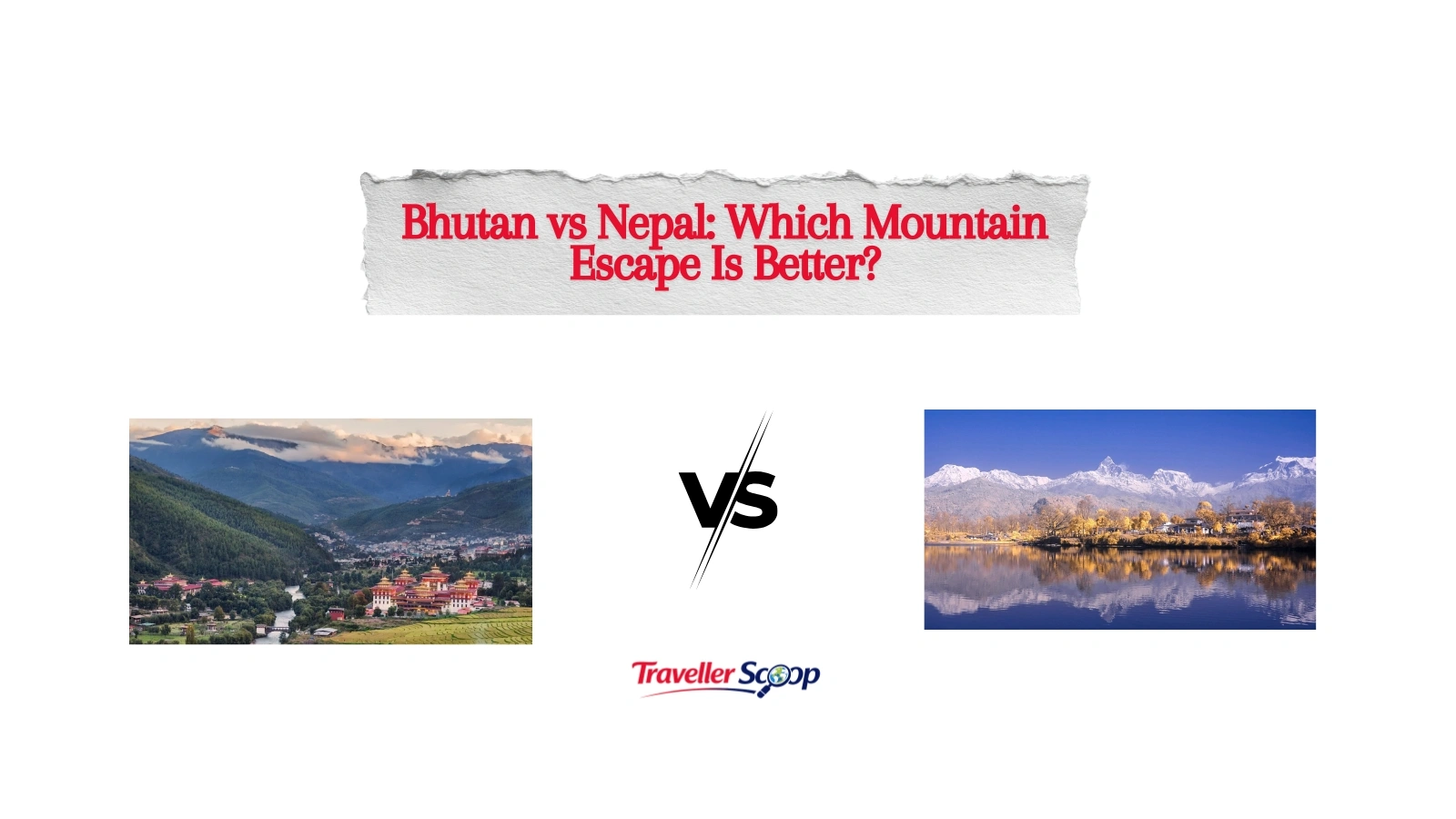
Bhutan vs Nepal is a question I get asked in my DMs almost every single week, and honestly, I used to go back and forth on it myself before I sat down and actually mapped out the numbers.
Both countries sit shoulder to shoulder in the Himalayas, and both promise snow-tipped peaks and monasteries that look like something out of a dream, yet the two trips could not feel more different once you land.
I am Khushi Vaid, and as a travel writer at Traveller Scoop, I have spent weeks pulling together cost data, permit rules, and on-the-ground experiences from travelers who have done both trips so that this Bhutan vs Nepal guide can actually help you decide instead of leaving you more confused.
If you have been Googling “Bhutan vs Nepal trip cost” at 1 a.m. trying to figure out where your rupees will stretch further, you are exactly who I wrote this for.
I am also covering trekking difficulty, the best pick if you are wondering whether Bhutan or Nepal for a honeymoon makes more sense, and a clear, numbers-backed verdict at the end.
Bhutan vs Nepal: Quick Snapshot (2026 Data)
Before we go deep, here is the fast version of the Bhutan vs Nepal comparison in numbers:
| Factor | Bhutan | Nepal |
|---|---|---|
| Average Daily Budget (Indian Travelers) | ₹6,000–₹9,000 per day | ₹1,800–₹3,500 per day |
| Visa Requirement for Indians | Permit required (No visa fee) | Visa-free entry |
| Sustainable Development Fee (SDF) | ₹1,200 per night (for Indians) | Not applicable |
| Best Trekking Routes | Tiger’s Nest, Druk Path Trek | Everest Base Camp, Annapurna Circuit |
| Ideal Trip Length | 4–6 days | 6–10 days |
| Best Time to Visit | March–May, September–November | September–November, March–May |
| Solo Travel Friendly | Limited (Guide often required) | Yes, very backpacker-friendly |
This table alone answers 70% of the questions people bring to me in the Bhutan vs Nepal debate, but let’s unpack every number.
Bhutan vs Nepal Trip Cost: The Real Math
When people ask me about Bhutan vs Nepal trip cost, the honest answer is that Nepal wins on pure affordability, and it is not close. In Nepal, I have seen budget backpackers manage a full week in Kathmandu and Pokhara for around ₹18,000–₹25,000, including guesthouse stays at ₹700–₹1,200 a night, local thali meals for ₹150–₹250, and shared jeep transfers.
A 10-day Everest Base Camp trek including permits, a guide, and teahouse stays typically lands between ₹55,000 and ₹90,000 per person.
Bhutan runs on a very different model. Since Indian travelers pay a Sustainable Development Fee of roughly ₹1,200 per night (as of the current 2026 policy, confirmed through mid-2027), a 5-night Bhutan trip adds about ₹6,000 in SDF alone, on top of guided tour packages that usually start around ₹35,000–₹45,000 for a 5-day itinerary covering Thimphu, Punakha, and Paro.
So when you compare Bhutan vs Nepal trip cost side by side, a 5-day Bhutan trip and a 5-day Nepal trip can differ by ₹20,000–₹30,000 for the same duration, purely because Bhutan’s tourism model bundles in a licensed guide, curated stays, and local transport, while Nepal lets you go fully DIY.
If your wallet is the deciding factor in Bhutan vs Nepal, Nepal gives you more trip for less money. If you would rather pay more once and have everything handled, the Bhutan vs Nepal trip cost gap starts to make more sense.
I always tell readers to work backwards from their own numbers: list your travel dates, check flight prices, and then plug them into a Bhutan vs Nepal trip cost worksheet before booking anything, because the Bhutan vs Nepal trip cost difference can shift a lot depending on season and group size.
Nepal vs Bhutan Trekking: Which One Should You Actually Book?
For anyone chasing altitude, the Nepal vs Bhutan trekking comparison matters more than cost. Nepal is genuinely the trekking capital of the world, home to 8 of the world’s 14 highest peaks, including Everest at 8,849 meters.
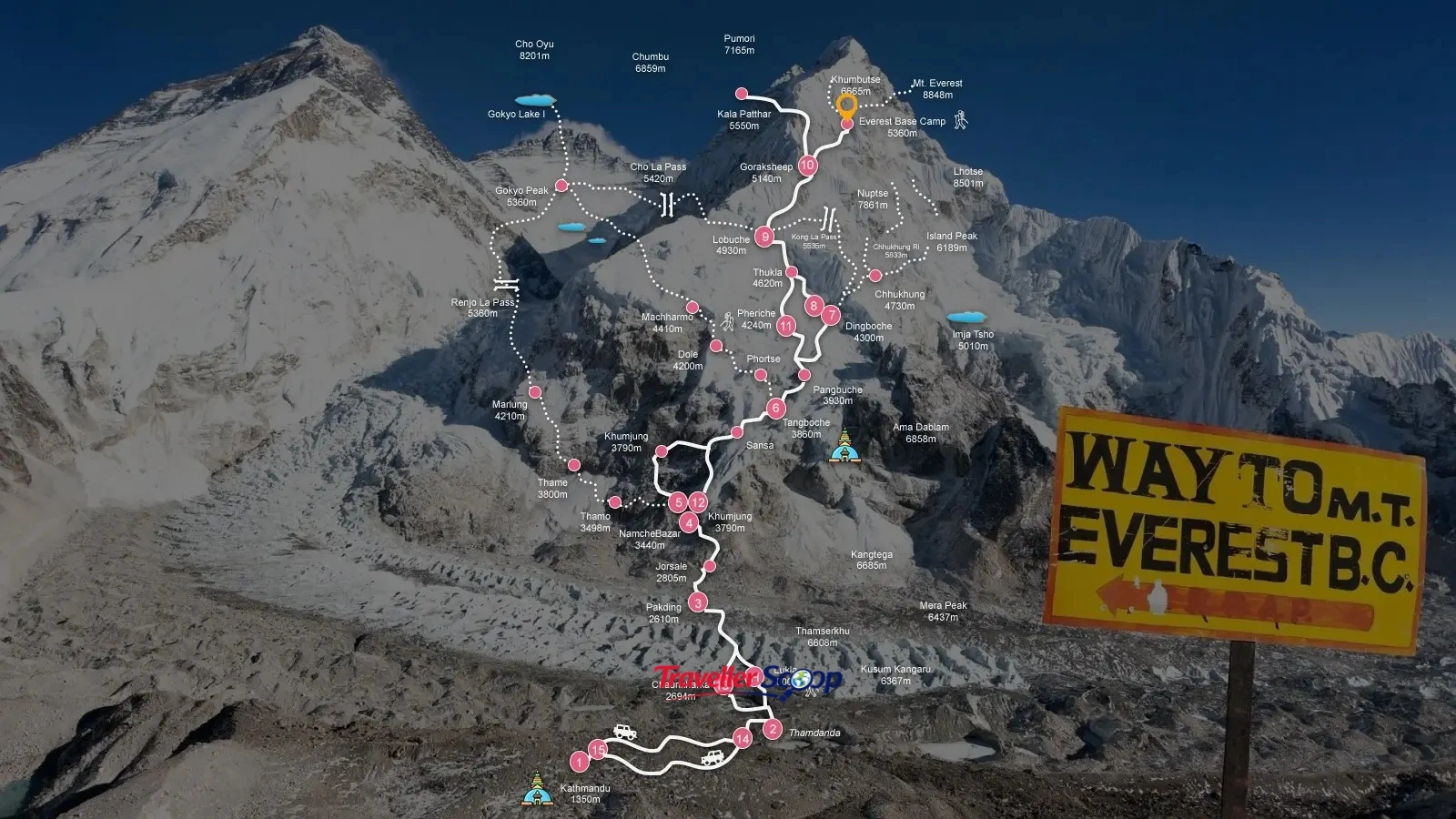
Routes like the Everest Base Camp trek (roughly 130 km round trip over 12–14 days) and the Annapurna Circuit (160–230 km depending on the route chosen) are internationally famous, well-marked, and supported by a teahouse network every few kilometres.
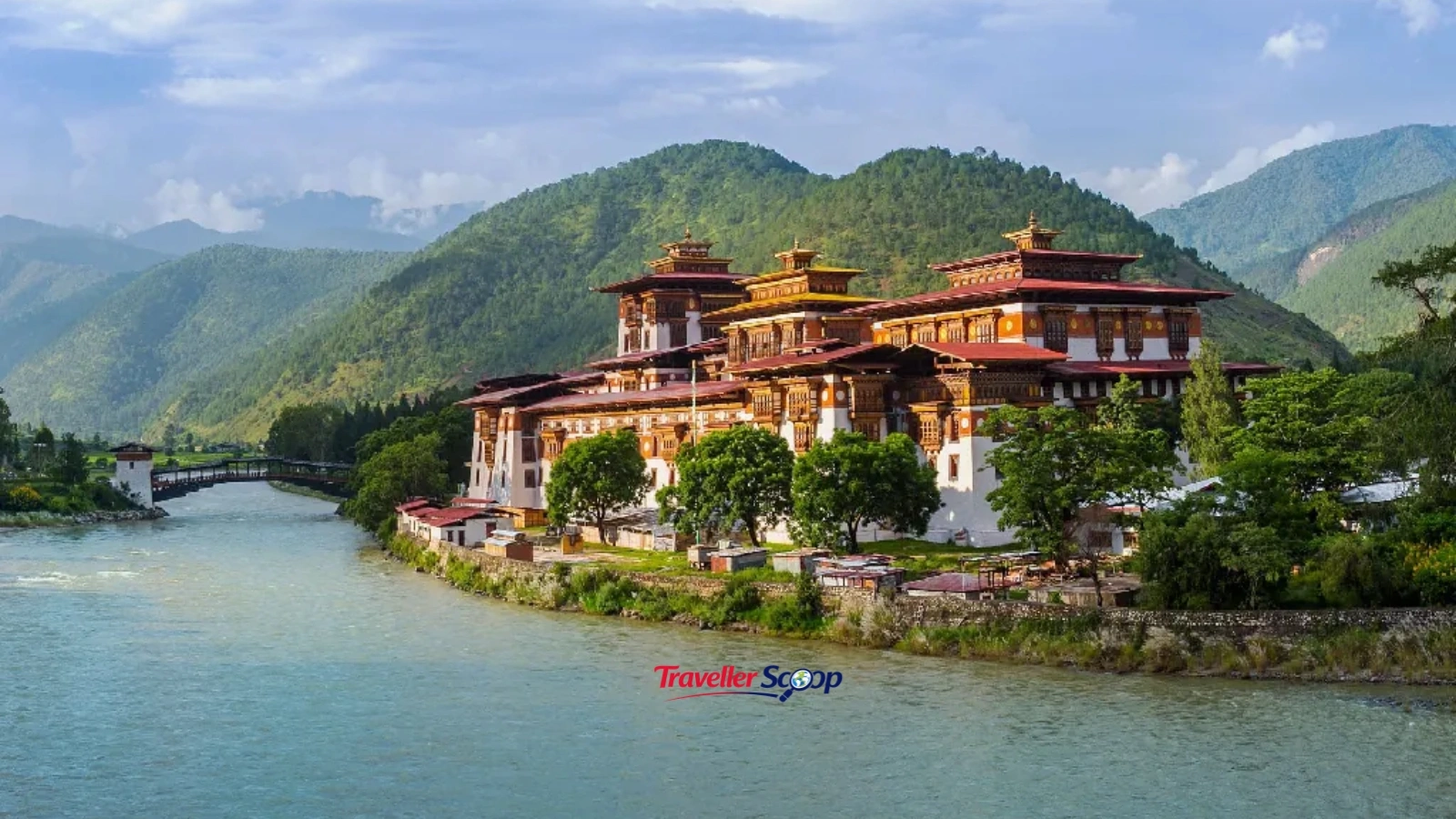
Bhutan’s trekking scene is smaller but far less crowded. The Druk Path Trek, a 4–6-day route between Paro and Thimphu, sits between 3,000 and 4,200 metres and gets a fraction of the footfall Nepal’s routes see.
If you compare Nepal vs Bhutan trekking on variety alone, Nepal has dozens of established routes across different altitudes and difficulty levels, while Bhutan has a handful of highly protected, guide-mandatory trails.
For my adventure-loving readers who have already tried the budget treks I listed in my guide to adventure trips under ₹10,000, Nepal is the natural next step up in altitude and challenge. In the Nepal vs Bhutan trekking debate, Nepal wins for range and affordability; Bhutan wins for solitude and preserved trails.
Every time someone messages me about Nepal vs Bhutan trekking difficulty, I tell them the same thing: Nepal has easy, moderate, and extreme treks for literally every fitness level, while Bhutan’s Nepal vs Bhutan trekking options stay firmly in the moderate-to-challenging range because access is deliberately limited.
If altitude and variety matter more to you than solitude, the Nepal vs Bhutan trekking comparison tips heavily toward Nepal.
Visa and Entry: Which Country Is Easier to Enter?
This is where Bhutan vs Nepal really splits. Nepal offers visa-free entry for Indian passport holders, and most other nationalities can get a visa on arrival or e-visa within minutes, priced at $30 for 15 days, $50 for 30 days, or $100 for 90 days.
Bhutan requires Indian, Bangladeshi, and Maldivian citizens to carry a permit (arranged online or at the border, no visa fee), while all other nationalities must apply through a licensed Bhutanese tour operator in advance, since Bhutan does not offer visa-on-arrival for most countries.
This single rule shapes the entire Bhutan vs Nepal experience: Nepal rewards spontaneous, last-minute planners, while Bhutan expects you to book ahead and travel with a structured itinerary.
If you like planning short, spontaneous getaways closer to home before committing to an international trip, my weekend budget travel destinations near Delhi guide is a good warm-up read.
Bhutan or Nepal for Honeymoon: My Honest Take
I get asked “Bhutan or Nepal for honeymoon” almost as often as the general Bhutan vs Nepal question, and my answer usually depends on the couple. Bhutan is calm, curated, and almost meditative- think candle-lit dinners in Punakha, the Tiger’s Nest hike at sunrise, and boutique farm-stays that rarely see more than a handful of guests. It genuinely feels designed for couples who want privacy over crowds.
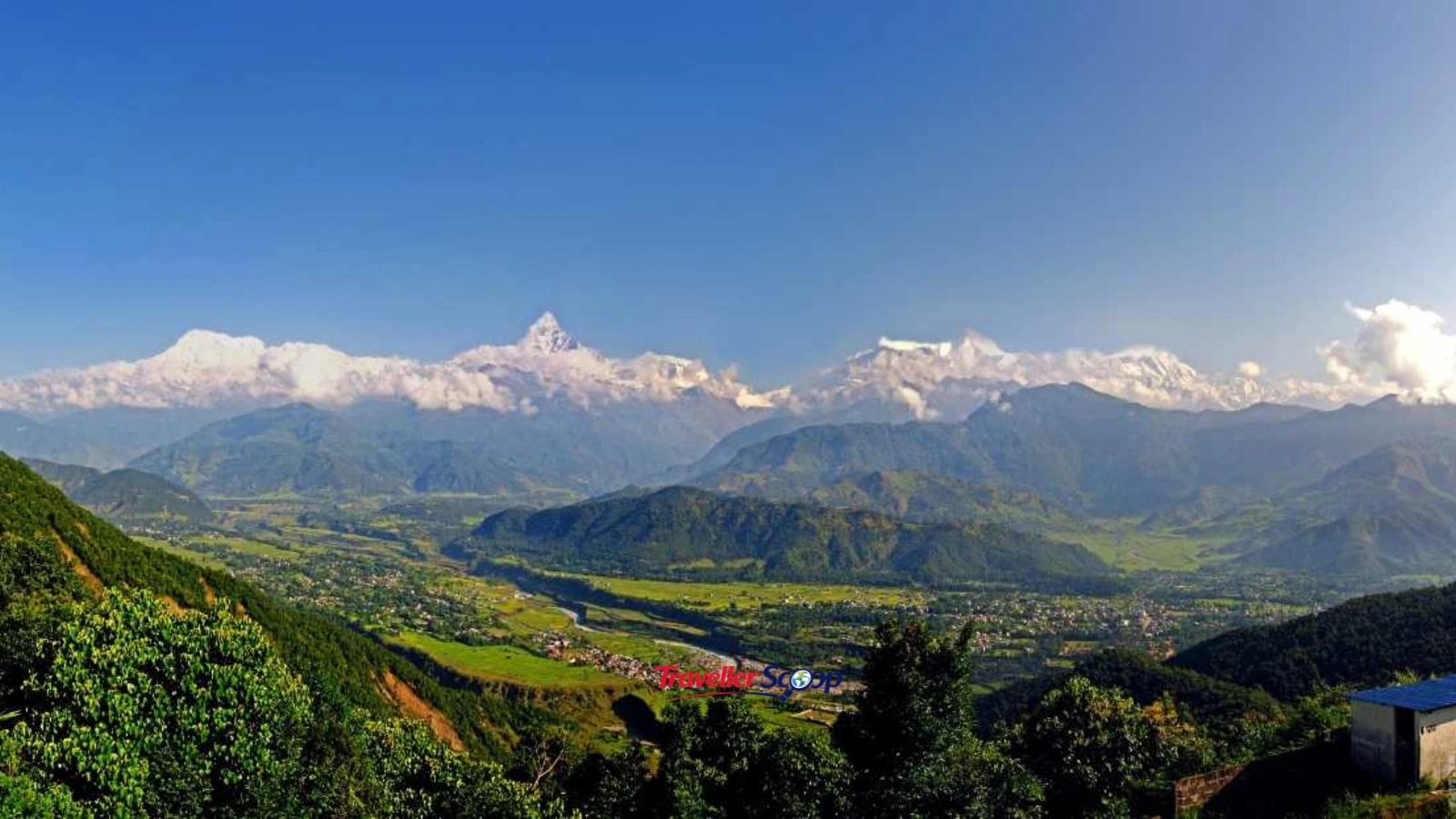
Nepal, on the other hand, gives you more variety for the same honeymoon budget. Pokhara’s lakeside cafes, sunrise views of the Annapurna range from Sarangkot, and a short paragliding session together (around ₹3,500–₹4,500 per person) make for a more energetic, photo-heavy honeymoon.
If you are choosing Bhutan or Nepal for a honeymoon purely on romance-per-rupee, Nepal edges ahead, but for exclusivity and fewer crowds, Bhutan is worth the extra spend. Readers planning a romantic trip on a tighter budget might also enjoy my budget-friendly honeymoon spots in India guide as a comparison point before deciding on an international trip.
Almost every couple who asks me about Bhutan or Nepal for a honeymoon is really asking about crowd levels, and that’s the real differentiator: Bhutan or Nepal for honeymoon planning always comes back to whether you want a private, guided experience or a livelier, more social one.
Culture, Food, and Vibe
Bhutan is almost entirely Buddhist, and that shows in the pace of daily life, monasteries perched on cliffs, prayer flags fluttering over quiet valleys, and a national policy that measures Gross National Happiness instead of just GDP.
Nepal blends Hindu and Buddhist traditions, and its cities feel louder, busier, and more layered, especially around Kathmandu’s Durbar Square and Boudhanath Stupa.
Food-wise, Bhutanese meals centre around red rice, ema datshi (chilli and cheese stew), and butter tea, while Nepali food leans into momos, dal-bhat, and Newari thalis, often more familiar and easier on Indian palates.
In the Bhutan vs Nepal culture comparison, Bhutan feels more preserved and controlled, while Nepal feels more lived-in and spontaneous.
Best Time to Visit: Bhutan vs Nepal
Both countries share similar peak windows: March to May and September to November. Spring brings rhododendron blooms in both Bhutan and Nepal, while autumn offers the clearest mountain views for photography and trekking.
Winter (December–February) is workable for lower-altitude sightseeing in both countries but gets bitterly cold above 3,000 meters.
Monsoon (June–August) is the toughest season for both, with landslide risk on mountain roads, so I would avoid it unless you are specifically chasing off-season discounts
So, Which Is Better: Bhutan or Nepal?
After going through all the numbers, here’s my honest verdict on which is better, Bhutan or Nepal: if you are a first-time Himalayan traveler, on a tighter budget, or want serious trekking options, Nepal is the smarter pick.
If you want a shorter, calmer, culturally immersive trip and don’t mind paying a premium for exclusivity, Bhutan is worth every rupee. In the broader Bhutan vs Nepal conversation, there genuinely isn’t a universal “better”, it depends entirely on your budget, your appetite for adventure, and how much planning you want to do yourself.
If you want a side-by-side breakdown tailored to your own dates and style, Traveller Scoop’s destination comparison tool can run the numbers for you in seconds. When friends ask me point-blank which is better, Bhutan or Nepal, I flip the question back: are you chasing a checklist of treks, or a slower, curated escape? That one answer usually settles which is better, Bhutan or Nepal, for their exact trip.
If you’re still deciding between destinations generally, my guide to affordable Dolomites alternatives also touches on why Nepal keeps showing up as a top pick for mountain lovers on a budget. And before you book anything, it’s worth running your dates through Traveller Scoop’s visa checker and budget calculator tools so you know your Bhutan vs Nepal costs down to the last rupee.
You can also browse more curated options on our Mountain Destinations page if neither trip feels like a perfect fit yet.
Conclusion
At the end of the day, the Bhutan vs Nepal decision comes down to what kind of traveler you are right now. I have watched friends fall in love with Nepal’s chaos and energy, and I have watched others come back from Bhutan talking about how quiet and reset they felt for weeks after.
Whichever one you pick, both trips will hand you some of the most breathtaking Himalayan views on the planet, and honestly, that’s a win either way. If this Bhutan vs Nepal breakdown helped you decide, I’d genuinely love to hear which one you’re booking first, drop it in the comments.
FAQs
Can I visit both Bhutan and Nepal in one trip?
Yes, both are roughly 2–3 hours apart by flight, and many travelers combine a Nepal trek with a short Bhutan cultural add-on.
Is Bhutan more expensive than Nepal?
Yes. Bhutan's Sustainable Development Fee and mandatory guided packages make it significantly costlier than Nepal, where budget travel and DIY trips are common.
Which is better for trekking, Nepal or Bhutan?
Nepal wins for range and affordability with routes like Everest Base Camp and Annapurna Circuit. Bhutan offers shorter, less crowded treks like the Druk Path Trek.
Do Indians need a visa for Bhutan or Nepal?
Indians get visa-free entry to Nepal and only need a permit (no visa fee) for Bhutan.
Is Bhutan or Nepal better for a honeymoon?
Bhutan suits couples wanting privacy and curated luxury. Nepal suits couples wanting variety and a lower honeymoon budget.

Khushi Vaid
Senior Travel EditorI’m Khushi Vaid, a travel writer with over 2 years of experience creating destination guides, travel tips, and travel planning content. At Traveller Scoop, I write about destinations, travel trends, and practical advice to help readers explore the world with confidence.