
Discover India’s Largest Tiger Reserves That Will Leave Every Nature Lover Amazed in 2026
Largest tiger reserves in India have always fascinated me more than any beach or hill station ever could, and I say this after years of dragging my camera bag through dusty jeep tracks at 5 a.m. When I started digging into the numbers for this piece, I realised most articles online just copy-paste the same […]
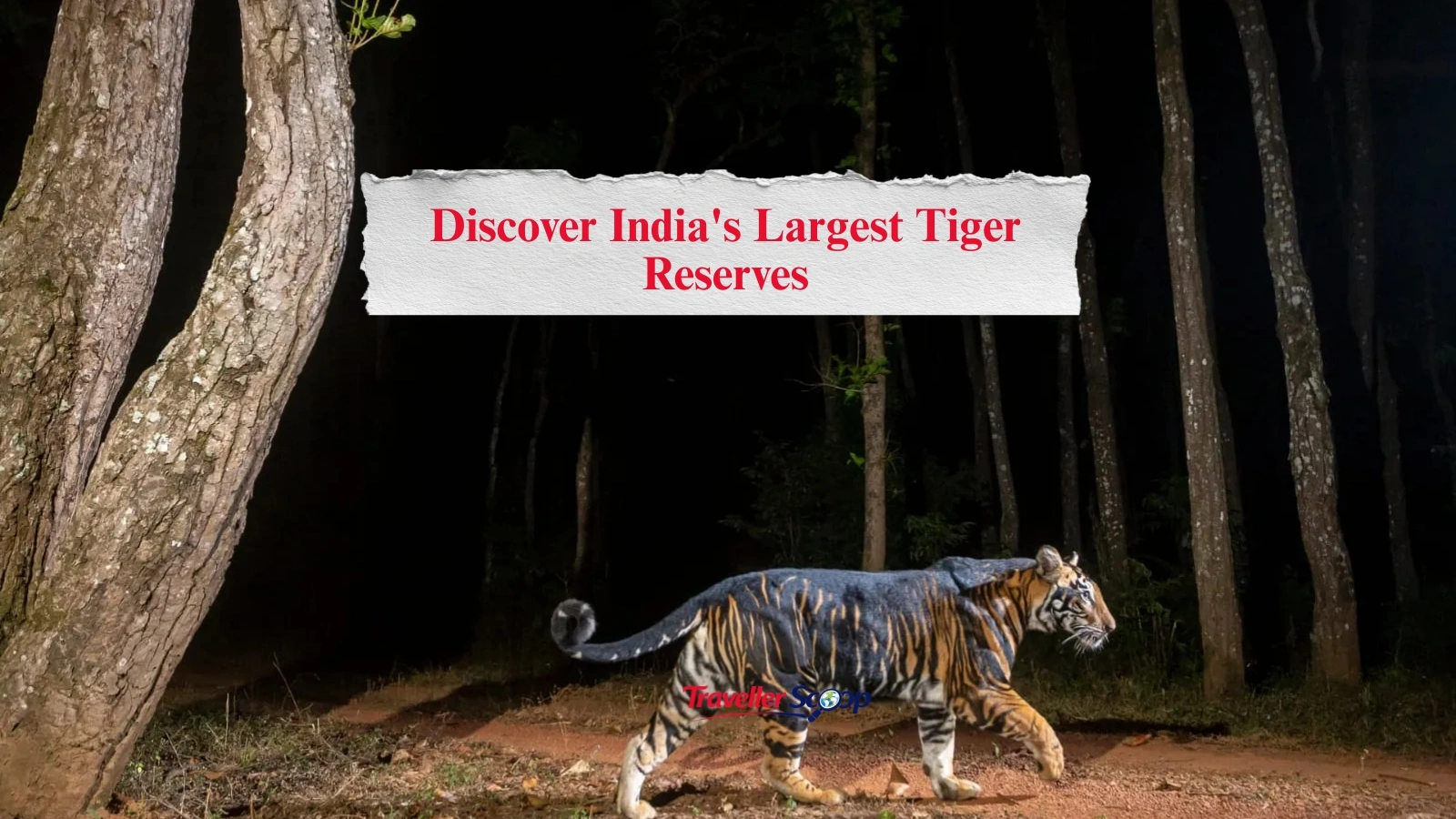
Largest tiger reserves in India have always fascinated me more than any beach or hill station ever could, and I say this after years of dragging my camera bag through dusty jeep tracks at 5 a.m. When I started digging into the numbers for this piece, I realised most articles online just copy-paste the same old list without ever explaining why size actually matters for a tiger’s survival.
So I sat down, went through the National Tiger Conservation Authority’s own data, cross-checked areas in square kilometres, and built this guide the way I wish someone had built it for me before my first Bandhavgarh trip.
As of 2026, India is home to 58 tiger reserves spread across 18 states, together covering more than 84,487 sq. km of protected forest, roughly 2.3% of the country’s entire landmass. That number alone tells you this isn’t a small conservation project; it’s one of the largest wildlife protection networks on the planet, holding close to 75-80% of the world’s remaining wild tiger population.
In this article, I’m walking you through the actual largest tiger reserves in India by core area, real tiger counts per reserve, and the exact months you should book your safari if you want a real sighting and not just pug marks in the mud.
Why Reserve Size Actually Matters for Tigers
A single adult tiger needs anywhere between 20 to 100 sq. km of territory depending on prey density, which is exactly why the largest tiger reserves in India tend to support the healthiest, most stable populations.
Smaller reserves like Bor in Maharashtra (just 138.12 sq. km) are important too, but they simply cannot hold the same number of breeding tigers as a landscape stretching over 2,000 or 3,000 sq. km.
This is the part most travel blogs skip; they’ll tell you where to go but never explain the ecology behind why some parks guarantee better sightings than others.
India's Top Tiger Reserves by Area (2026 Data)
Here is the real, verified list of the biggest tiger reserve in India by area and the ones right behind it, based on core + buffer zone figures.
- Nagarjunsagar-Srisailam Tiger Reserve (Andhra Pradesh/Telangana) — 3,296.31 sq. km. This is officially the largest tiger reserve in India, spread across the Nallamala Hills around the Srisailam and Nagarjunasagar reservoirs. Along with tigers, it shelters leopards, pangolins, and the Indian rock python.
- Guru Ghasidas-Tamor Pingla Tiger Reserve (Chhattisgarh) — around 2,829 sq. km. India’s third-largest overall, this reserve was created by merging a national park with a wildlife sanctuary and now works as a genetic corridor between Madhya Pradesh and Jharkhand.
- Namdapha Tiger Reserve (Arunachal Pradesh) — 2,052.82 sq. km. One of the few places on earth where you can spot four big cats in one landscape: tiger, leopard, snow leopard, and clouded leopard.
- Kanha Tiger Reserve (Madhya Pradesh) — 2,051.79 sq. km. The reserve that inspired Rudyard Kipling’s The Jungle Book, and still one of the most photogenic sal forests I’ve personally walked through.
- Manas Tiger Reserve (Assam) and Corbett Tiger Reserve (Uttarakhand) round out the next tier of vast, biodiversity-rich landscapes, with Corbett, India’s very first reserve, notified in 1973, still recording the highest tiger density of any single park.
Among the top tiger reserves in India for wildlife safari, Corbett actually leads in tiger population with around 260 tigers, followed by Bandipur (150) and Nagarhole (141) in Karnataka, which shows that a reserve doesn’t need to be the biggest to be the busiest.
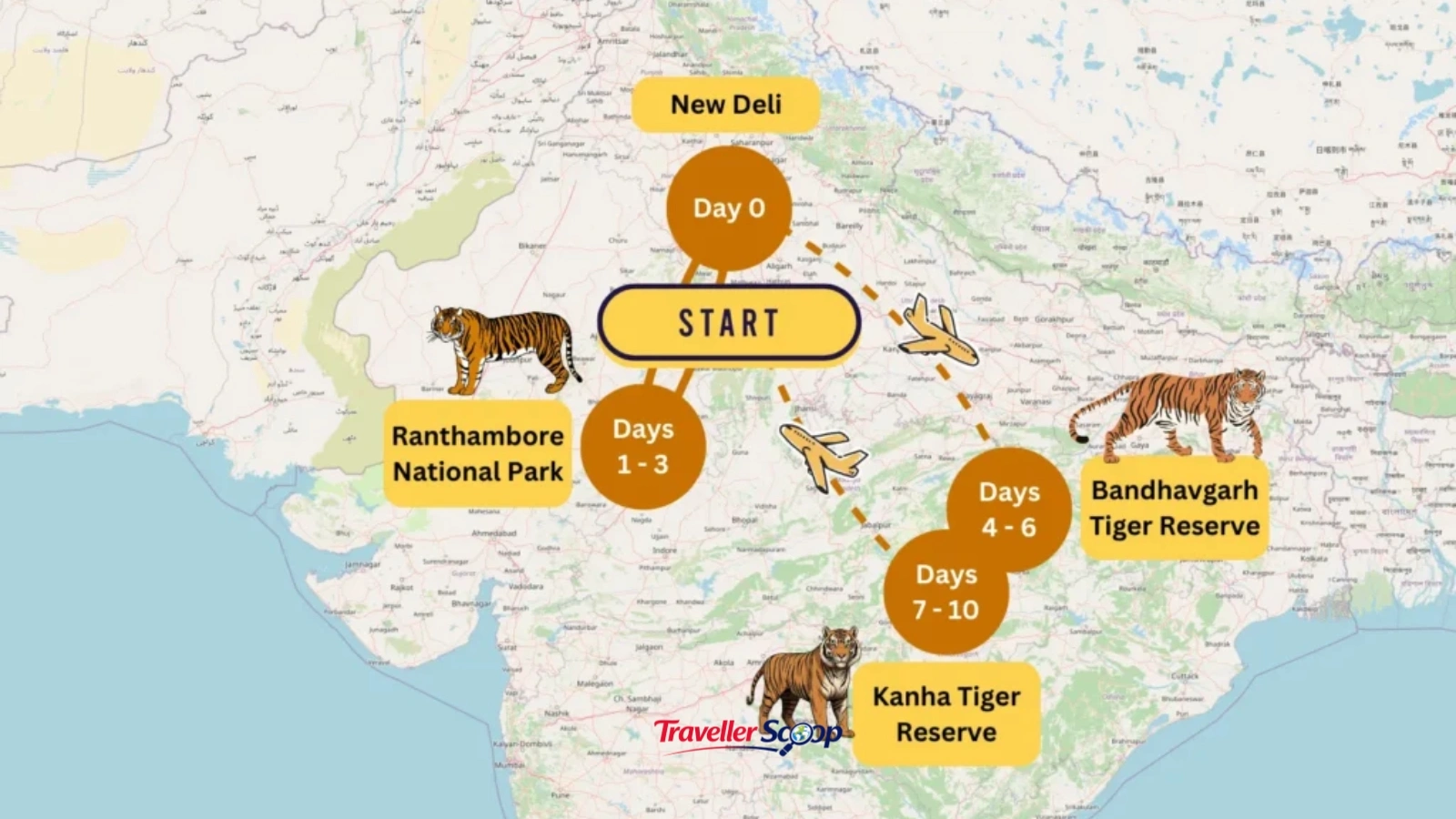
State-Wise Tiger Numbers: The 2026 Picture
Numbers help put things in perspective, so here’s what the last National Tiger Census actually recorded:
- Madhya Pradesh: 785 tigers (highest in India, and home to 9 tiger reserves, the most of any state)
- Karnataka: 563 tigers
- Uttarakhand: 560 tigers
- Maharashtra: 444 tigers
And here’s how India’s total wild tiger count has climbed over two decades: 1,411 tigers in 2006, 1,706 in 2010, 2,226 in 2014, 2,967 in 2018, and 3,682 in the most recent count, proof that Project Tiger, launched in 1973 with just 9 reserves covering 18,278 sq. km, has genuinely worked.
Best Time to Visit Tiger Reserves in India
If you’re planning around the best time to visit tiger reserves in India, aim for March to May. Summer heat pushes tigers toward waterholes during daylight hours, which massively increases your chances of a clear sighting.
Most reserves, including Corbett and Kanha, stay closed during the monsoon (July to September) for the animals’ breeding season, so avoid booking a safari in those months.
I’d personally suggest early April if you can handle 40°C afternoons; that’s when I got my best sighting at Bandhavgarh, barely 15 minutes into the drive.
Since a lot of these parks sit close to hill terrain and remote forest belts, it’s worth reading how I rate destinations for adventure-heavy trips in my Destination Guides section before you lock your dates, and if you’re travelling solo, my breakdown of safest Indian cities for solo travellers is worth a read since most reserve towns are small and quiet after dark.
How to Plan a Budget-Friendly Tiger Safari Trip
Safari permits, jeep charges, and forest lodge stays can add up fast, especially at popular reserves like Ranthambore and Kanha during peak season (November to March).
I always run my numbers through a proper travel budget calculator before booking anything, because entry fees alone vary from ₹1,500 to ₹6,000 per safari depending on the reserve and season.
If safety and last-minute advisories worry you, especially for remote reserves in the Northeast like Namdapha and Manas, I’d also recommend checking a destination safety score before you finalise the itinerary.
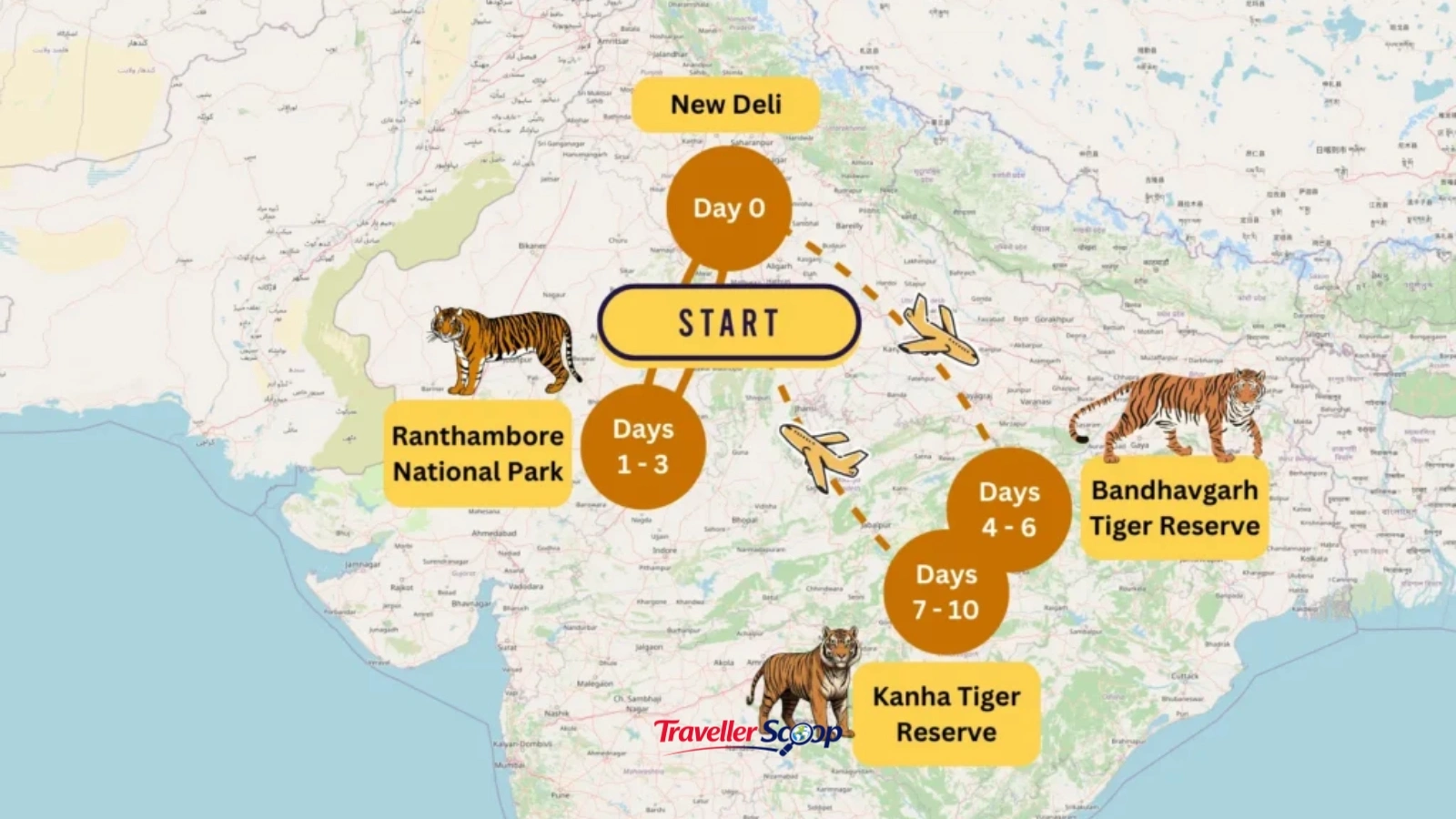
Lesser-Known Facts About India's Tiger Reserves
Every tiger reserve in India is divided into two distinct management areas to balance wildlife conservation with sustainable human activities:
- Core Zone (Critical Tiger Habitat):
- This is the most protected part of the reserve.
- Human activities such as farming, grazing, and construction are strictly prohibited.
- Only forest officials, researchers with permission, and conservation staff can enter.
- It provides tigers and other wildlife with a safe, undisturbed habitat for hunting, breeding, and raising cubs.
- Buffer Zone:
- Surrounds the core zone and acts as a protective cushion.
- Controlled eco-tourism, wildlife safaris, nature trails, and conservation-related activities are permitted.
- Local communities can carry out limited livelihood activities, such as collecting non-timber forest products, under forest department regulations.
- This zone helps reduce conflicts between wildlife and nearby villages while supporting local economies.
1. Panna Tiger Reserve Is One of India’s Greatest Conservation Success Stories
Located in Madhya Pradesh, Panna Tiger Reserve experienced one of the worst wildlife crises in Indian history.
- By 2009, all of its wild tigers had disappeared due to large-scale poaching.
- Instead of abandoning the reserve, the National Tiger Conservation Authority (NTCA) and forest officials launched an ambitious tiger reintroduction program.
- Tigers were carefully relocated from reserves like Bandhavgarh, Kanha, and Pench.
- The animals were monitored using radio collars, camera traps, and scientific tracking techniques.
- The project exceeded expectations, with the relocated tigers successfully breeding in the wild.
- Today, Panna has a thriving tiger population and is recognized worldwide as one of the most successful big-cat recovery projects ever undertaken.
2. Sariska Tiger Reserve Made a Remarkable Comeback Too
Sariska Tiger Reserve in Rajasthan faced a similar crisis.
- In 2004, investigations revealed that all of Sariska’s tigers had been wiped out by poachers.
- Beginning in 2008, tigers were relocated from Ranthambore Tiger Reserve.
- Conservation teams closely monitored each relocated tiger using GPS and radio telemetry.
- Over the years, the animals adapted successfully, reproduced, and established territories.
- Today, Sariska once again supports a growing tiger population, proving that carefully planned wildlife restoration can reverse even severe conservation setbacks.
3. Tiger Reserves Also Protect India’s Water Resources
Tiger reserves are far more than wildlife sanctuaries—they are also vital watersheds that support millions of people.
Many reserves protect the forests where important rivers originate or flow, including:
- Krishna River: Originates in the Western Ghats, with surrounding forests protected by nearby reserves.
- Ramganga River: Flows through Corbett Tiger Reserve, providing water for wildlife and communities downstream.
- Indravati River: Passes through forest landscapes associated with Indravati Tiger Reserve in Chhattisgarh.
Healthy forests inside tiger reserves:
- Improve groundwater recharge.
- Reduce soil erosion.
- Prevent floods during heavy rainfall.
- Store carbon and regulate regional climate.
- Ensure year-round freshwater supplies for nearby towns, villages, and agriculture.
Protecting tigers also helps protect India’s long-term water security.
4. India Is Still Expanding Its Tiger Reserve Network
India continues to strengthen its wildlife conservation efforts by adding new protected areas.
Some of the newest tiger reserves include:
- Ranipur Tiger Reserve (Uttar Pradesh): Notified in 2022, becoming the state’s fourth tiger reserve.
- Dholpur-Karauli Tiger Reserve (Rajasthan): Declared in 2023, improving wildlife connectivity between Rajasthan and Madhya Pradesh.
- Ratapani Tiger Reserve (Madhya Pradesh): Officially designated in 2024 after years of conservation planning.
- Madhav Tiger Reserve (Madhya Pradesh): Added in 2025, further expanding the state’s already extensive tiger conservation network.
These new reserves:
- Increase protected habitat for tigers.
- Improve wildlife corridors between forests.
- Support biodiversity conservation.
- Reduce habitat fragmentation.
- Strengthen India’s position as the country with the world’s largest wild tiger population.
Their addition demonstrates that India’s tiger conservation program continues to grow, ensuring safer habitats for tigers and countless other species for generations to come.
Conclusion
Researching the largest tiger reserves in India taught me that the story isn’t just about which park is the biggest on a map, it’s about how size, prey density, and protection status come together to keep the Bengal tiger alive after nearly disappearing by the 1970s.
Whether you head to the sprawling Nagarjunsagar-Srisailam, the Kipling-famous Kanha, or the tiger-dense Corbett, you’re stepping into one of the most successful wildlife recovery stories on earth.
My honest advice: pick a reserve based on the season you’re traveling in, book your safari slots at least a month in advance, and give yourself at least two safari drives; one sighting rarely happens on the first try, but when it does, it’s worth every bumpy jeep ride.
FAQs
Which state has the most tiger reserves in India?
Madhya Pradesh leads with 9 tiger reserves and also records the highest tiger population in the country at 785 tigers.
Which is the largest tiger reserve in India?
Nagarjunsagar-Srisailam Tiger Reserve in Andhra Pradesh and Telangana is the largest, with a core area of 3,296.31 sq. km.
How many tiger reserves are there in India in 2026?
India has 58 tiger reserves spread across 18 states, covering over 84,487 sq. km of forest area.
Which tiger reserve has the highest tiger population?
Corbett Tiger Reserve in Uttarakhand has the highest count, with around 260 tigers, followed by Bandipur and Nagarhole in Karnataka.
What is the best time to visit tiger reserves in India?
March to May offers the best sighting chances, since tigers visit waterholes more often in the heat. Most reserves stay shut during monsoon months (July-September).

Khushi Vaid
Senior Travel EditorI’m Khushi Vaid, a travel writer with over 2 years of experience creating destination guides, travel tips, and travel planning content. At Traveller Scoop, I write about destinations, travel trends, and practical advice to help readers explore the world with confidence.