Breaking: Thailand Visa Rules for Indians Have Changed Here’s Everything You Need to Know
Thailand visa rules for Indians have officially changed in 2026, and if you’ve been scrolling through group chats trying to figure out whether you still need a visa for your Phuket trip, you’re not alone.I spent the last few weeks going through every official update, cabinet announcement, and airport requirement so I could put together […]
Thailand visa rules for Indians have officially changed in 2026, and if you’ve been scrolling through group chats trying to figure out whether you still need a visa for your Phuket trip, you’re not alone.
I spent the last few weeks going through every official update, cabinet announcement, and airport requirement so I could put together one clear guide instead of ten confusing ones. As someone who tracks travel policy for a living, I can tell you this round of Thailand Visa Rules for Indians caused more panic than it needed to, mostly because the story kept flip-flopping between May and July 2026. So let’s clear the air properly.
Here’s the short version before we go deep: Thailand Visa Rules for Indians did get revised this year; there was a scary period where visa-free entry was almost scrapped entirely, but the Thai government reversed course in July 2026.
Indian travelers can still enter Thailand without a visa; the only real change is the stay duration. I’ll walk you through exactly what happened, what documents you need now, and how to avoid getting stopped at immigration.
Is Thailand Still Visa-Free for Indians in 2026?
Yes, and this is the part that gets lost in all the noise around Thailand Visa Rules for Indians. On July 14, 2026, Thailand’s Tourism Minister Surasak Phancharoenworakul confirmed that Indian passport holders will continue to receive visa-free entry.
The catch-aside under the revised Thailand Visa Rules for Indians is that the maximum stay has been cut from 60 days to 30 days. For most Indian holidaymakers, whose trips typically run 5 to 10 days, this change makes almost no practical difference.
Here’s how we got here, because the timeline actually matters if you’re planning a trip:
- July 2024: Thailand extended visa-free entry to Indian travelers for up to 60 days, as part of a wider exemption covering 93 countries.
- May 19, 2026: Thailand’s Cabinet approved a proposal to remove India from the visa-free list entirely, shifting Indians to a Visa on Arrival (VoA) category alongside just three other countries.
- May–June 2026: The proposal was approved but never implemented. It is still confusing, and Indian arrivals reportedly dropped as travelers held off on booking.
- July 14, 2026: The Thai Cabinet reversed direction. Under the updated Thailand Visa Rules for Indians, visa-free travel stays in place, with the window reduced to 30 days per entry instead of 60.
So if someone tells you Indians now need a visa for short Thailand trips, that’s outdated information from the May proposal that never went live. The current, confirmed Thailand Visa Rules for Indians keep the door open, just for a shorter stay.

What Exactly Changed Under the New Thailand Visa Rules for Indians?
Let’s break this down into what actually applies to you, depending on how long you’re traveling.
1. Visa-Free Entry (Up to 30 Days)
This is the default for most Indian tourists. Under the current Thailand visa-free for Indians 2026 policy:
- No visa fee, no embassy visit, no prior approval needed
- Maximum stay of 30 days per entry (down from 60 days)
- Applies to tourism and short business visits
- You still need to complete a mandatory pre-arrival digital form (more on that below)
2. Thailand Digital Arrival Card (TDAC): Mandatory for Everyone
Regardless of which category you fall under, every traveler entering Thailand, including those covered under visa-free rules, must complete the Thailand Digital Arrival Card. This is a separate requirement from the visa itself and has nothing to do with the May 2026 proposal.
- Must be filled online within 72 hours before arrival
- Free of cost, done through Thailand’s official immigration portal
- Generates a QR code you’ll need to show at check-in and immigration
- Airlines can deny boarding if you don’t have it ready
I’d genuinely recommend filling this out the night before you fly, not at the airport lounge with spotty Wi-Fi; I’ve seen too many people scrambling at the counter.
3. Tourist e-Visa (For Stays of 16–60 Days)
If your trip runs longer than 30 days, say a slow trip covering Krabi, Koh Lanta, and Chiang Mai, you’ll need to apply for a Tourist e-Visa before departure.
- Single-entry e-Visa costs approximately ₹3,000
- Applied for online through Thailand’s official e-Visa portal
- Processing typically takes 5 to 15 working days
- Valid for a single continuous stay, extendable once at a local immigration office
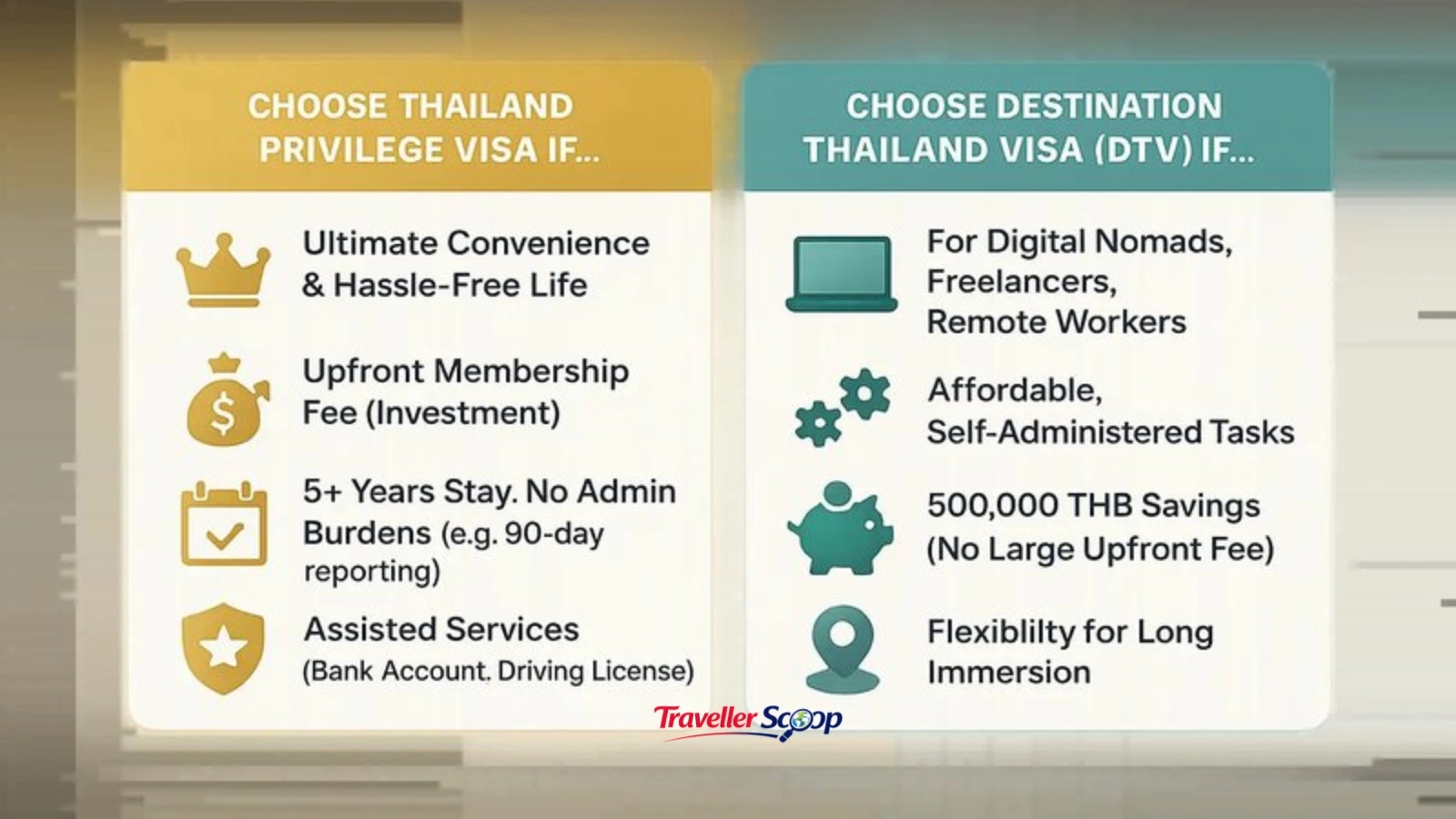
4. Destination Thailand Visa (DTV): For Remote Workers and Long Stays
If you’re planning a workation or a longer stay, the DTV is worth knowing about even though it won’t apply to a standard holiday.
- Valid for 5 years, with each visit allowed up to 180 days
- Designed for remote workers, freelancers, and long-term visitors
- Requires proof of remote income or a qualifying activity in Thailand
- Fees and exact terms should be checked on the official Thai MFA page before applying, since they’ve changed more than once this year
Documents Required for Thailand Visa for Indians in 2026
One thing every version of the Thailand Visa Rules for Indians agrees on: documentation checks have gotten stricter, even for the visa-free category. Carry these regardless of your entry type:
- Passport valid for at least 6 months from your date of travel
- Confirmed return or onward flight ticket
- Proof of accommodation (hotel booking or host details)
- Proof of funds generally around 10,000 THB per person or 20,000 THB per family
- Completed TDAC QR code
- Passport-size photograph (only needed if applying for a VoA or e-Visa)
Immigration officers have been asking for these more consistently since mid-2026, so don’t assume you’ll breeze through just because you’re visa-exempt.
Why Did Thailand Almost Scrap Visa-Free Entry for Indians?
This context helps explain why the Thailand Visa Rules for Indians kept changing this year. Thai authorities raised concerns through late 2025 and early 2026 about overstays, misuse of tourist entries for informal business activity, and pressure on immigration infrastructure at major airports.
The initial response was the broader May 2026 policy that would have moved 93 countries, India included, into stricter categories.
But the economics didn’t work out. India is one of Thailand’s largest inbound tourism markets, trailing only China and Malaysia. When the proposal caused a visible dip in Indian arrivals, even before it was implemented, the Thai government walked it back within two months.
That’s a fairly rare reversal, and it tells you how much Thailand’s tourism economy depends on Indian travelers specifically.
1. Rising Concerns Over Tourist Visa Misuse
Throughout late 2025 and early 2026, Thai immigration authorities reported an increase in cases where visitors entered the country on tourist visas but stayed longer than permitted or engaged in activities that were not allowed under a tourist status.
Some of the common concerns included:
- Visitors overstaying their permitted stay.
- People using tourist entries for informal work or business activities.
- Repeat short-term entries that effectively allowed long-term stays without the appropriate visa.
- Increased pressure on immigration officers to monitor compliance.
These issues prompted authorities to review existing visa policies for several nationalities, including India.
2. Pressure on Thailand's Immigration Infrastructure
Thailand welcomed millions of international visitors after tourism rebounded, leading to heavy passenger traffic at major international airports.
Officials cited increasing operational challenges at key gateways such as:
- Bangkok’s Suvarnabhumi Airport
- Don Mueang International Airport
- Phuket International Airport
- Chiang Mai International Airport
Long immigration queues, higher document verification workloads, and a growing number of overstays encouraged the government to consider tightening entry requirements.
3. The Proposed Policy Change in May 2026
In May 2026, Thai authorities proposed a significant revision to their visa policy that would have affected travelers from 93 countries, including India.
The proposal aimed to:
- Reduce the length of visa-free stays.
- Strengthen immigration screening.
- Improve monitoring of foreign visitors.
- Prevent misuse of tourist privileges.
The announcement generated widespread attention among travel agencies, airlines, and frequent travelers because it represented one of the biggest proposed visa policy changes in recent years.
4. Why the Government Reversed Course
Although the proposal was intended to strengthen immigration controls, it quickly revealed an unintended consequence.
Travel companies and airlines began reporting softer demand from Indian travelers, with many postponing trips while waiting for clarity on the new rules. Even before the policy was fully implemented, booking patterns indicated that uncertainty was affecting travel decisions.
Recognizing the potential economic impact, the Thai government reconsidered its approach and softened several of the proposed measures within a matter of weeks.
5. India's Importance to Thailand's Tourism Industry
One of the biggest reasons behind the policy adjustment is India’s growing role in Thailand’s tourism economy.
Indian travelers are among the country’s largest international visitor groups, ranking just behind China and Malaysia in terms of arrivals. Every year, millions of Indians visit Thailand for:
- Family holidays
- Honeymoons
- Shopping trips
- Beach vacations
- Business travel
- Medical tourism
- Destination weddings
Indian visitors also contribute significantly to hotels, restaurants, airlines, local transportation, attractions, and retail businesses across popular destinations such as Bangkok, Phuket, Pattaya, Krabi, and Chiang Mai.
How the New Thailand Visa Rules for Indians Affect Popular Trips
If you’re planning any of the usual circuits, here’s how the current rules play out in practice:
- Bangkok + Pattaya (5–7 days): Fully covered under visa-free entry. Just complete the TDAC.
- Phuket or Krabi beach holiday (7–10 days): No visa needed, well within the 30-day window.
- Bangkok + Chiang Mai + Islands (20–25 days): Still fits under visa-free entry, but cutting it close, plan your exit date carefully.
- Extended trip or workation (30+ days): You’ll need either the Tourist e-Visa or the DTV, depending on your purpose.
Practical Tips Before You Book
A few things I’d genuinely tell a friend before they fly out under the new Thailand Visa Rules for Indians:
- Don’t rely on old blog posts (including ones from earlier this year), this policy changed twice in three months.
- Fill your TDAC form only through Thailand’s official immigration site, never a third-party link that asks for payment.
- If your itinerary is close to the 30-day mark, build in a buffer day rather than cutting it exact.
- Keep both digital and printed copies of your hotel booking and return ticket, some counters still ask for printouts.
- If you’re unsure which category applies to your trip length, check it against an updated visa requirement checker before booking flights.
Conclusion
If there’s one thing to take away from this year’s back-and-forth, it’s that the Thailand Visa Rules for Indians are more traveler-friendly than the headlines made them sound. Yes, the stay duration dropped from 60 to 30 days, and yes, there’s a new mandatory digital form to fill out, but the core promise of visa-free travel for Indians is still intact as of August 2026.
My advice: book your trip, fill your TDAC a day before you fly, keep your documents in order, and don’t let outdated articles about scrapped visa-free entry stop you from planning that Thailand holiday.
Before you lock in your dates, it’s worth running your exact itinerary through a visa requirement checker and comparing costs with our travel budget calculator so nothing catches you off guard at the airport.
For more on planning your trip, check out our full Thailand destination guides, browse other international travel guides, or explore our complete destination guides section for more Southeast Asia itineraries.
FAQs
How much does the Thailand e-Visa cost for Indians?
The single-entry Tourist e-Visa currently costs approximately ₹3,000, with processing taking 5 to 15 working days.
Is Thailand visa-free for Indians in 2026?
Yes. As of the July 14, 2026 update, Indian passport holders can enter Thailand visa-free for tourism, though the maximum stay has been reduced from 60 days to 30 days.
What is the Thailand Digital Arrival Card (TDAC), and is it mandatory?
The TDAC is a free online pre-arrival form required for every traveler entering Thailand, including Indians under visa-free entry. It must be completed within 72 hours of arrival.
Do Indians need a visa for a 15-day Thailand trip?
No. A 15-day trip comfortably fits within the current 30-day visa-free window, so no advance visa is required.
What if I want to stay in Thailand for more than 30 days?
You'll need to apply for a Tourist e-Visa (valid up to 60 days) before departure, or a Destination Thailand Visa (DTV) if you're working remotely or planning a longer stay of up to 180 days.

Khushi Vaid
Senior Travel EditorI’m Khushi Vaid, a travel writer with over 2 years of experience creating destination guides, travel tips, and travel planning content. At Traveller Scoop, I write about destinations, travel trends, and practical advice to help readers explore the world with confidence.