
IndiGo vs Alliance Air: Which Airline Is Better for Regional Flights?
IndiGo vs Alliance Air is a question I get asked almost every week by readers planning trips to smaller Indian cities, and honestly, I used to assume the answer was obvious until I actually sat down and compared both airlines route by route.I fly out of tier-2 airports more often than most travel writers admit, […]

IndiGo vs Alliance Air is a question I get asked almost every week by readers planning trips to smaller Indian cities, and honestly, I used to assume the answer was obvious until I actually sat down and compared both airlines route by route.
I fly out of tier-2 airports more often than most travel writers admit, and the difference between IndiGo and Alliance Air on a regional sector isn’t always what you’d expect from their brand image alone.
IndiGo is the airline everyone knows for its on-time reputation and huge Airbus fleet, while Alliance Air is the quieter, government-owned carrier that actually built its entire business around reaching places IndiGo’s mainline jets simply cannot land.
So when someone asks me IndiGo vs Alliance Air for a flight to somewhere like Tezu, Pasighat, Kadapa, or Port Blair’s inner islands, I don’t answer from memory anymore; I check the current DGCA numbers, the fleet data, and the fare patterns first, because this comparison changes almost every year as both airlines expand their UDAN networks.
This is exactly what I did before writing this guide.
I pulled 2026 fleet figures, the latest DGCA on-time performance reports, and route data for both carriers so that this IndiGo vs Alliance Air breakdown is based on real numbers, not just brand perception.
If you’re trying to decide which airline to book for your next regional trip in India, here’s everything I found, laid out the way I’d explain it to a friend.
Who Are IndiGo and Alliance Air? A Quick Introduction
Before comparing IndiGo vs Alliance Air on the details, it helps to know what each airline actually is, because they aren’t really competing in the same category.
IndiGo is India’s largest airline by market share, holding roughly 64–66% of the domestic market through 2026. It’s a private, low-cost carrier with a fleet of close to 420 aircraft, dominated by Airbus A320neo and A321neo jets, but it also runs a dedicated regional operation using around 46–50 ATR 72-600 turboprops.
IndiGo entered the regional segment in 2017 specifically to serve UDAN routes and smaller airports its Airbus fleet can’t use.
Alliance Air is a fully government-owned regional carrier, founded in 1996 as a subsidiary of the old Indian Airlines. Since 2022 it has operated independently of Air India under the Ministry of Civil Aviation.
Its entire fleet is ATR 72 turboprops (plus a couple of Dornier 228s for island hopping), and its business exists almost solely to serve UDAN and remote-connectivity routes, places like Tezu, Pasighat, Rupsi, Lilabari, Dimapur, and the Andaman islands.
So right away, this isn’t IndiGo vs Alliance Air in the sense of two similar airlines fighting for the same customer. It’s a large low-cost carrier’s regional arm versus a specialized government carrier built entirely for regional connectivity.
Fleet and Aircraft: IndiGo ATR 72 Regional Routes vs Alliance Air's Turboprops
If you care about which plane you’ll actually sit in, this is where IndiGo vs Alliance Air gets interesting.
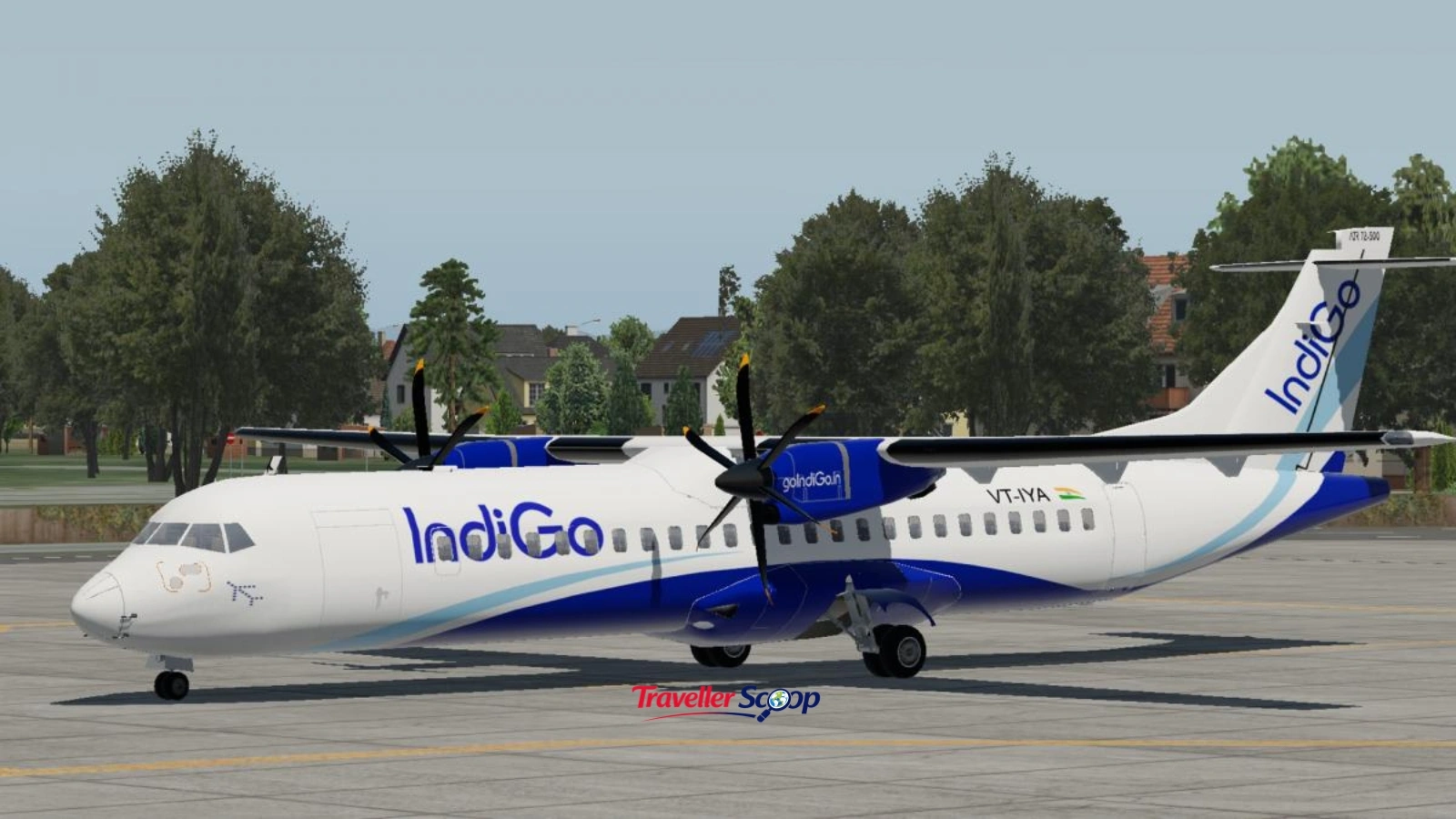
- IndiGo ATR 72 regional routes use the ATR 72-600, configured in a high-density 78-seat layout, with a range of about 1,370 km. IndiGo currently flies roughly 276 daily ATR flights across 52+ regional destinations.
- Alliance Air also flies the ATR 72, typically in a 70-seat configuration, across a network of 58 destinations with 100+ daily flights, and it’s the only scheduled operator on a few genuinely remote routes, like Port Blair to Diglipur on the Dornier 228.
In terms of raw aircraft, both airlines fly essentially the same ATR 72 turboprop, so the plane itself isn’t the deciding factor.
What differs is the network it’s deployed on, IndiGo’s ATRs often connect mid-size cities to its main Airbus hubs, while Alliance Air’s ATRs are frequently the only civilian flight option a small town has.
If you’re weighing regional flight options as part of a bigger trip, our Travel Tips section has more practical booking advice worth a read
Route Network: Which Airline Reaches More Regional Destinations?
This is the part where I think most people get IndiGo vs Alliance Air backwards, assuming the bigger airline automatically wins.
IndiGo’s total network crosses 100+ destinations, but a large majority of that is Airbus-served metro and international routes, the ATR-only regional network sits at 52+ destinations.
Alliance Air, despite being a fraction of IndiGo’s size overall, actually serves more pure regional airports at 58+, concentrated heavily in the Northeast, Andaman & Nicobar Islands, and other UDAN-only sectors.
Under the UDAN scheme specifically, government data shows Alliance Air has historically received the largest share of Viability Gap Funding among all carriers, around ₹3,502 crore compared to IndiGo’s ₹638 crore, reflecting how much more of Alliance Air’s business model depends on subsidised, hard-to-reach routes.
If your destination is a well-known tier-2 city like Kolhapur, Jabalpur, or Agra, IndiGo probably flies there. If it’s somewhere genuinely remote, like an interior Northeast town or an island strip, Alliance Air is very often your only scheduled option.
If you’re building out a full trip and want to compare regional fares against your overall trip cost, our travel budget calculator is a quick way to see how flight costs stack up against your daily spend.
On-Time Performance: IndiGo vs Alliance Air Punctuality (2026 DGCA Data)
Punctuality is usually the single biggest factor readers ask about, so here’s the actual 2026 DGCA data for IndiGo vs Alliance Air:
| Month (2026) | IndiGo OTP | Alliance Air OTP |
|---|---|---|
| March | — | 62.9% |
| May | 82.8% | 70.5% |
| June | 89.4% | 74.7% |
IndiGo has led India’s on-time performance rankings for most of 2026, consistently topping the list across the country’s 10 busiest airports. Alliance Air’s OTP has been climbing too, rising from 62.9% in March to 74.7% by June, but it still trails IndiGo by roughly 15 percentage points on average.
This gap is largely explained by Alliance Air’s route profile, flying into weather-sensitive, short-runway Northeast and island airports naturally causes more delays than IndiGo’s metro-heavy schedule.
For flight delays beyond two hours, IndiGo also reported the lowest rate industry-wide in June 2026, while Alliance Air sat around 2.78%. If a tight connection matters to your itinerary, this is the number I’d weigh most heavily in the IndiGo vs Alliance Air decision.
Ticket Prices and UDAN Subsidy: Cheap Flights to Tier 2 Cities India
Both airlines participate heavily in UDAN, the government’s regional connectivity scheme that caps fares on subsidized seats to keep short regional sectors affordable. In practice, this means base fares on routes like Delhi–Kadapa or Guwahati–Tezu can be surprisingly low compared to their flight time, because a portion of every UDAN flight’s seats are price-capped by the scheme.
From what I’ve tracked across both airlines:
- Alliance Air fares on pure UDAN routes tend to run lower on average, since a larger share of its network operates under the scheme’s subsidy structure.
- IndiGo fares on ATR routes are usually close to its Airbus short-haul pricing, occasionally higher than Alliance Air on the same UDAN sector once the subsidized inventory sells out.
The catch with both airlines: UDAN base fares are typically non-refundable or carry steep change fees, and baggage allowances on ATR flights are smaller than on full-size jets, so always check the fare rules before assuming “cheap flights to tier 2 cities India” means flexible tickets too.
For more ways to stretch your travel budget, our Budget Travel category has plenty of India-specific saving tips.
If you’re planning a longer regional itinerary and want to see how flight costs compare across your route options, check out our Compare Destinations tool for a side-by-side cost breakdown.
In-Flight Experience and Comfort
Neither airline positions its regional ATR service as a premium product, and IndiGo vs Alliance Air is a wash here in most respects:
- Both fly single-class, no-frills ATR 72 cabins with no in-flight entertainment or Wi-Fi.
- Snacks and beverages are for purchase on both airlines rather than complimentary.
- IndiGo’s ATR cabins generally feel slightly newer on average, since its ATR fleet was inducted more recently (from 2017 onward) compared to some of Alliance Air’s older aircraft.
- Alliance Air’s Dornier 228 flights (used on a few island routes) are noticeably more basic, given the aircraft’s smaller size and older design.
For most travellers, the actual in-cabin experience won’t be the deciding factor, the route network and schedule reliability matter far more.
IndiGo vs Alliance Air: Which Should You Choose for Regional Flights?
Here’s how I’d sum up the best airline for regional flights in India, based on everything above:
- Choose IndiGo if your route is served by both airlines, punctuality is a priority, or you’re connecting a regional leg with an international or metro IndiGo flight on the same PNR.
- Choose Alliance Air if you’re travelling to a genuinely remote UDAN destination, Northeast India, the Andaman & Nicobar Islands, or a small town that only Alliance Air serves, because for these routes, it’s often not really a competition at all; it’s your only scheduled option.
If you’re mapping out a broader regional trip and want inspiration for tier-2 and tier-3 destinations worth visiting, browse more guides in our Destination Guides section on the blog.
Conclusion
After going through the 2026 fleet, route, and DGCA punctuality data side by side, my honest takeaway on IndiGo vs Alliance Air is that this isn’t really a head-to-head rivalry; it’s two airlines built for slightly different jobs.
IndiGo wins on reliability and network size when both carriers serve the same city. Alliance Air wins simply by existing on routes IndiGo never will. My practical advice: check both airlines for your specific route before booking, because on regional sectors, availability and UDAN fare caps often matter more than brand loyalty.
If you’re planning a trip to a smaller Indian city soon, I’d start by checking which of the two actually flies there, that answer alone usually settles the debate.
FAQs
Does Alliance Air have Wi-Fi or in-flight entertainment?
No, both IndiGo's ATR flights and all Alliance Air flights are single-class with no Wi-Fi or in-flight entertainment; snacks are available for purchase.
Is IndiGo better than Alliance Air for regional flights?
IndiGo generally has better on-time performance and a newer ATR fleet, but Alliance Air covers more remote UDAN destinations that IndiGo doesn't serve at all, especially in the Northeast and Andaman Islands.
Do IndiGo and Alliance Air fly the same aircraft on regional routes?
Yes, both airlines primarily operate the ATR 72 turboprop on regional sectors, though Alliance Air also uses smaller Dornier 228 aircraft on a few island routes.
Which airline is cheaper for tier-2 city flights in India?
Alliance Air fares tend to be lower on average on pure UDAN routes since more of its network runs under the government's fare-capped scheme, but this varies route by route.
Is Alliance Air government-owned?
Yes, Alliance Air has been an independent, fully government-owned entity under the Ministry of Civil Aviation since 2022, after being separated from Air India.

Khushi Vaid
Senior Travel EditorI’m Khushi Vaid, a travel writer with over 2 years of experience creating destination guides, travel tips, and travel planning content. At Traveller Scoop, I write about destinations, travel trends, and practical advice to help readers explore the world with confidence.