
5 Breathtaking Wildlife Encounters in the World: Including One Incredible Experience in India
Wildlife Encounters in the World are not something you plan once and forget, they’re the kind of memories that quietly rearrange your priorities. I’ve spent the last few years chasing these moments across three continents, and I can tell you that no camera, no documentary, no Instagram reel comes close to standing three metres from […]
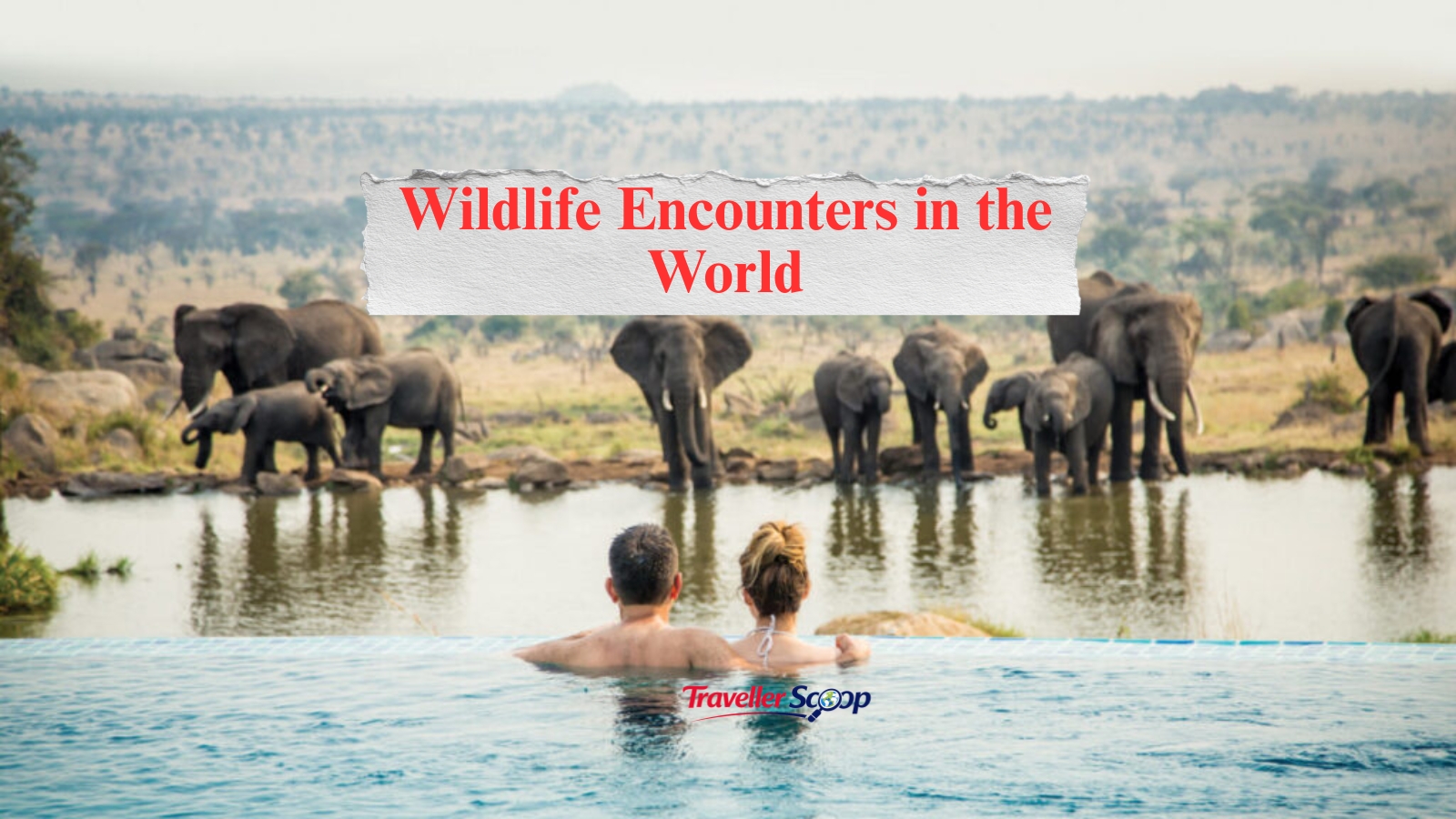
Wildlife Encounters in the World are not something you plan once and forget, they’re the kind of memories that quietly rearrange your priorities. I’ve spent the last few years chasing these moments across three continents, and I can tell you that no camera, no documentary, no Instagram reel comes close to standing three metres from a wild tiger or watching a million hooves thunder across a golden plain.
This article is my first-hand account of the five Wildlife Encounters in the World that changed how I travel, including one deeply personal experience right here in India that I still think about weekly.
If you’re searching for the best wildlife safari destinations in the world, or you simply want unique animal encounters around the world that aren’t recycled from every other travel blog, you’re in the right place.
I’m going to walk you through real numbers, real costs, and real logistics, not just pretty descriptions, because that’s what actually helps you plan a trip.
Over the next 2,000-odd words, I’ll cover exactly which parks to book, when to go, what it costs in rupees and dollars, and how to see wildlife in its natural habitat without disturbing it.
I’ve also linked out to a few of my own India travel guides where the itineraries overlap, so you can build a full trip around these Wildlife Encounters in the World rather than treating this as a one-off bucket-list item.
What Actually Makes a Wildlife Encounter Unforgettable?
Before I list the five destinations, I want to answer a question I get asked constantly: what separates a forgettable “we saw some deer” safari from one of the truly best places to see wildlife in its natural habitat?
In my experience, it comes down to three numeric factors, animal density per square kilometre, the conservation success rate of the region, and how much human interference is allowed near the animals.
Every destination below scores high on all three, which is exactly why they made this list of Wildlife Encounters in the World over the hundreds of other parks I’ve researched or visited.
5 Breathtaking Wildlife Encounters in the World
From getting up close with majestic animals to witnessing rare moments in the wild, these five breathtaking wildlife encounters offer unforgettable experiences for every nature and adventure lover.
1. Tiger Safari in Ranthambore & Bandhavgarh: My Wildlife Sanctuary Experience in India for Tiger Safari
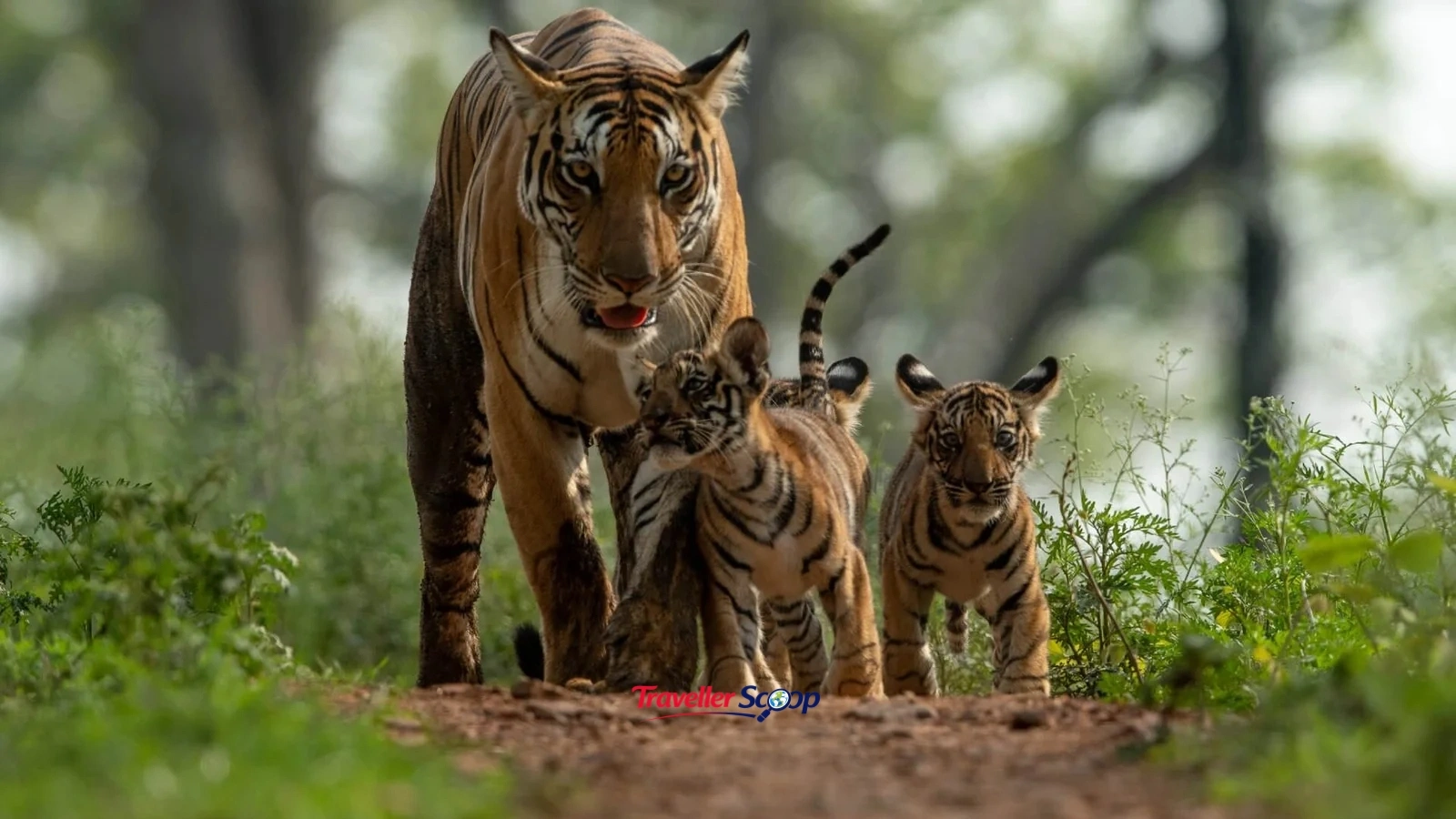
This is the one I promised you, my most incredible experience in India, and honestly, one of the most incredible experiences of my life. I did back-to-back safaris in Ranthambore National Park (Rajasthan) and Bandhavgarh National Park (Madhya Pradesh), and both are strong contenders for the best wildlife sanctuaries in India for tiger safari.
Here’s why the numbers matter: India’s 2022 tiger census recorded a minimum of 3,167 wild tigers, with an average estimate of 3,682, up from 2,967 in 2018, a rise of roughly 6.7% in just four years.
Madhya Pradesh alone (where Bandhavgarh sits) is home to 785 tigers, the highest of any Indian state, while Bandhavgarh specifically has one of the highest tiger densities of any reserve on earth.
India now holds more than 70% of the world’s entire wild tiger population, which is a staggering statistic when you actually see it reflected in how often you spot a tiger on a single safari drive.
My first sighting happened on day two, at around 7:40 AM, when our guide cut the jeep engine and we sat in complete silence for eleven minutes before a tigress named Arrowhead walked out of the grass, twenty feet from our vehicle.
I remember shaking. Genuinely shaking. That single moment is why I keep coming back to Wildlife Encounters in the World as a theme for my writing, nothing manufactured can replicate that adrenaline.
Practical numbers you’ll actually need:
- Ranthambore safari permit: approx ₹1,000–₹1,500 (Indian nationals) / ₹4,000–₹5,500 (foreign nationals) per jeep safari
- Bandhavgarh safari permit: approx ₹2,500–₹3,500 per jeep, shared among up to 6 people
- Best months: October to June (park closes for monsoon, July–September)
- Average tiger sighting probability in Bandhavgarh core zone: roughly 60–70% per safari, among the highest in India
- Ideal trip length: 3 nights, minimum 4 safari drives, to meaningfully raise your odds
If a full Indian wildlife circuit interests you, I’ve also mapped out budget-friendly adventure routes across India in my guide to adventure trips under ₹10,000 for friends, which includes a few wildlife-adjacent stops for travelers who want nature without a luxury price tag.
2. The Great Wildebeest Migration, Serengeti: Maasai Mara, Africa
If Wildlife Encounters in the World had a “greatest hits” reel, the Great Migration would open it. Around 1.5 million wildebeest, alongside roughly 200,000–300,000 zebra and hundreds of thousands of gazelles, move in a continuous 800–1,000 km clockwise loop between Tanzania’s Serengeti and Kenya’s Maasai Mara every single year, chasing rainfall and fresh grass.
I watched a Mara River crossing from a ridge above the water, thousands of wildebeests queuing, hesitating, then surging in at once while crocodiles waited below. Roughly 250,000 wildebeest die annually during the migration from predation, exhaustion, or drowning, which sounds brutal on paper but is precisely the raw, unscripted nature that makes this one of the best wildlife safari destinations in the world rather than a curated zoo experience.
Numbers worth knowing:
- Best river-crossing window: July to September (Mara side), January to March (calving season, southern Serengeti)
- Around 8,000 wildebeest calves are born per day during the February calving peak
- Average safari cost: $250–$600 per person per night depending on camp category
- Serengeti National Park alone covers roughly 14,750 sq km, larger than several small countries
3. Mountain Gorilla Trekking, Volcanoes National Park, Rwanda
This is the encounter that humbled me the most. There are only around 1,063 mountain gorillas left on the entire planet, split between the Virunga Massif (about 604 individuals across Rwanda, Uganda, and DR Congo) and Uganda’s Bwindi Impenetrable Forest (about 459 individuals).
To put that in perspective, in the early 1980s the global population had dropped to fewer than 400, this is one of the few genuine wildlife recovery success stories, and being able to witness it firsthand felt like a privilege rather than a tourist activity.
I trekked for just under two hours through dense bamboo forest in Rwanda before we found a habituated family of twelve gorillas, including a silverback who probably weighed over 180 kg. You’re allowed exactly one hour with the family, timed strictly by rangers, and every second of it felt suspended.
Numbers worth knowing:
- Rwanda gorilla trekking permit: $1,500 per person
- Uganda gorilla trekking permit: $800 per person
- DR Congo gorilla trekking permit: $400 per person (subject to regional stability)
- Minimum trekking age: 15 years
- Group size limit per gorilla family: 8 visitors per day, to minimize stress on the animals
4. Galápagos Islands Wildlife Encounters, Ecuador
The Galápagos is unlike any of the other unique animal encounters around the world on this list because the animals show zero fear of humans you can sit two feet from a sea lion and it won’t move.
There are 12–13 living species of Galápagos giant tortoise, with a combined wild population estimated between 15,000 and 20,000 individuals, recovered from a low of around 3,000 in the 1970s after centuries of hunting by sailors and whalers. Some individual tortoises here are documented to live well past 100 years.
I spent four days island-hopping and, in a single afternoon on Española Island, saw blue-footed boobies mid-mating-dance, marine iguanas piled on volcanic rock, and a pod of Galápagos sea lions basking meters from my snorkel fins.
It’s one of the only ecosystems on earth where 56 endemic species exist in one archipelago, making it an unmatched destination if you want the best places to see wildlife in natural habitat without a single fence in sight.
Numbers worth knowing:
- Galápagos National Park entry fee: $200 per foreign adult (as of recent regulations)
- Best months for calmer seas and wildlife activity: June to December
- Number of inhabited islands you can visit independently: 4 (Santa Cruz, San Cristóbal, Isabela, Floreana)
- Average multi-day cruise cost: $2,500–$6,000 per person
5. Polar Bear Watching, Churchill, Manitoba, Canada
Known as the “Polar Bear Capital of the World,” Churchill sits on the migration path of the Western Hudson Bay polar bear population, estimated at 900–1,000 individuals, one of only 19 polar bear populations tracked globally.
Every October and November, hundreds of bears gather near this tiny town of fewer than 900 human residents, waiting for Hudson Bay to freeze so they can resume hunting seals.
Watching a 600-kg male polar bear pad silently across the tundra from inside a heated tundra buggy is a strange mix of awe and vulnerability, you realize very quickly why this is considered one of the best wildlife safari destinations in the world for anyone chasing a genuinely wild, unscripted encounter rather than a curated one.
Numbers worth knowing:
- Peak viewing window: late October to mid-November
- Average tundra buggy tour cost: $400–$700 per day
- Churchill’s human population: under 900 (fewer than the polar bears that visit annually)
- Bonus: 3,000+ beluga whales gather in the Churchill River estuary from July to August
How to Plan Your Own Wildlife Encounters in the World
A few things I wish someone had told me before my first trip:
- Book safaris/permits 3–6 months ahead for India, Rwanda, and Galápagos, permit numbers are capped by law to protect the animals.
- Budget for multiple attempts, not one. Tiger and gorilla sightings aren’t guaranteed on a single drive or trek; 3–4 attempts dramatically raise your odds.
- Travel in shoulder season where possible, you get better light, thinner crowds, and often lower permit costs.
- Hire local, licensed naturalists. Every single one of my best sightings across all five destinations came because a local guide read animal behavior I would have completely missed.
- Respect the distance rules. Every park above enforces minimum distances for a reason, the animals’ welfare always comes before your photo.
If you’re building a broader nature-heavy itinerary, my round-up of Florida’s small beach towns and affordable Dolomites alternatives both include coastal and alpine wildlife-spotting stops that pair well with a bigger wildlife-focused trip. You can also browse our full Wildlife-tagged destination guides for more curated options by country and budget
Conclusion
Wildlife Encounters in the World aren’t ranked by luxury or Instagram appeal, they’re ranked by how much they leave you changed once the jeep engine starts again and you drive away.
From watching a tigress emerge from the grass in Bandhavgarh to standing a foot from a gorilla silverback in Rwanda, each of these five destinations offers something no man-made attraction ever could: proof that the wild world is still out there, still thriving in pockets, and still worth protecting.
If I had to recommend just one starting point for your own list of Wildlife Encounters in the World, it would be India, accessible, affordable, and home to some of the best wildlife sanctuaries in India for tiger safaris anywhere on the planet.
Wherever you start, go slow, hire local guides, and give the animals the space and respect they’ve earned by simply surviving this long.
FAQs
Can you see the Great Migration river crossing every time you visit?
No, river crossings depend on rainfall and herd movement, so while July–September is the best window, no operator can guarantee a crossing on any single day.
Which country has the most Wildlife Encounters in the World for beginners?
India is one of the easiest starting points it's affordable, has excellent infrastructure around parks like Ranthambore and Bandhavgarh, and holds over 70% of the world's wild tiger population, so sighting odds are genuinely high even on a first trip.
What is the best time of year for wildlife safaris in India?
October through June is ideal, with March to May often producing the highest tiger sighting rates because animals gather near shrinking waterholes in the summer heat.
How much does a wildlife safari in India cost on average?
A budget safari in a park like Bandhavgarh or Ranthambore can cost between ₹2,500–₹5,000 per jeep for Indian nationals, making it one of the most affordable of the best places to see wildlife in natural habitat globally.
Is gorilla trekking in Rwanda safe for beginners?
Yes. Treks are led by armed rangers, groups are capped at 8 visitors per gorilla family, and moderate fitness is enough for most trails, though some treks do involve steep, muddy terrain.

Khushi Vaid
Senior Travel EditorI’m Khushi Vaid, a travel writer with over 2 years of experience creating destination guides, travel tips, and travel planning content. At Traveller Scoop, I write about destinations, travel trends, and practical advice to help readers explore the world with confidence.