
World’s Most Connected Airports in 2026 Revealed: Amazing Global Hubs, But One Indian Airport Stands Out
World’s Most Connected Airports, that’s the exact phrase every serious flyer, travel planner, and aviation nerd has been typing into Google this week, and honestly, I get why. I’ve spent the last two days going through OAG’s freshly released Megahubs 2026 report, cross-checking numbers, and comparing them with last year’s data, and I can tell […]

World’s Most Connected Airports, that’s the exact phrase every serious flyer, travel planner, and aviation nerd has been typing into Google this week, and honestly, I get why. I’ve spent the last two days going through OAG’s freshly released Megahubs 2026 report, cross-checking numbers, and comparing them with last year’s data, and I can tell you, the shake-up this year is bigger than usual.
For the first time in three years, London Heathrow has lost its crown, a Middle Eastern hub has surged to the top, and an Indian airport has quietly jumped 11 places to enter the global top 30.
If you’re someone who books connecting flights, plans layovers, or just wants to know which airports actually work the best for you as a traveler, this list of the world’s most connected airports is exactly what you need to understand before your next international trip.
I’m writing this as a first-person breakdown, not a copy-paste press release, because I wanted to actually explain why these rankings matter for you as a passenger, not just list numbers.
So let’s get into the full World’s Most Connected Airports 2026 ranking, region by region, and then zoom into the Indian airport that’s making headlines
What Is the OAG Megahubs Index and Why Does It Actually Matter?
Before jumping into rankings, it’s worth understanding what “connectivity” even means here, because it’s not the same as “busiest” or “biggest.” OAG, the global aviation data authority, calculates its Megahubs Index by measuring how many potential connections a passenger can make within a six-hour window on the busiest travel day of the year, combined with the total number of destinations served from that airport.
In simple words, it’s not about how many people pass through an airport, it’s about how easily one flight can connect to another.
This is exactly why the World’s Most Connected Airports 2026 list is more useful for travelers than a simple “busiest airport” ranking. If you’re booking a flight with a layover, a highly connected airport means shorter waits, more onward flight options, and fewer chances of getting stranded if your first flight is delayed.
Which Airport Is the World's Most Connected Airport in 2026?
Here’s the biggest surprise of this year’s report: Istanbul Airport (IST) has officially become the world’s most connected airport, dethroning London Heathrow, which had held the top position for three straight years. Istanbul climbed from second place in 2025 to first in 2026, now offering potential connections to 337 destinations worldwide, the highest of any airport globally.
What’s driving this? Turkish Airlines alone accounts for around 80% of Istanbul’s total flight capacity, and the airport itself was designed for future expansion, it’s currently the only airport in Europe capable of running simultaneous operations across three runways.
Istanbul’s geography also helps massively; sitting between Europe, Asia, and the Middle East gives it a natural advantage for connecting flights in every direction.
London Heathrow (LHR) dropped to second place after its potential connections fell by 6% year-on-year, largely because Heathrow’s scheduled capacity to the Middle East dropped by a sharp 25% compared to last year, a direct ripple effect of regional disruptions affecting Gulf airlines.
Amsterdam Schiphol (AMS) held on to third place, recording steady growth in both connections and destinations served.

Which Airports Made the Global Top 10 for Connectivity?
If you’re planning long-haul trips with layovers, these are the hubs worth knowing about. Based on the OAG Megahubs 2026 data, the global top 10 most connected airports are:
- Istanbul Airport (IST): Turkey
- London Heathrow (LHR): UK
- Amsterdam Schiphol (AMS): Netherlands
- Kuala Lumpur International (KUL): Malaysia
- Chicago O’Hare (ORD): USA
- Frankfurt International (FRA): Germany
7–9. A mix of European and Asian megahubs - Atlanta Hartsfield-Jackson (ATL): USA
Chicago O’Hare deserves a special mention here, it jumped from 7th to 5th place, recording 71,497 potential connections across 308 destinations, with United Airlines controlling about 49% of its capacity.
It’s now officially the most connected airport in the Americas, edging out Atlanta, which slipped two spots to 10th.
Notice something? Five of the top 10 world’s most connected airports in 2026 are in Europe, but Asia-Pacific is closing the gap fast, which brings me to the next big story in this report.
How Did Asia-Pacific Airports Perform in the 2026 Rankings?
This year’s report has a clear regional headline: Asia-Pacific is rising, and rising fast. Eight of the top 20 most connected airports globally are now in Asia-Pacific.
Kuala Lumpur International (KUL) remains the region’s top hub, ranking 4th globally with connections to 154 destinations, and it also tops the Low-Cost Carrier (LCC) Megahub rankings with nearly 15,000 possible low-cost connections, largely thanks to AirAsia’s massive route network.
China’s airports also made a strong post-pandemic comeback this year, Shanghai Pudong (PVG) rose from 19th to 14th place, Guangzhou Baiyun (CAN) jumped a huge 17 spots to 19th, and Hong Kong (HKG) returned to the global top 20.
If you’re planning trips through East Asia in the coming year, these hubs are worth watching closely for better connection options.
Meanwhile, capacity disruption in the Middle East, down 5.7% year-on-year, pulled down rankings for both Dubai and Doha, showing just how much regional geopolitics can reshape a “connectivity” list in a single year.
Which Indian Airport Stood Out in the World's Most Connected Airports List?
Now here’s the part I think most Indian readers actually came for. Delhi Airport (Indira Gandhi International Airport) is the standout Indian entry in this year’s World’s Most Connected Airports ranking, and honestly, the jump is impressive.
Delhi climbed 11 places, from 39th in 2025 to 28th globally in 2026, making it the highest-ranked Indian airport by a clear margin.
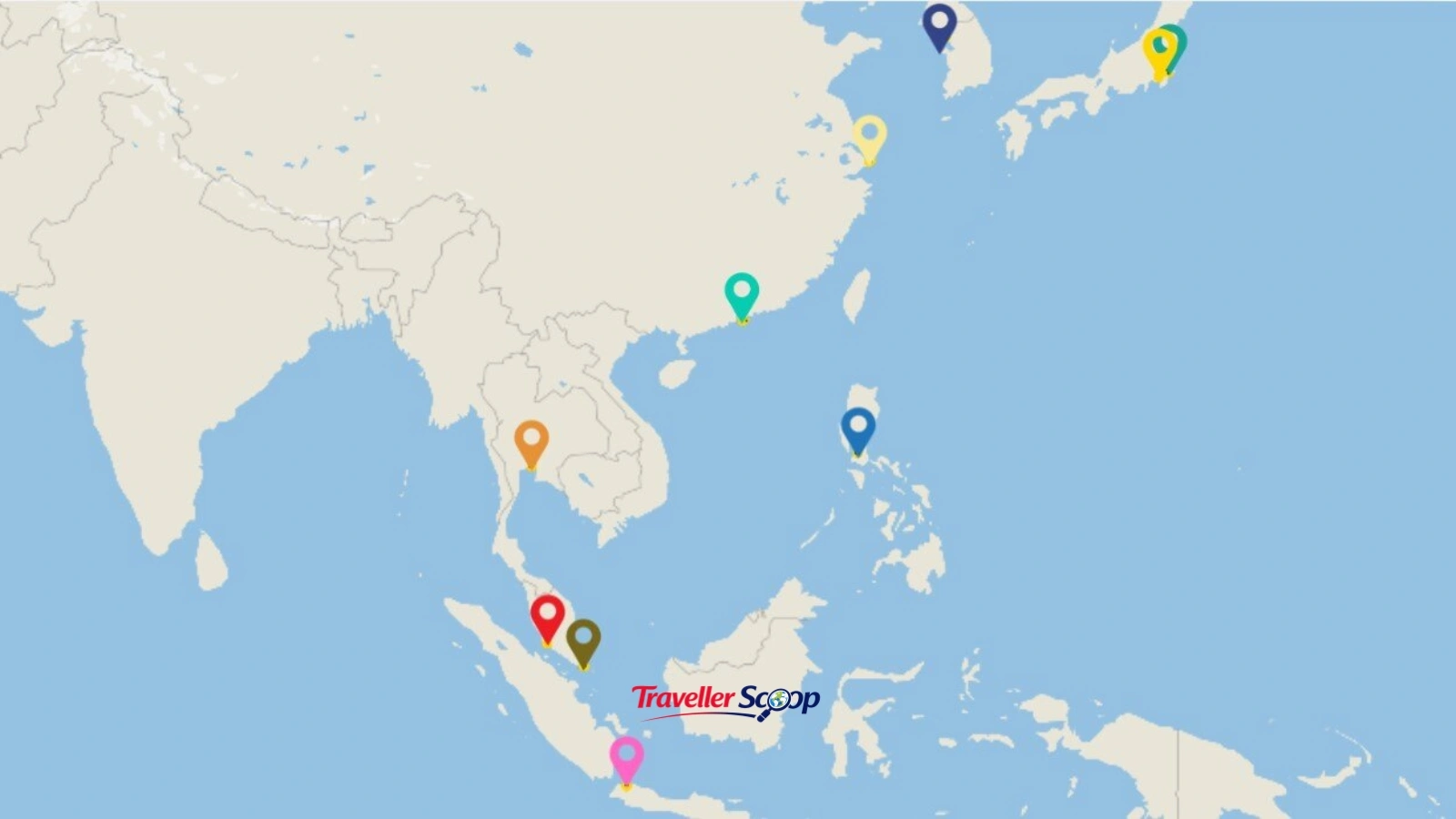
Within the Asia-Pacific region specifically, Delhi ranked 9th, sitting behind established giants like Bangkok, Singapore Changi, Kuala Lumpur, Tokyo Haneda, Seoul Incheon, Shanghai Pudong, Guangzhou, and Hong Kong, but ahead of dozens of other regional airports.
For a hub that’s still scaling its international wide-body network compared to these older aviation giants, cracking the global top 30 is genuinely a big deal.
Why Did Delhi Airport's Ranking Improve So Much in 2026?
If you’re wondering what changed, it’s not just luck, it’s better-aligned flight banks (the scheduling windows that let arriving and departing flights connect smoothly) combined with real capacity growth.
Interestingly, Delhi had actually fallen from 24th in 2024 to 39th in 2025, a slide that OAG attributes more to how connecting flight timings lined up on the specific sample day used for calculation, rather than the airport losing relevance.
This year’s recovery to 28th suggests that scheduling and capacity both improved together.
IndiGo plays a massive role in this story, the airline accounts for roughly 40% of Delhi’s overall flight capacity, connecting the capital to major Indian cities as well as a growing list of international destinations.
This dense domestic network feeds international connections at Delhi in a way few other Indian hubs can currently match.
What Does Delhi's Low-Cost Megahub Ranking Mean for Indian Travellers?
Here’s a stat that doesn’t get enough attention: Delhi Airport ranked 9th globally among Low-Cost Carrier (LCC) Megahubs in 2026. Since low-cost airlines operate a huge share of domestic flights in India, this ranking is directly relevant if you’re a budget traveller connecting between a smaller Indian city, Delhi, and an international destination.
In practical terms, this means:
- More onward-flight options if you’re flying into Delhi from a Tier-2 city
- Better chances of finding budget-friendly connecting fares
- A wider spread of departure time slots, reducing layover stress
If you’re mapping out multi-city India trips, it’s worth checking destination-specific cost comparisons before booking connections through Delhi.

What Happened to Mumbai Airport in the 2026 Rankings?
Not every Indian story is a rise. Mumbai Airport (BOM), which had ranked 44th globally back in 2024, has now fallen completely out of the global top 50 in the 2026 Megahubs Index. This is a significant shift, it means Delhi is currently the only Indian airport doing meaningful work in this particular global ranking.
For Mumbai to regain ground, it would likely need stronger international wide-body scheduling and better-aligned connection banks, similar to what pushed Delhi back up this year.
This is genuinely useful information if you’re comparing hubs for connecting flights within India, right now, Delhi offers a measurably stronger connectivity profile than Mumbai for onward international travel.
How Do Middle East Airports Compare in 2026?
The Middle East had a tougher year overall. Scheduled capacity to the region was down 5.7% year-on-year as of August 2026, and this shows up clearly in the rankings, both Dubai and Doha lost ground compared to 2025.
Heathrow’s own ranking drop was partly a side effect of this, since a 25% cut in its Middle East capacity directly hurt its connection numbers. If you regularly transit through Gulf hubs, it’s worth keeping an eye on how this recovers over the next reporting cycle.
What Can Indian Travellers Actually Learn From These Rankings?
If you’re planning trips in the next year, here’s my honest, practical takeaway from going through this entire report:
- For long layovers with maximum onward options, Istanbul, Heathrow, Amsterdam, and Kuala Lumpur remain your safest bets globally.
- For flying out of India, Delhi is now clearly your best-connected domestic gateway, especially for budget travel via IndiGo’s network.
- For East and Southeast Asia trips, keep an eye on Chinese hubs like Guangzhou and Shanghai Pudong, their rapid climb this year means more route options are opening up.
- For Gulf transits, expect slightly tighter connections this year compared to 2025 due to regional capacity cuts.
Before you lock in a connecting itinerary, it’s genuinely worth running it through a travel budget calculator and checking visa requirements for your layover country, connectivity is only half the planning puzzle.
Conclusion
The World’s Most Connected Airports 2026 report tells a bigger story than just a leaderboard shuffle, it reflects shifting geopolitics, capacity investments, and airline strategy all playing out in real time.
Istanbul’s rise, Heathrow’s Middle East-driven slip, and Asia-Pacific’s growing dominance all matter if you’re planning international trips with connections. But for Indian readers specifically, Delhi’s climb to 28th globally, and Mumbai’s fall out of the top 50, is the number worth remembering the next time you’re booking a connecting flight through India.
As airline networks keep expanding through 2026 and beyond, I’ll be tracking how these rankings shift again next year, especially to see if Mumbai can claw its way back in.
FAQs
What does "connectivity ranking" actually measure?
It measures how many potential flight connections a passenger can make within a six-hour window on the busiest travel day, combined with the total destinations served — not just passenger traffic or airport size.
Which airport is the world's most connected airport in 2026?
Istanbul Airport (IST) is the world's most connected airport in 2026, according to OAG's Megahubs report, offering potential connections to 337 destinations worldwide.
Which is the most connected airport in India in 2026?
Delhi Airport (Indira Gandhi International Airport) is the most connected airport in India in 2026, ranking 28th globally after climbing 11 places from 2025.
Why did London Heathrow lose its top spot in 2026?
Heathrow dropped to second place mainly because its potential connections fell 6% year-on-year, largely due to a 25% cut in its scheduled capacity to the Middle East.
What happened to Mumbai Airport's global ranking in 2026?
Mumbai Airport (BOM) fell out of the global top 50 in the OAG Megahubs 2026 report, down from 44th place in 2024, leaving Delhi as India's sole representative in the ranking.

Khushi Vaid
Senior Travel EditorI’m Khushi Vaid, a travel writer with over 2 years of experience creating destination guides, travel tips, and travel planning content. At Traveller Scoop, I write about destinations, travel trends, and practical advice to help readers explore the world with confidence.