
Treehouse Stays vs Mountain Homestays: Which Offers a Better Nature Holiday?
Treehouse Stays vs Mountain Homestays is a useful comparison for anyone planning a peaceful holiday surrounded by forests, hills, fresh air and beautiful views. But which stay offers better value for money? Should I choose a wooden treehouse hidden among tall trees or a cosy mountain homestay where I can enjoy local food and experience […]
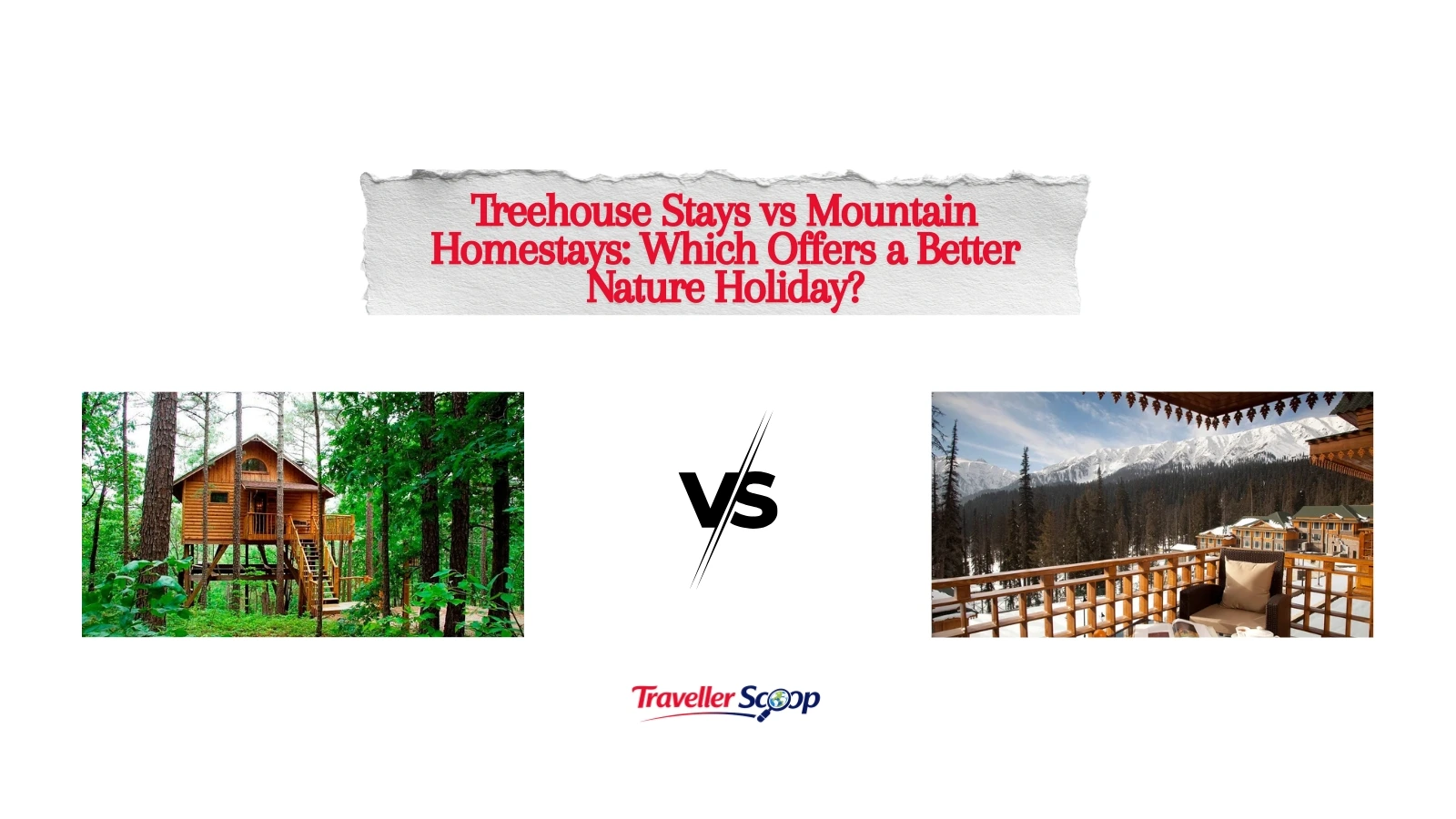
Treehouse Stays vs Mountain Homestays is a useful comparison for anyone planning a peaceful holiday surrounded by forests, hills, fresh air and beautiful views. But which stay offers better value for money? Should I choose a wooden treehouse hidden among tall trees or a cosy mountain homestay where I can enjoy local food and experience village life?
Both options offer something special, but the right choice depends on your budget, travel style, comfort requirements and the kind of nature experience you want. A treehouse can make an ordinary weekend feel different, while a mountain homestay can offer a slower and more personal holiday.
While researching accommodation options in India, I found that the price difference can be significant. In Jibhi, Himachal Pradesh, indicative prices for village homestays are around ₹1,500–₹3,500 per night, while some treehouse stays cost approximately ₹4,000–₹9,000. Actual prices depend on the property, season, facilities and booking dates.
In this guide, I will compare costs, privacy, comfort, safety, food, accessibility, and activities to help you choose the right nature escape without stretching your travel budget.
What Is the Difference Between Treehouse Stays vs Mountain Homestays?
A treehouse stay is accommodation built above ground, around trees or on an elevated platform surrounded by greenery. Depending on the property, it may include a balcony, forest views, a private bathroom, a small seating area or luxury facilities.
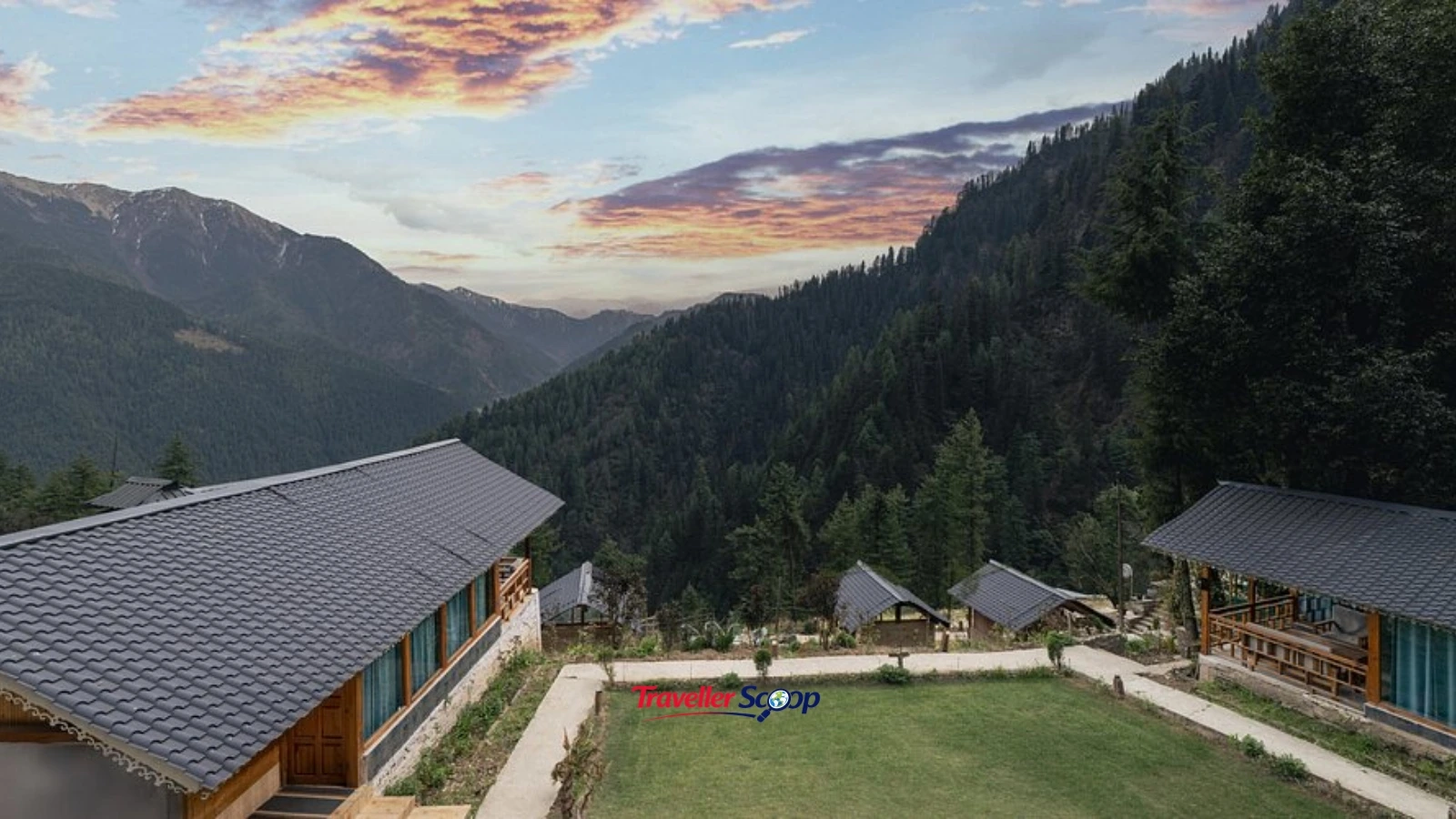
Mountain homestays are usually rooms or cottages in mountain villages, often managed by local families. Guests may enjoy home-cooked meals, conversations with hosts, nearby walking trails and views of the surrounding hills.
The main difference is the experience. Treehouses focus on unusual accommodation and a feeling of being close to the forest. Mountain homestays generally offer a more grounded experience, with opportunities to understand local culture and everyday life.
Neither option guarantees complete isolation or spectacular views. The exact location, surrounding landscape, and property design matter more than the name used in a listing.
Which Is More Affordable: Treehouse Stays or Mountain Homestays?
For travellers who want a nature holiday on a limited budget, accommodation costs can make the biggest difference. In my comparison, mountain homestays are generally the better starting point for budget-conscious travellers, although some basic treehouses can also be affordable.
Here is an indicative comparison for popular mountain destinations. These figures are planning estimates rather than live quotes.
Expense | Mountain Homestay | Treehouse Stay |
|---|---|---|
Room per night | ₹1,500–₹3,500 | ₹4,000–₹9,000 |
Cost for two nights | ₹3,000–₹7,000 | ₹8,000–₹18,000 |
Food for two per day | ₹800–₹1,500 | ₹1,000–₹2,000 |
Local activities for two | ₹500–₹1,500 | ₹500–₹2,000 |
Best suited for | Budget trips and longer stays | Special weekends and unique experiences |
Prices vary by destination and property. Some treehouses cost less than premium homestays, while luxury treehouses can be much more expensive.
Example: What Would a Two-Night Trip Cost?
Suppose two people plan a two-night holiday in a mountain destination and travel by their own car.
In this example, the homestay saves ₹6,600 over two nights. The total does not include every possible expense, such as parking, tolls, shopping or equipment rental.
Expense | Homestay Trip | Treehouse Trip |
|---|---|---|
Accommodation | ₹4,000 | ₹10,000 |
Food | ₹2,400 | ₹3,000 |
Fuel and Local Transport | ₹2,000 | ₹2,000 |
Activities | ₹1,000 | ₹1,000 |
Estimated Total | ₹9,400 | ₹16,000 |
For couples who want an unusual stay for an anniversary or birthday, the extra cost of a treehouse might be worthwhile. However, for a three- or four-night holiday, a mountain homestay may leave more money for sightseeing, local food and experiences.
My suggestion is to compare the complete booking price rather than the advertised room rate. Check taxes, breakfast, dinner, cancellation terms and transport costs before deciding.
Which Offers a Better Nature Experience?
The answer depends on what being close to nature means to you.
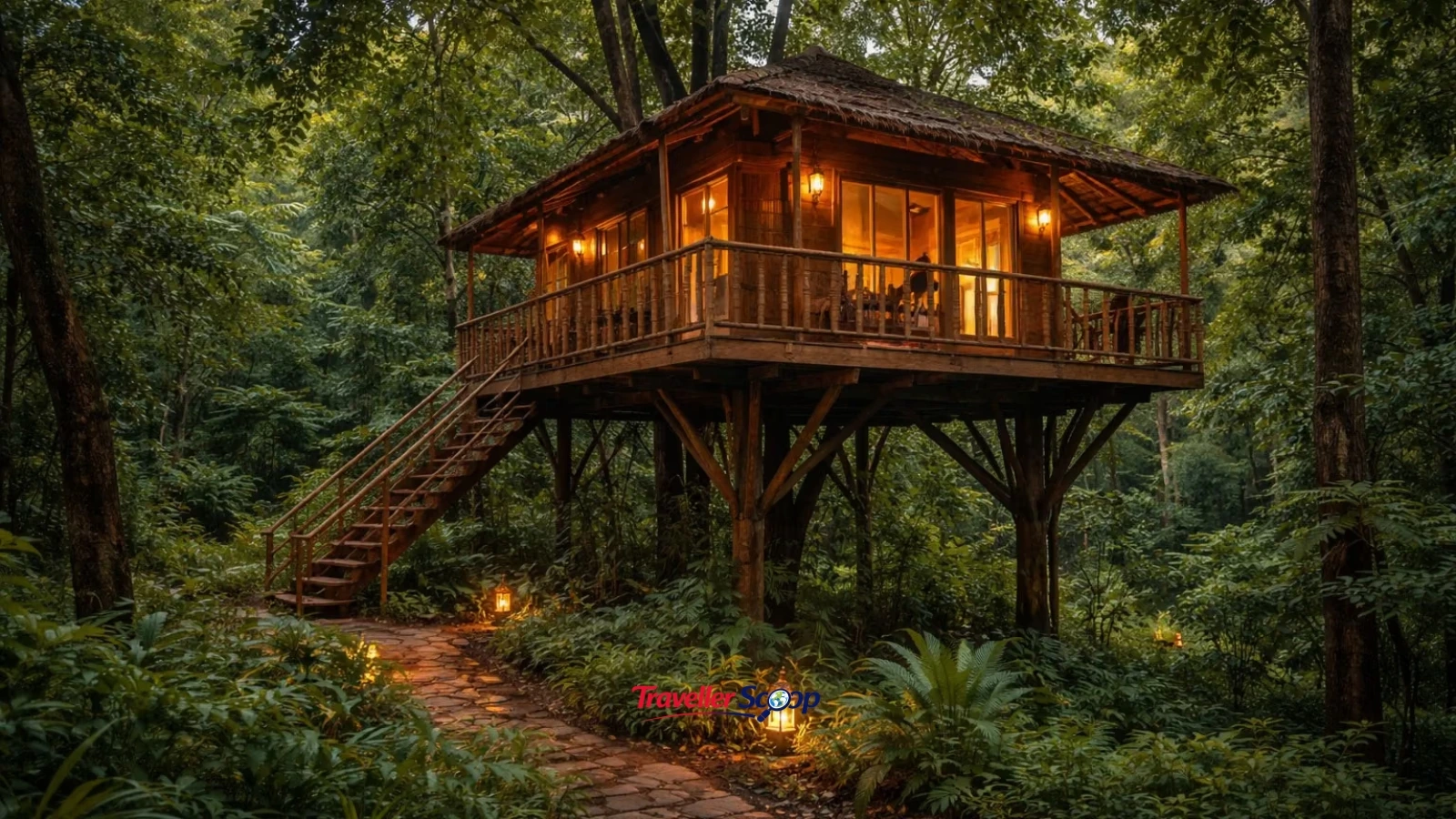
A treehouse may put you among the branches, with birdsong, forest views, and a private balcony. Some properties are surrounded by thick greenery, making them appealing for travelers who want to spend time reading, relaxing, or watching the landscape.
A mountain homestay may offer a different kind of connection. You can wake up to mountain views, take a walk through a nearby village, visit an orchard, or sit outside with a cup of tea. Depending on the location, you may also be close to rivers, waterfalls, and hiking routes.
Here is how I would compare the experiences:
Choose a treehouse if you want an unusual room, elevated views, and a memorable accommodation experience.
Choose a mountain homestay if you prefer village walks, local food, and a slower holiday.
Choose either if your priority is quiet surroundings rather than luxury facilities.
One important detail is the property’s actual setting. A treehouse next to a busy road may be noisier than a homestay tucked away in a quiet village. Before booking, examine recent photographs, read reviews, and check the map.
Which Is Better for Couples, Families, and Solo Travellers?
For couples:-
Treehouses can be a good option for couples looking for privacy, an unusual setting and a special weekend. A private balcony or forest-facing room may make the experience feel more intimate.
Mountain homestays are often better for couples who prefer simple accommodation, scenic walks and local meals. They can also be a sensible choice when the couple wants to spend more on experiences than on the room.
For a romantic holiday, compare privacy, room layout, heating, bathroom facilities and the distance from restaurants before booking.
For families with children:-
Mountain homestays can be more practical for families because many offer ground-level rooms, family-sized accommodation, and access to home-cooked meals.
Treehouses require additional checks. Elevated staircases, balcony railings, and limited space may not suit toddlers or travelers with mobility needs. Ask the property about age restrictions and safety arrangements before confirming the reservation.
For solo travelers:-
A mountain homestay can provide a welcoming base, particularly if the host lives on the property and can share information about local transport and walking routes.
Solo travelers considering a treehouse should check how far the accommodation is from the main road, whether staff are available at night, how mobile connectivity works and how they can get help in an emergency.
For solo women travelers, neither accommodation type is automatically safer. Recent guest reviews, secure access, reliable communication, and the property’s location are more useful indicators than the accommodation label.
Are Treehouse Stays Safer Than Mountain Homestays?
Safety should be part of the booking decision, not something to consider after arrival.
A well-maintained treehouse should have stable stairs, secure railings, adequate lighting, and a clearly explained emergency procedure. Ask whether the structure receives regular inspections and whether access becomes slippery during rain.
For a mountain homestay, check the condition of balconies, staircases, electrical fittings, and heating equipment. If the property is located far from the village center, ask about road access, emergency transport, and mobile network coverage.
Before booking either option, I recommend checking these five things:
- Read recent guest reviews, especially comments about cleanliness and maintenance.
- Confirm the exact location and how to reach the property.
- Ask whether hot water, heating, and meals are included.
- Check cancellation policies and emergency contact arrangements.
- Look at the weather forecast and local travel advisories before departure.
During the monsoon, mountain roads can be affected by landslides, flooding, or road closures. In winter, some properties may have limited heating or difficult road access.
Check conditions for your specific destination rather than assuming every mountain region has the same risks.
Which Gives Better Comfort, Privacy, and Facilities?
Comfort is where the two accommodation types can differ considerably.
A premium treehouse may offer a private balcony, large windows, a modern bathroom and a beautiful view. A basic treehouse, however, may have narrow stairs, limited storage or fewer facilities than a conventional room.
Mountain homestays range from simple village rooms to stylish cottages with private bathrooms, heaters and balconies. Some have shared dining spaces, which can be enjoyable for social travellers but less suitable for guests who want complete privacy.
Before paying extra for a treehouse, check whether the property offers:
An attached bathroom and reliable hot water.
Heating or cooling suitable for the season.
Comfortable bedding and adequate ventilation.
Secure windows, doors and balcony railings.
Wi-Fi or mobile connectivity if required.
Clear information about meals and room service.
If you work remotely, do not assume that a mountain property has reliable internet simply because its listing advertises Wi-Fi. Ask about the actual connection and backup options.
For travellers who value comfort over novelty, a well-reviewed mountain homestay may provide a better overall experience at a lower price.
Where Can You Find These Nature Stays in India?
India has several destinations where travellers can compare treehouses, cottages and mountain homestays.
1. Jibhi and Tirthan Valley, Himachal Pradesh
Jibhi is worth considering for forest surroundings, mountain villages and a quieter pace of travel. The wider Tirthan Valley offers opportunities for nature walks and exploring the local landscape.
Treehouses and wooden cottages can appeal to couples, while village homestays are worth comparing for travellers on a tighter budget.
Indicative accommodation prices in Jibhi vary considerably. Research published for the destination lists village homestays around ₹1,500–₹3,500 per night and treehouses around ₹4,000–₹9,000. Confirm the rate directly for your dates.
2. Mukteshwar, Uttarakhand
Mukteshwar is known for mountain scenery, orchards and views of the Himalayan region. Travellers can compare hillside cottages, homestays and properties marketed as treehouse accommodation.
This destination may suit couples and small groups who want a scenic stay without planning a demanding trekking holiday.
3. Manali, Himachal Pradesh
Manali offers a wide range of accommodation, including conventional hotels, cottages, homestays and some treehouse-style stays.
A homestay outside the busiest areas may suit travellers seeking a quieter experience. A treehouse or forest cottage can be appealing if the property has convenient road access and the facilities you need.
4. Wayanad, Kerala
Wayanad offers a different nature setting, with forests, plantations and green hills. Treehouse-style accommodation is available in the region, alongside homestays and plantation stays.
It is a useful option for travellers who prefer tropical greenery to the colder climate of the Himalayas. Check local weather conditions and property access during the monsoon.
5. Munnar, Kerala
Munnar is known for tea-growing landscapes, misty hills and plantation scenery. Travellers can compare treehouse accommodation with homestays and cottages around the wider region.
If your priority is a tea-estate view, choose based on the property’s location and surroundings rather than its category alone.
How Can You Save Money When Booking a Nature Stay?
A scenic holiday does not need to become an expensive one. A few practical decisions can reduce the total cost without sacrificing the experience.
Book according to your actual travel dates. Compare weekday rates with weekend rates, and check prices for long weekends before making a reservation.
Travel with a realistic budget. Use the Travel Budget Calculator to estimate accommodation, transport, food and activity expenses.
Ask about meal packages. A homestay that includes breakfast or dinner may offer better value than a room with no meals. Compare the complete cost rather than assuming that an included meal automatically makes a property cheaper.
Avoid paying for facilities you will not use. A private hot tub or premium balcony may be attractive, but it may not be worth the extra charge if you plan to spend most of your time exploring.
Check cancellation terms. A cheaper non-refundable booking may become expensive if bad weather or road closures affect your trip.
Stay longer when it makes sense. Ask whether the property offers a discount for three or more nights. A longer stay can also reduce the pressure to fit every activity into a short weekend.
For more destination ideas, explore The World’s Most Popular Cities You Must Visit and use TravellerScoop’s destination guides to plan the rest of your trip.
Conclusion
Treehouse Stays vs Mountain Homestays comes down to the kind of holiday you want. A treehouse is worth considering when the accommodation itself is a major part of the experience. A mountain homestay is often the more practical choice for travellers who want affordable rooms, local food, village experiences and more flexibility with their budget.
If I were planning a short romantic escape and had money set aside for a special stay, I would compare private treehouses first. For a longer holiday focused on peaceful surroundings, local culture and sensible spending, I would start with mountain homestays.
My final advice is simple: compare the location, facilities, safety arrangements and total cost before booking. The best nature holiday is not necessarily the most expensive one. It is the stay that lets you relax, explore your surroundings and return home feeling refreshed.
FAQs
What is the best time for a mountain nature holiday in India?
The best time depends on the destination. Many Himalayan destinations are popular from spring through early summer and again in autumn, while winter suits travellers who are prepared for cold weather. Conditions in Kerala's hill regions differ, so check local weather before booking.
Are treehouse stays more expensive than mountain homestays?
Often, but not always. Some treehouses charge a premium for their design, views and privacy, while basic treehouses may be affordable. Mountain homestays often have lower-priced options, particularly in smaller villages.
Which is better for a budget trip in India?
A mountain homestay is usually a sensible starting point for budget travellers. Look for properties with meals included, convenient transport and access to free or low-cost activities.
Are treehouse stays suitable for families with children?
Some are, but families should check staircases, railings, balcony safety, age restrictions and room layouts. A ground-level homestay may be more practical for families with toddlers.
Which is better for couples seeking privacy?
A private treehouse can offer a memorable setting for couples, but privacy depends on the property's layout and surroundings. A secluded mountain homestay can be equally peaceful.

Khushi Vaid
Senior Travel EditorI’m Khushi Vaid, a travel writer with over 2 years of experience creating destination guides, travel tips, and travel planning content. At Traveller Scoop, I write about destinations, travel trends, and practical advice to help readers explore the world with confidence.