5 Beautiful Places to Visit in Vietnam: Escape the Crowds
Beautiful places to visit in Vietnam are genuinely endless, and yet, most travelers end up at the same four or five spots. I’m Khushi Vaid, and I travel full-time. Vietnam was one of those countries I thought I understood before I even landed.Ha Long Bay screensavers, Hoi An lanterns on Instagram, pho in a steaming […]

Beautiful places to visit in Vietnam are genuinely endless, and yet, most travelers end up at the same four or five spots. I’m Khushi Vaid, and I travel full-time. Vietnam was one of those countries I thought I understood before I even landed.
Ha Long Bay screensavers, Hoi An lanterns on Instagram, pho in a steaming bowl, I had a checklist, just like everyone else.
Then I actually went. And the beautiful places to visit in Vietnam that stayed with me weren’t the ones I’d bookmarked six months earlier. They were the places I stumbled into, the ones that weren’t heaving with selfie sticks and tour buses.
Vietnam welcomed over 18 million international tourists in 2023, and that number is climbing fast. By 2025, popular spots like Ha Long Bay and Hoi An Ancient Town are handling between 3–5 million visitors per year each.
The crowds are real. The noise is real. But what about the hidden gems in Vietnam for tourists who are willing to go just a little off script? Those are absolutely real, too.
In this guide, I’m taking you through 5 beautiful places to visit in Vietnam that most travelers overlook, with everything you need to know: when to go, what it costs, how to get there, and exactly what makes each one worth the detour.
Why You Need to Look Beyond the Tourist Trail in Vietnam ?
Before I get into my favorite beautiful places to visit in Vietnam, let me be honest with you: the famous spots are beautiful. Ha Long Bay is jaw-dropping. Hoi An is magical. But when you’re sharing that magic with 3,000 other tourists at 9 am on a Monday, the experience becomes diluted.
Vietnam is a long, narrow country, about 1,650 km from north to south, and it holds extraordinary diversity within that stretch. The offbeat Vietnam travel destinations for 2026 I’m sharing below are genuinely spectacular, largely uncrowded, and often more affordable than the big names.
Vietnam’s tourism board has been actively promoting Vietnam’s places to visit away from crowds in recent years, and for good reason: the country has so much more to offer than its most Instagrammed corners.
Let me show you what I mean.
5 beautiful places to visit in Vietnam
Discover Vietnam’s hidden beauty with these 5 stunning destinations, where breathtaking landscapes, peaceful surroundings, and authentic local experiences let you escape the crowds.
1. Ninh Binh: Vietnam's Most Underrated Landscape
If Ha Long Bay is Vietnam’s headline act, then Ninh Binh is the underground artist everyone should know about.
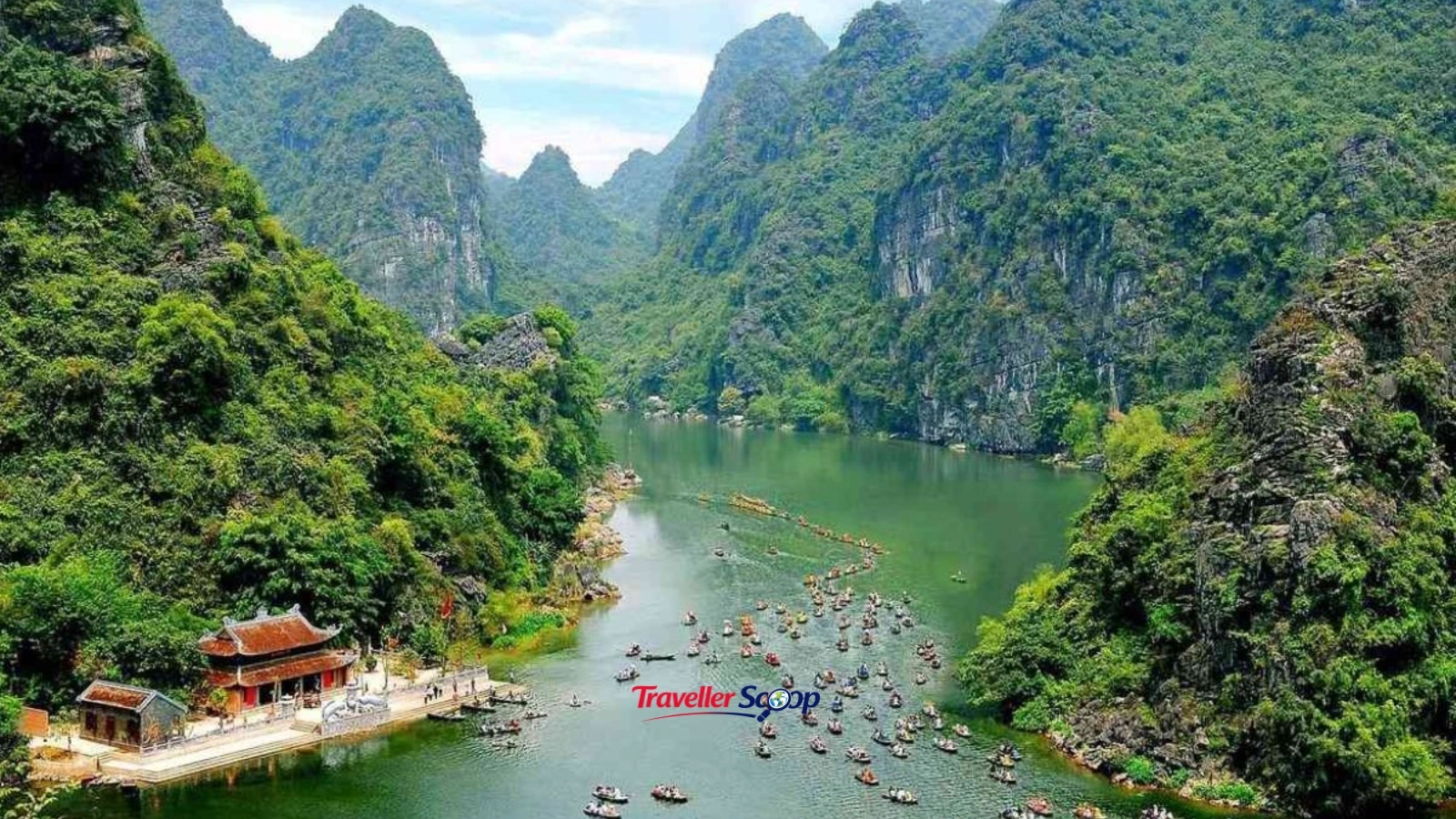
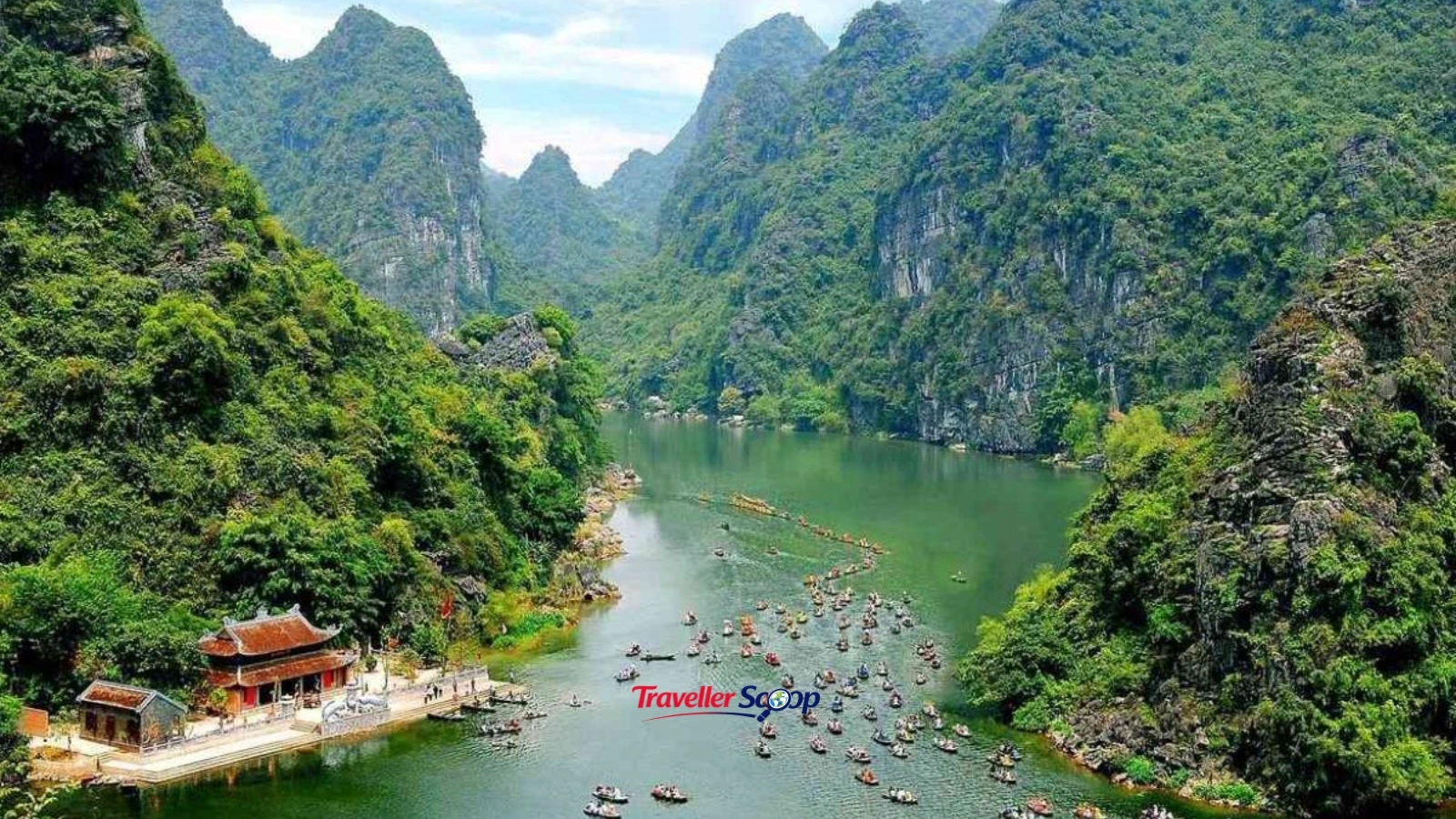
Often called “Ha Long Bay on land,” Ninh Binh sits about 90 km south of Hanoi and offers a landscape that genuinely took my breath away, and I’ve traveled a lot.
The Trang An Landscape Complex here is a UNESCO World Heritage Site, covering around 6,172 hectares of limestone karsts, ancient caves, and flooded valleys.
You get into a small rowboat, and your guide paddles you through tunnel after tunnel of dripping limestone, and because it’s not Ha Long Bay, the water is clear, the boats are few, and the silence is almost eerie.
What makes it one of the best underrated places in Vietnam:
- Bich Dong Pagoda, a 3-tier cave temple built in the 15th century, is free to enter and almost always quiet before 7am
- Hoa Lu, the ancient capital of Vietnam from 968–1010 AD, has two imperial temples that receive a fraction of the visitors that Hue’s Imperial City gets
- The surrounding rice fields are most dramatic from May to June (planting season) and September to October (harvest season), when the paddies glow a vivid gold or jade green
- A full boat trip through Trang An costs approximately VND 200,000–250,000 per person (roughly $8–10 USD)
This is one of those beautiful places to visit in Vietnam where I genuinely had to stop and remind myself that I was still in the same country as the chaotic, neon-lit Ho Chi Minh City.
Getting there:
2-hour bus from Hanoi (around VND 90,000 / $3.50 USD). Day trips are possible, but I recommend staying 2 nights to catch the early morning mist over the fields.
2. Phong Nha-Ke Bang: Caves That Will Rearrange Your Brain
I’ll be direct: the cave systems in Phong Nha-Ke Bang National Park are the most extraordinary natural feature I have ever seen in my life. Full stop.
Son Doong Cave, discovered only in 1991 and first explored in 2009, is the largest cave in the world by volume. It stretches over 9 km in length, reaches heights of 200 meters, and contains its own ecosystem, jungle, and weather system.
You can only visit with a licensed operator, and the 4-day expedition costs around $3,000 USD per person, but for good reason, it’s fully worth it if your budget allows.
But here’s what most travelers don’t know: there are more than 300 caves in this national park, and many of them are accessible, affordable, and completely staggering.
Paradise Cave (Thien Duong), which you can visit for around $12 USD, runs for 31 km and features formations so enormous and delicate they look like frozen music.
This is among the hidden gems in Vietnam for tourists that still hasn’t been discovered by mainstream tour itineraries; most people skip it entirely because it’s a bit out of the way, sitting in Quang Binh province in central Vietnam
Key Facts:
- The national park covers 857 sq km and was designated a UNESCO World Heritage Site in 2003
- Dark Cave offers a combination of zip-lining, kayaking, and mud baths inside a cave — one of the most unique experiences in all of Southeast Asia (entry: approx. $20 USD)
- Best visited February to August when the dry season makes cave exploration safe
- The small town of Phong Nha itself is charmingly unhurried, with guesthouses from as little as $15–20 USD per night
This is one of the offbeat Vietnam travel destinations 2025 that I think is going to become much more well-known in the next 2–3 years. Go now, while it’s still quiet.
Getting there:
Fly to Dong Hoi Airport (served from Hanoi and Ho Chi Minh City), then take a 45-minute taxi or bus to Phong Nha town.
3. Ha Giang: The Road That Changes Everything
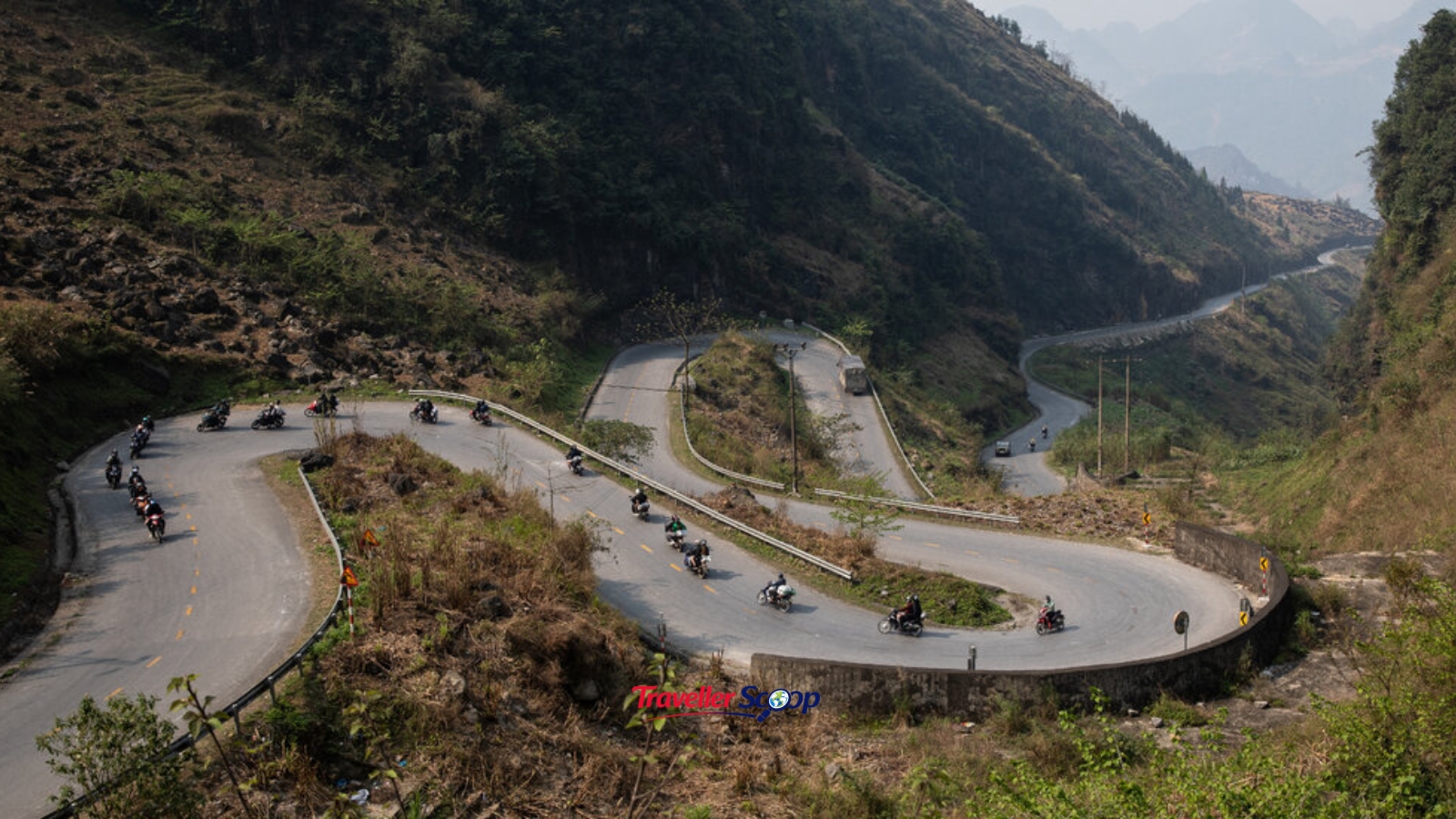
The Ha Giang Loop is a 300-km circuit of mountain roads in northern Vietnam’s Ha Giang province, right on the Chinese border. Doing this loop, whether by motorbike, motorbike taxi (easy rider), or jeep, is one of the most visceral, alive-feeling travel experiences in Southeast Asia.
I went on a rented semi-automatic motorbike. My knuckles were white. My jaw was permanently open.
The landscape is staggering: terraced rice fields carved into mountain slopes, towering limestone peaks, narrow roads that corkscrew around cliff edges, and valleys so deep they look painted.
More importantly, you pass through villages of the Hmong, Tay, and Dao ethnic minority communities, communities with distinct languages, traditions, dress, and festivals that have very little in common with lowland Vietnamese culture.
Why this belongs on any list of beautiful places to visit in Vietnam:
- Ha Giang province is home to the Dong Van Karst Plateau Geopark, recognized by UNESCO as a Global Geopark, covering 2,356 sq km of extraordinary geological formations
- Buckwheat flower season (October–November) transforms hillsides into seas of pink and white blooms; photos don’t do it justice
- Sunday markets at Dong Van, Meo Vac, and Lung Phin draw ethnic minority communities from surrounding villages and are completely authentic, not tourist-facing
- The Ma Pi Leng Pass, a 20-km stretch considered one of the most beautiful mountain passes in Vietnam, rises to an altitude of 1,500 m.
- A full 4-day loop on a motorbike costs approximately $60–80 USD all in (bike rental: ~$10/day, accommodation: ~$7–10/night, food: ~$5/day)
This is the definitive Vietnamese place to visit away from crowds, though it’s becoming more popular; the sheer size and wildness of the landscape mean it never feels overrun.
Getting there:
Night bus from Hanoi to Ha Giang City (8–9 hours, ~$12 USD). The loop starts and ends in Ha Giang city.
4. Quy Nhon: The Beach Town Vietnam Forgot to Advertise
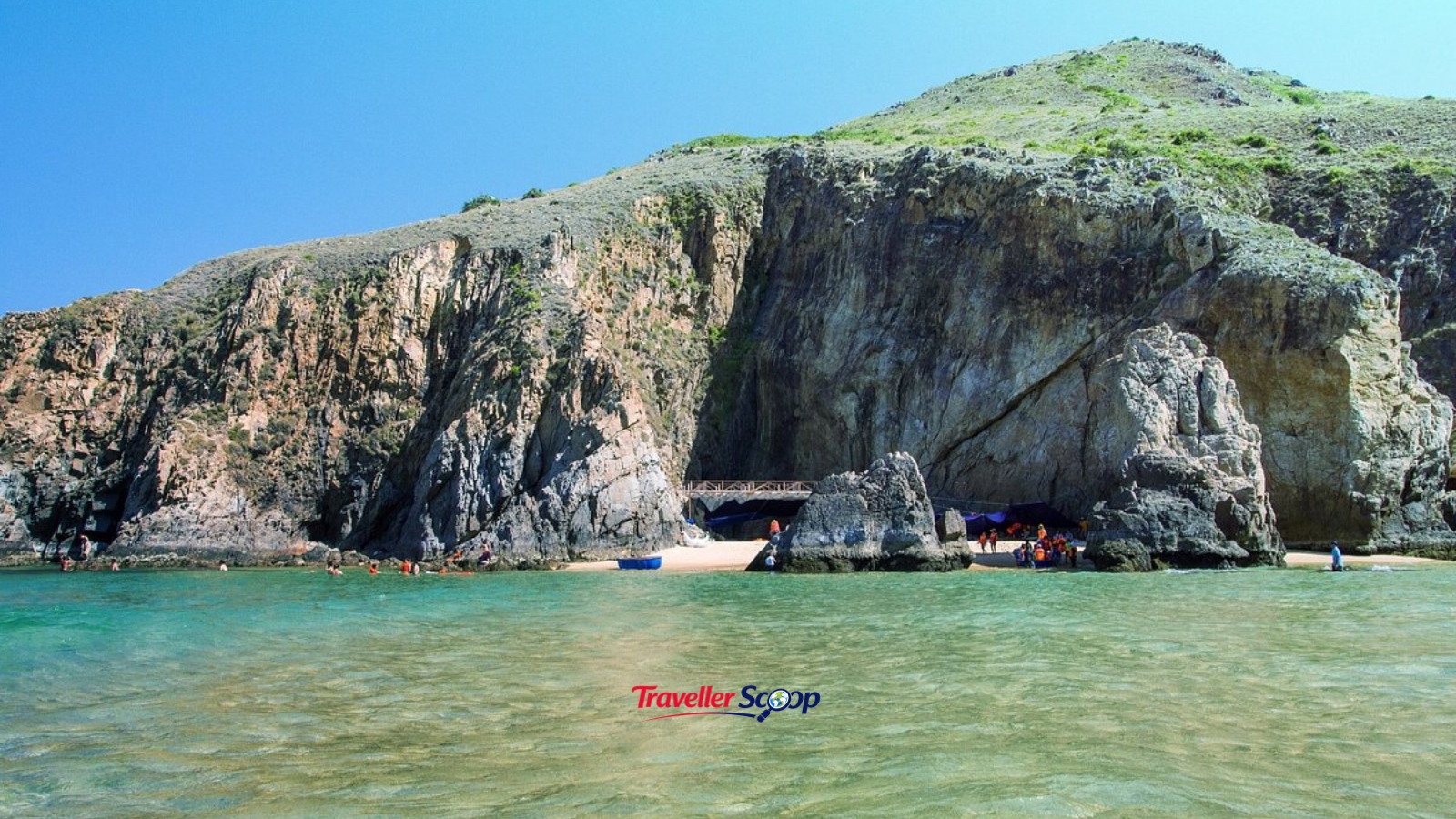
If you’ve been to Da Nang, you know Vietnamese coastal towns can be beautiful. But Da Nang is crowded, commercialized, and expensive by Vietnamese standards. Quy Nhon is what Da Nang was 15 years ago, except the beach is arguably better.
Located in Binh Dinh province, about 650 km north of Ho Chi Minh City, Quy Nhon is a working fishing town with extraordinary beaches and zero attitude. The seafood is some of the freshest I’ve eaten anywhere in Asia.
The accommodation is excellent value. And on many stretches of coast, you can have a white-sand beach almost entirely to yourself, even in peak season.
What makes Quy Nhon one of the best underrated places in Vietnam?
- Ky Co Beach, about 25 km from town, is routinely cited as one of the most beautiful beaches in Vietnam, a 500m stretch of sand flanked by turquoise water and rocky headlands, accessible only by boat or a narrow road
- Bai Xep, a tiny fishing village with a cove beach, has a handful of excellent guesthouses and the kind of slow pace that makes you extend your stay by several days
- The Cham Towers of Binh Dinh, over a dozen brick towers built by the Cham civilization between the 10th and 13th centuries, dot the surrounding countryside and receive almost no tourists
- Average budget for a day in Quy Nhon: $20–30 USD (accommodation, food, and transport)
- Best season: January to August, with peak beach weather from March to July
Quy Nhon is specifically highlighted by Vietnam’s official tourism platform as delivering some of Vietnam’s most beautiful beaches, all blissfully uncrowded, where travelers can spend most of their time relaxing and use the rest exploring the region’s Cham-era temple towers and exceptional local seafood.
Getting there:
Fly direct from Hanoi or Ho Chi Minh City to Phu Cat Airport (1 hour). Quy Nhon is 35 km from the airport.
5. Moc Chau: The Plateau Nobody Told You About
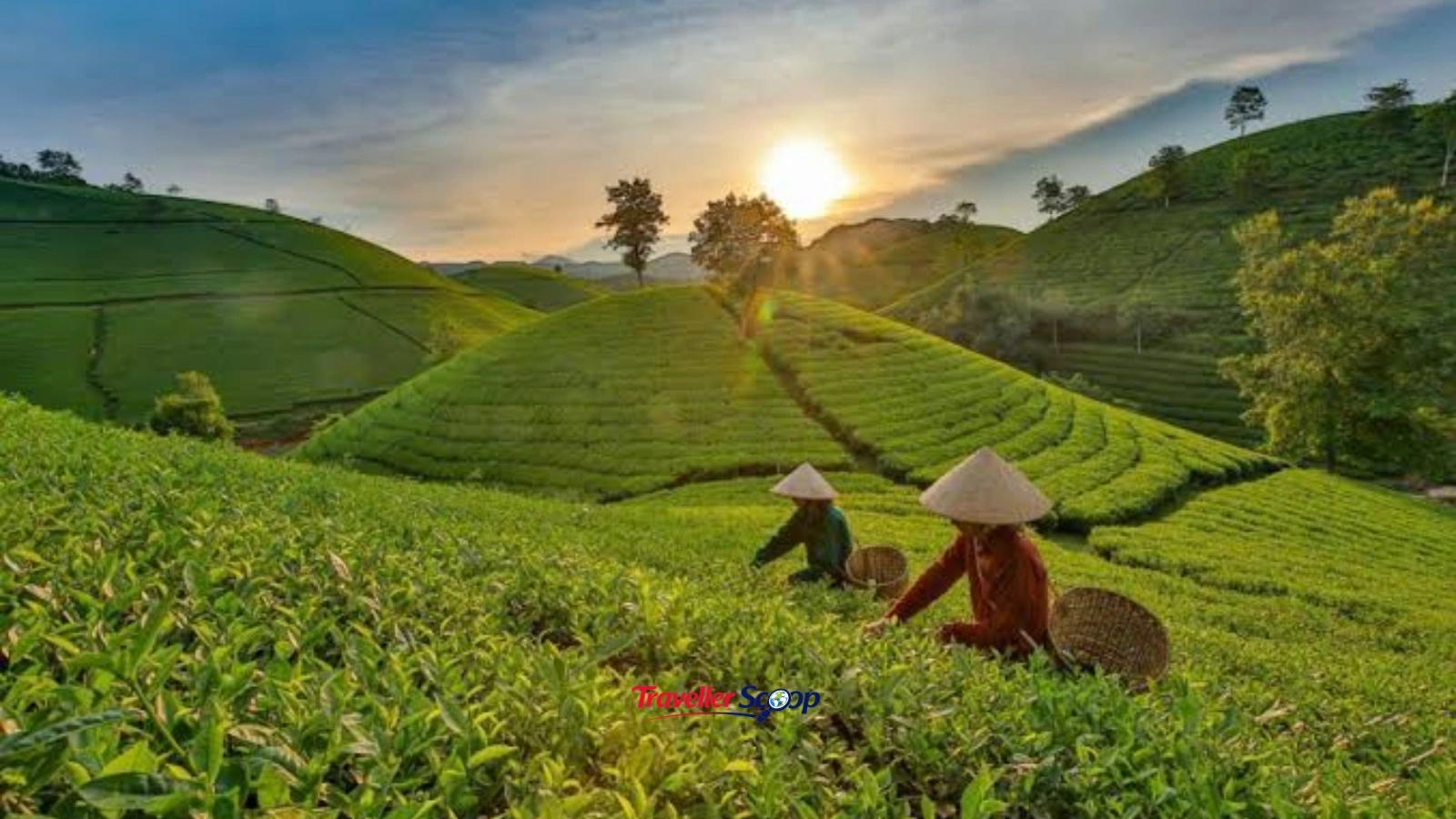
Moc Chau is a highland plateau in Son La province, about 200 km west of Hanoi. At 1,050m above sea level, it has a cooler, mistier climate than most of Vietnam, and a landscape that is genuinely unlike anything else in the country.
The plateau is famous for its tea plantations, dairy farms (unusual for Vietnam), and, most spectacularly, its flowering seasons. In January and February, white plum and peach blossoms cover the hillsides.
In April and May, mustard flower fields turn the landscape brilliant yellow. In October, wild sunflowers bloom across the slopes. Each season delivers a completely different and absolutely stunning visual landscape.
Why Moc Chau is one of the beautiful places to visit in Vietnam that most travelers miss:
- The Moc Chau Tea Hill offers panoramic views of rolling tea plantations; entry is free, and the area is rarely crowded on weekdays
- Ban Ang Pine Forest, a rare pine plantation in tropical Southeast Asia, feels like walking into a European fairy tale
- The local H’Mong and Thai minority communities here maintain traditional weaving, embroidery, and farming practices, and homestays with local families cost as little as $10–15 USD per night including dinner and breakfast
- Hang Doi Cave (Bat Cave), home to thousands of bats and surrounded by ancient stalactites, is one of the most visually dramatic cave experiences accessible without a professional guide
- The drive up on Highway 6 is itself spectacular, winding mountain roads with sweeping valley views
Getting there:
Direct bus from Hanoi’s My Dinh bus station to Moc Chau (3.5–4 hours, approximately VND 150,000 / $6 USD). Renting a motorbike in Moc Chau for the plateau is highly recommended.
Quick Comparison Table: 5 Beautiful Places to Visit in Vietnam
| Destination | Best For | Best Season | Budget/Day | Crowd Level |
|---|---|---|---|---|
| Ninh Binh | Landscapes, history | September–October | $20–30 | Low–Medium |
| Phong Nha | Caves, adventure | February–August | $25–35 | Low |
| Ha Giang | Motorbike trips, culture | October–November | $20–30 | Low |
| Quy Nhon | Beaches, seafood | March–July | $20–30 | Very Low |
| Moc Chau | Nature, | Jan-May | $15–25 | Very Low |
Practical Tips for Visiting These Beautiful Places in Vietnam
Before I wrap up, here are a few things I wish I’d known before visiting these hidden gems in Vietnam for tourists:
Visa:
As of 2026, Vietnam offers a 90-day e-visa to all nationalities for approximately $25 USD. Apply at least 3 days in advance at the official government portal.
Best time overall:
November to April is generally considered the best travel window, though the specific timing varies significantly by region. Always check local conditions before booking.
Getting around:
For the offbeat Vietnam travel destinations of 2026, a combination of overnight sleeper buses, domestic flights, and rented motorbikes gives you the most flexibility. Grab (Southeast Asia’s Uber) is available in most towns of any size.
Currency:
Vietnam uses the Vietnamese dong (VND). As a rough guide, VND 25,000 = $1 USD. ATMs are widely available in provincial capitals; carry cash when visiting smaller villages.
Accommodation:
Across these best underrated places in Vietnam, you’ll consistently find guesthouses and boutique homestays in the $10–25 USD per night range, often with breakfast included and significantly more character than chain hotels.
Conclusion
I started this article by telling you that beautiful places to visit in Vietnam are everywhere, and I meant it. The five destinations in this guide barely scratch the surface of what this country holds.
But they represent something important: the version of Vietnam that exists just beyond the reach of the standard itinerary.
Ninh Binh gave me misty mornings on the river. Phong Nha gave me caves that made me feel microscopic. Ha Giang gave me mountain roads and sunsets I’ll never forget. Quy Nhon gave me a beach I shared with fishermen, not tourists. And Moc Chau gave me hillsides so beautiful they made no sense.
These are the hidden gems in Vietnam for tourists who want more than photographs. These are the offbeat Vietnam travel destinations of 2026 that reward curiosity over convenience.
These are the places in Vietnam to visit away from crowds that turn a good trip into an unforgettable one.
If you’re planning a trip, don’t just visit Vietnam. Discover it.
Have questions, or have you visited any of these places? Leave a comment below; I read every single one. And if you found this guide helpful, share it with someone planning a Vietnam trip. They’ll thank you later.
FAQs
What is the average travel budget for visiting these best underrated places in Vietnam?
A comfortable budget traveler can cover accommodation, food, transport, and activities across these destinations for approximately $30–45 USD per day. Motorbike rentals, cave entrance fees, and homestays are all very affordable by global standards.
What are the most beautiful places to visit in Vietnam that aren't too crowded?
The most beautiful and least crowded destinations in Vietnam include Ninh Binh, Phong Nha-Ke Bang, Ha Giang, Quy Nhon, and Moc Chau. These five spots offer exceptional landscapes, culture, and experiences without the tourist congestion of Ha Long Bay or Hoi An.
What is the best time to visit Vietnam's hidden gems?
It depends on the region. For northern Vietnam (Ha Giang, Moc Chau), October to February is ideal. For central Vietnam (Phong Nha, Quy Nhon), February to August offers the best weather. For Ninh Binh, September to November is most scenic during rice harvest season.
Are these offbeat Vietnam travel destinations safe for solo travelers?
Yes, Vietnam consistently ranks as one of the safest countries in Southeast Asia for solo travelers, including solo women. The main precautions are standard: watch your belongings in markets, use reputable transport, and carry emergency contact information when exploring remote areas like the Ha Giang Loop.
How many days do I need to cover these beautiful places in Vietnam?
To visit all five locations comfortably, plan for at least 14–18 days. A suggested order: Hanoi → Ha Giang (4 days) → Moc Chau (2 days) → Ninh Binh (2 days) → Phong Nha (3 days) → Quy Nhon (3 days), ending with a flight home from Da Nang or Ho Chi Minh City.

Khushi Vaid
Senior Travel EditorI’m Khushi Vaid, a travel writer with over 2 years of experience creating destination guides, travel tips, and travel planning content. At Traveller Scoop, I write about destinations, travel trends, and practical advice to help readers explore the world with confidence.