
The Best Time to Arrive at the Airport, According to Travel Experts
The best time to arrive at the airport is the one question I get asked more than almost anything else, and honestly, I used to get it wrong myself. I once landed in Delhi with barely 40 minutes before my international boarding closed because I trusted an old “arrive whenever” habit, and I sprinted through […]
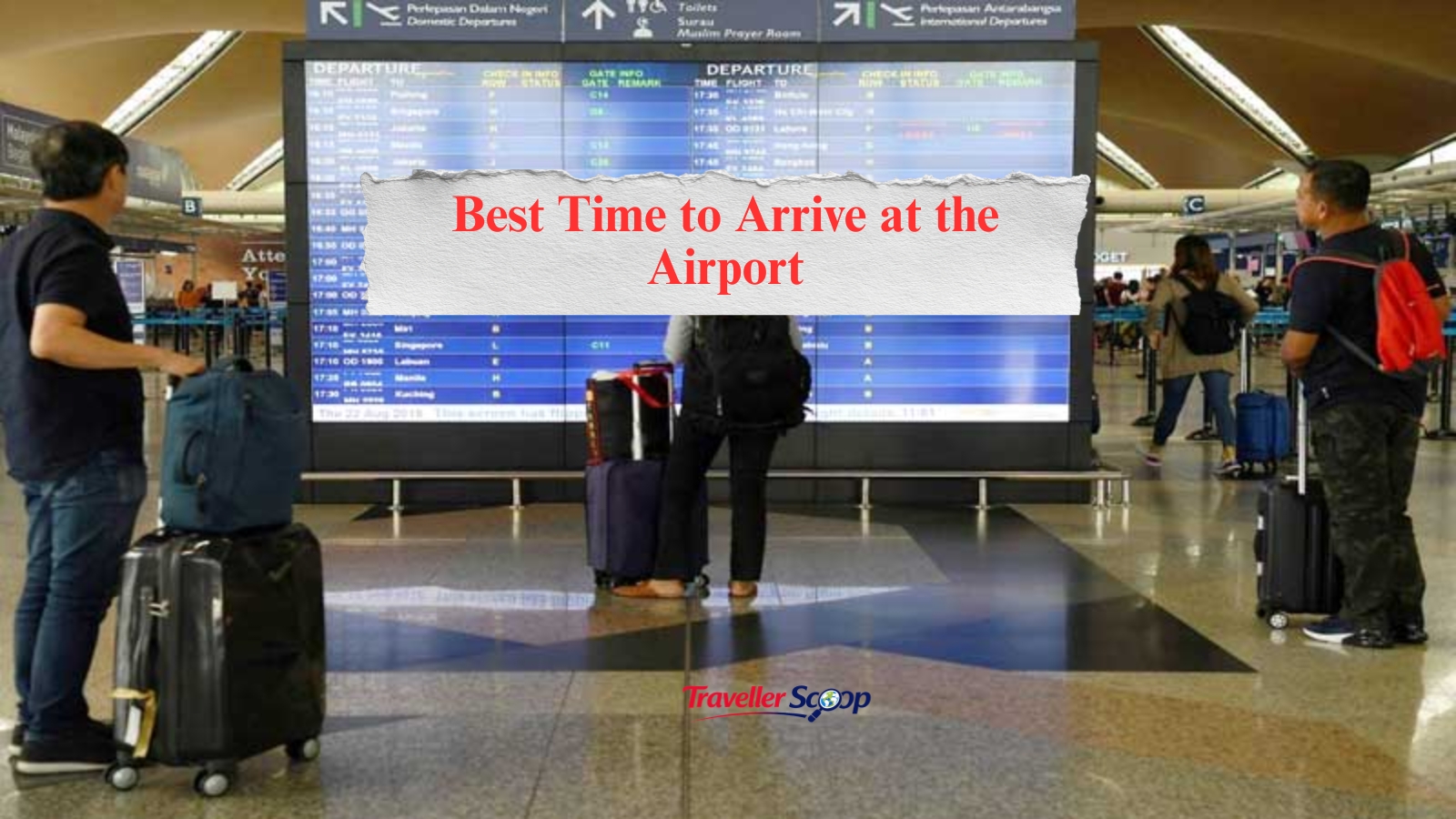
The best time to arrive at the airport is the one question I get asked more than almost anything else, and honestly, I used to get it wrong myself. I once landed in Delhi with barely 40 minutes before my international boarding closed because I trusted an old “arrive whenever” habit, and I sprinted through T3 as if my life depended on it.
That day taught me this isn’t a fixed number; it’s a formula. Since then, I’ve flown over 60 domestic and international sectors, tracked my own timings, and cross-checked them against TSA data, airline check-in cutoffs, and airport ops reports.
This guide is the result of that research, written as a real, first-person breakdown, not a copy-paste of the same “arrive two hours early” line every other site repeats.
If you’ve searched for the best time to arrive at the airport, you’ve probably seen the generic “2 hours domestic, 3 hours international” advice everywhere. It’s not wrong, but it’s incomplete.
The real answer depends on your airport, the day of the week, whether you have TSA PreCheck, whether you’re checking a bag, and even the hour you’re flying. Below, I’m breaking down exactly how early you should arrive at the airport based on real numbers, so you never have to guess or run, again.
What Is the Best Time to Arrive at the Airport, According to TSA?
Officially, the Transportation Security Administration recommends arriving at least 2 hours before a domestic flight and 3 hours before an international flight, especially at medium to large airports.
This is the baseline almost every airline, from United to American to Delta, repeats to passengers. TSA spokespeople have reinforced this exact window in interviews, noting it applies “regardless of whether travelers are enrolled in TSA PreCheck,” particularly during holiday periods when volumes spike.
So if you’re only remembering one number, the safest arrival window for a standard domestic trip is 2 hours prior, and for anything crossing a border, plan for 3 hours. But that’s the floor, not the whole picture, because airline check-in counters and bag-drop desks often close well before boarding even starts.

Best Time to Arrive at the Airport for Domestic Flights
For a domestic flight, the best time to arrive at the airport is 2 hours before departure, but here’s the number most people miss: most major airlines cut off online and counter check-in 30 to 45 minutes before departure, and boarding doors can close 10–15 minutes before wheels-up.
That means if you arrive “2 hours early” but spend 45 minutes finding parking and another 20 minutes in a bag-drop queue, your real buffer shrinks fast.
Here’s my personal breakdown for domestic sectors:
- No checked bag, online check-in done, no TSA PreCheck: 90 minutes is usually workable, but 2 hours is safer.
- Checked bag, standard security: Stick to the full 2-hour rule, bag-drop lines add 15–25 minutes on average.
- Small regional airport: You can shave 30 minutes off the standard recommendation, since regional security lines are typically much shorter than big-hub lines.
- Flying out of a top-10 busiest hub (Atlanta, LAX, O’Hare, JFK): Add 30 extra minutes on top of the standard 2 hours during morning and evening peak windows.
If you’re wondering how early to arrive at the airport for a domestic flight specifically during holiday weekends (Diwali, Christmas, or Thanksgiving-equivalent rush periods), I’d genuinely push that number to 2.5–3 hours.
I’ve personally waited 50+ minutes just at bag-drop during a festive-season Friday evening flight out of Mumbai.
Best Time to Arrive at the Airport for International Flights
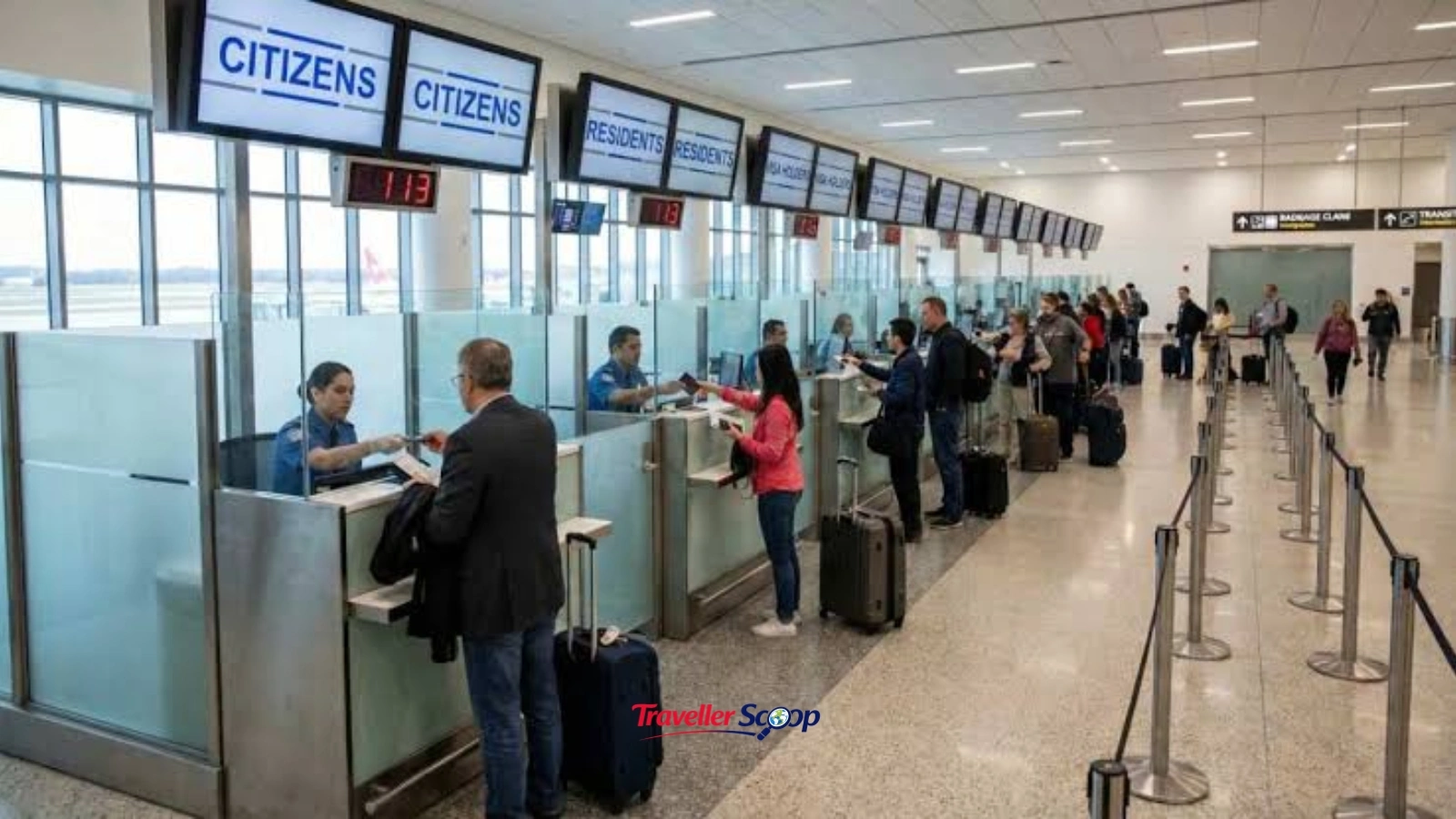
The best time to arrive at the airport for international flights is 3 hours before departure, and I don’t recommend cutting this short, even if you’re a light packer. International check-in involves document verification: passport, visa, sometimes proof of onward travel, which domestic check-in skips entirely.
Airlines typically close international check-in 60 to 75 minutes before departure, and once that counter shuts, no amount of pleading gets you rebooked for free.
From my own trips to Dubai, Bangkok, and Singapore, here’s what actually eats up time on an international departure:
- Immigration/emigration counters (10–40 minutes depending on the country and time of day)
- Additional document checks at the airline counter (5–15 minutes)
- Security screening, which is often busier for international terminals during evening “red-eye” departure waves
- Duty-free and gate walk time, especially at sprawling hub airports
So if someone asks me directly what the ideal arrival window is for a long-haul international flight, my honest answer is 3 hours minimum, 3.5 hours if you’re flying from a major hub during peak evening hours, and 4 hours if you’re traveling with a connecting flight booked separately (not on one ticket).
If you’re planning a multi-country trip and need to double-check entry paperwork before you even think about arrival timing, run your route through our Visa Requirement Checker, it saves you from discovering a missing visa at the check-in counter.
How Early Should You Arrive at the Airport With TSA PreCheck or Global Entry?
This is where your arrival window genuinely changes based on what programs you’re enrolled in. According to TSA’s own data, roughly 99% of PreCheck passengers wait less than 10 minutes at security during normal operations.
A 2026 airport-monitoring study also found that PreCheck lanes cut average waits from 7.8 minutes down to 4.9 minutes, a 37% reduction compared to standard lanes.
That’s a real, measurable difference. If you have TSA PreCheck (which costs about $78 for five years) or Global Entry, you can reasonably trim:
- Domestic flights: Arrive 90 minutes early instead of 2 hours, assuming no checked bag.
- International flights: Arrive 2.5 hours early instead of 3, since Global Entry also speeds up immigration on return.
I’ll be honest, there’s a viral trend online called “airport theory,” where frequent flyers arrive just 15 to 30 minutes before boarding using mobile boarding passes, no checked bags, and expedited screening.
It works for a small number of extremely experienced travelers at extremely efficient airports. I would not recommend it as your default arrival strategy unless you fly weekly and know your home airport’s rhythms cold.
One security delay, one gate change, and that plan collapses.
For more ways to travel lighter and faster through checkpoints, our Travel Tips category has a full breakdown of packing and security hacks that pair well with this timing strategy.
Best Time to Arrive at the Airport by Day and Hour (Real Wait-Time Data)
Something most articles skip entirely: your ideal arrival window also depends on which day and hour you’re flying. A 2026 multi-airport wait-time study covering 184,000+ live security checkpoint readings found:
- Mondays run 36% slower than Wednesdays at security; the average Monday wait was 10.1 minutes versus 7.4 minutes on Wednesday, across 41 major U.S. airports.
- Salt Lake City International had the shortest average wait of any major hub studied, at just 9.1 minutes.
- Houston and Miami ranked among the slowest, averaging close to 19.8 minutes, with peak Sunday evening waits stretching past 50 minutes.
- The single longest recorded wait in that study was 74 minutes, at Miami International on a Wednesday afternoon.
- Early morning weekday flights (before 7 a.m.) and midweek midday flights (Tuesday–Wednesday) consistently showed the calmest security lines.
So if your travel dates are flexible, the genuinely best time to arrive at the airport, and honestly, the best time to fly at all, is a Tuesday or Wednesday, ideally not during the 6–9 a.m. Monday rush or Sunday evening return-traffic wave.
This single scheduling choice can save you 15–20 minutes compared to flying Monday morning or Sunday night.

Factors That Change How Many Hours Before a Flight You Should Arrive
There’s no single universal answer to how many hours before a flight should you arrive, because your personal situation changes the math. Here’s what actually moves the needle, based on both official guidance and my own tracked trips:
- Traveling with kids: Add 20–30 minutes for stroller check, extra security screening, and slower walking pace.
- Traveling with a wheelchair or mobility device: The U.S. Department of Transportation recommends arriving at least 1 hour earlier than the standard check-in time, plus an additional 90 minutes if you need airport-provided wheelchair assistance. In practice, that’s roughly 3.5 hours before a domestic flight and 4.5 hours before an international one.
- Checked luggage vs. carry-on only: Checked bags add 15–25 minutes on average for drop-off queues.
- Connecting flights on separate tickets: Always budget the full international arrival window at your origin airport, since you’re re-clearing security and sometimes immigration at your layover.
- Peak season (festivals, school holidays, year-end travel): Push your arrival time up by 30–45 minutes regardless of airport size.
- Unfamiliar airport or first-time international travel: Add a buffer simply for wayfinding; large hub terminals can involve a 15-minute walk between check-in and your actual gate.
If budgeting time (and money) for a trip is part of your planning process anyway, it’s worth running your full itinerary, including airport buffers, through our Travel Budget Calculator so nothing catches you off guard on travel day.
What Happens If You Arrive Too Early: or Too Late?
Arriving too early isn’t dangerous, just mildly boring, most airports now have decent lounges, cafés, and charging stations, so an extra 45 minutes rarely hurts. But cutting it too close has real consequences.
Airline check-in counters close firmly 30–75 minutes before departure depending on route type, and once that cutoff passes, you’re typically rebooked on the next available flight, often at your own cost if it’s not a covered irregular-operations situation.
From what I’ve personally experienced and what most gate agents will tell you off the record: the actual risk zone isn’t the security line, it’s underestimating traffic, parking shuttle wait times, or a badly timed queue at check-in. A realistic arrival plan accounts for all of that, not just the walk from the curb to the gate.
My Personal Arrival-Time Formula (Real Numbers)
After tracking my own flights for over a year, here’s the exact formula I now use, and it’s genuinely become my go-to answer whenever someone asks me the best time to arrive at the airport:
Base time (2 hrs domestic / 3 hrs international) + 20 minutes if checking a bag + 20 minutes if flying Monday morning or Sunday evening + 30 minutes if flying from a top-10 busiest hub – 30 minutes if you have TSA PreCheck/Global Entry and no checked bag + 30–45 minutes during holiday or festival travel weeks
Add those together based on your specific trip, and you’ll land on a far more realistic number than a flat, one-size-fits-all rule.
Quick Reference Chart: Best Time to Arrive at the Airport
| Situation | Recommended Arrival Time |
|---|---|
| Domestic, no bag, PreCheck | 90 minutes before |
| Domestic, standard | 2 hours before |
| Domestic, peak/holiday | 2.5 hours before |
| International, standard | 3 hours before |
| International, major hub / peak evening | 3.5 hours before |
| International, connecting flight (separate ticket) | 4 hours before |
| Traveling with a wheelchair (domestic) | 3.5 hours before |
| Traveling with a wheelchair (international) | 4.5 hours before |
For destination-specific arrival advice, since airport layouts genuinely vary by country, browse our Destination Guides before you book your next international sector.
Conclusion
If there’s one thing I want you to take away from this guide, it’s that the best time to arrive at the airport isn’t a single magic number, it’s a formula built around your flight type, your airport, the day you’re flying, and the programs or documents you’re carrying.
The standard “2 hours domestic, 3 hours international” rule is a solid starting point, but layering in real data, like PreCheck wait times, day-of-week patterns, and airline check-in cutoffs, is what actually protects you from a stressful sprint through the terminal.
I’ve made the mistake of cutting it too close, and I’ve also wasted hours sitting at empty gates because I overcorrected. This formula is the balance I wish I’d had from day one, and I hope it saves you the same trial and error it took me to figure out.
FAQs
What day has the shortest airport security lines?
Based on recent multi-airport data, Wednesdays consistently show shorter average wait times than Mondays, which run about 36% slower due to business-travel volume.
What is the best time to arrive at the airport for a domestic flight?
The best time to arrive at the airport for a standard domestic flight is 2 hours before departure. This gives you enough buffer for check-in, bag-drop, and security, even at a moderately busy airport.
What is the best time to arrive at the airport for an international flight?
For international flights, arrive at least 3 hours early. Immigration checks, document verification, and busier security lines mean international departures need more buffer than domestic ones.
Is 1 hour before a domestic flight enough time?
Generally, no. Most airlines close check-in 30–45 minutes before departure, so arriving just an hour early leaves almost no room for parking delays, security lines, or a long walk to your gate.
How early should I arrive at the airport with TSA PreCheck?
With TSA PreCheck, 90 minutes is usually sufficient for domestic flights and 2.5 hours for international ones, since PreCheck lanes average under 10 minutes of wait time in most conditions.

Khushi Vaid
Senior Travel EditorI’m Khushi Vaid, a travel writer with over 2 years of experience creating destination guides, travel tips, and travel planning content. At Traveller Scoop, I write about destinations, travel trends, and practical advice to help readers explore the world with confidence.