
The Powerful 90-Second Hotel Room Safety Check You Should Do Immediately
Hotel Room Safety Check is the one habit I never skip, no matter how tired I am after a flight, a train, or a 12-hour road trip. I used to be the traveler who dropped her bag on the bed, kicked off her shoes, and collapsed the second the door clicked shut.That changed after a […]
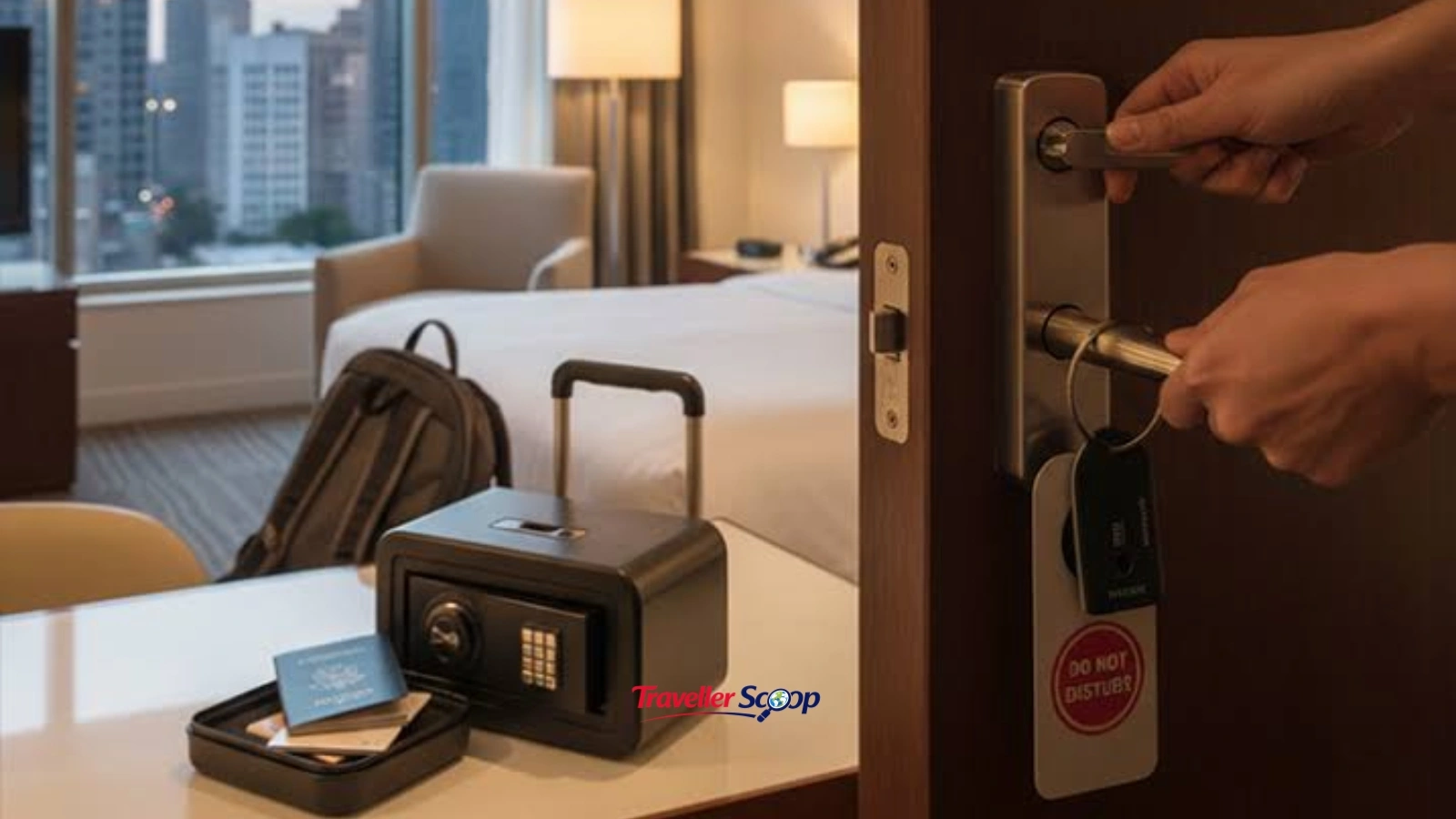
Hotel Room Safety Check is the one habit I never skip, no matter how tired I am after a flight, a train, or a 12-hour road trip. I used to be the traveler who dropped her bag on the bed, kicked off her shoes, and collapsed the second the door clicked shut.
That changed after a stay in a mid-range city hotel where the door chain was broken, the peephole had been tampered with, and the front desk shrugged it off like it was normal. Nothing happened to me that night, but it was the last time I trusted a hotel room on sight.
Since then, I’ve built a Hotel Room Safety Check routine that takes less time than brushing your teeth, about 90 seconds, and I do it in literally every hotel, hostel, or serviced apartment I stay in, from a ₹1,500 budget room to a five-star suite.
This isn’t a generic listicle copied from a hotel’s own safety page. This is the exact Hotel Room Safety Check I run every single time, built from years of solo travel, dozens of hotel stays across India, Southeast Asia, and Europe, and conversations with hotel security staff who were surprisingly candid once I started asking the right questions.
If you’ve ever Googled “is my hotel room safe” at 11 p.m. while standing in the hallway, this hotel room safety checklist is for you.
Why a Hotel Room Safety Check Matters More Than You Think
Most travelers assume a locked door is enough. It isn’t. A standard hotel room has at least five points of entry that most guests never inspect: the main door, the connecting door to the next room, the window, the balcony door, and sometimes a service door used by housekeeping.
Security consultants who advise hotel chains consistently point out that room burglaries and unauthorized entries cluster around ground-floor rooms, rooms near stairwells, and rooms near elevators, because these locations offer the fastest way in and the fastest way out.
That single fact is why a hotel room safety check should start before you even step inside your room, at the moment you’re handed your key.
A proper hotel room safety check isn’t about being paranoid. It’s about spending 90 seconds to confirm that the basics, locks, exits, lighting, and privacy, actually work the way they’re supposed to.
I’ve found broken deadbolts, non-functioning phones, and even a room that was already occupied by someone else’s luggage because of a booking mix-up. Every one of those situations was caught during my hotel room safety check, not after something went wrong.
My 90-Second Hotel Room Safety Check Routine
This is the exact order I follow. I’ve timed it, it genuinely takes under 90 seconds once it becomes muscle memory.
- Scan the room before you fully step in. Check behind the door, behind curtains, inside the closet, and under the bed. This takes 10 seconds and rules out anyone hiding inside.
- Test every lock. Deadbolt, security chain or bar, and the latch on any connecting door. If any of them feel loose, don’t fully engage, or are missing entirely, call the front desk immediately and ask for a different room.
- Check the windows and balcony door. Confirm they lock, and note whether the balcony is accessible from a neighboring room or the ground.
- Confirm the phone works. Pick it up and check for a dial tone, or confirm it can reach the front desk. This matters more than people think; in an emergency, your mobile signal might be weak, especially inside concrete-heavy hotel buildings.
- Locate the fire exit map on the back of the door. Note the nearest exit and count the doors between your room and the stairwell so you can find it in the dark or in smoke.
- Check smoke detectors and, if available, carbon monoxide detectors. A glance is enough to confirm one is actually installed.
- Cover or check the peephole from the corridor side if you’re uneasy about privacy, and glance for anything that looks like a hidden lens.
This full hotel room safety check becomes second nature after a few trips, and it’s the single biggest reason I feel comfortable traveling solo, staying in unfamiliar cities, or checking into last-minute bookings.
How to Check a Hotel Room for Hidden Cameras
This is the part of my hotel room safety check that people ask about most, and it’s easier than it sounds. Hidden cameras, when they exist, are almost always placed to capture the bed or the bathroom, disguised inside everyday objects, smoke detectors, alarm clocks, wall outlets, or even stuffed animals in family-friendly properties.
Here’s how I check a hotel room for hidden cameras in under a minute:
- Turn off all the lights and use your phone’s camera in a dark room. Most hidden camera lenses reflect a small, unnatural glow when a phone flashlight or camera passes over them.
- Physically inspect anything facing the bed, the smoke detector, the alarm clock, picture frames, and any decorative item that seems out of place or newer than the rest of the room.
- Use your phone’s Wi-Fi settings to scan for unfamiliar connected devices on the same network, since many hidden cameras rely on Wi-Fi to stream footage.
- Look for tiny pinholes in wall fixtures, USB chargers left plugged in by a previous guest, or smoke detectors with a blinking LED that seems misplaced.
I make this hidden-camera check part of my standard hotel room safety. Check in every new room, even in well-known hotel chains, because it costs nothing and takes under 60 seconds.
Best Floor for Hotel Room Safety (And Why It Matters)
One decision you can make before you even arrive is which floor to request. Security professionals who train hotel staff generally point to the same answer: floors two through six are the sweet spot for the best floor for hotel room safety.
Ground-floor and first-floor rooms are easiest to break into from outside, through a window or balcony, while extremely high floors can be harder for emergency services and fire ladders to reach quickly in older buildings.
When I book a room, I now specifically request:
- A floor between the second and sixth level
- A room away from the elevator bank and stairwell (both are common access points for anyone who isn’t a guest)
- A room not directly next to an exterior fire escape
- No connecting door to an adjoining room, if I can help it
This one request, made at check-in or during booking, does more for your overall hotel room safety check than almost anything else, because it changes the odds before you’ve even unlocked the door.
Hotel Room Safety Checklist for Solo Travelers
If you’re traveling alone, and especially if you’re a solo woman traveler, a few extra steps belong in your hotel room safety checklist:
- Don’t say your room number out loud at check-in. Ask the front desk to write it down instead of announcing it, especially if other guests are nearby.
- Book under a first initial and last name, not a first name that reveals your gender, if the hotel allows it.
- Request that housekeeping or room service confirm through the door before entering, rather than walking straight in with a master key.
- Pack a portable door lock or doorstop alarm. These cost very little, weigh almost nothing, and add a real physical barrier even when the hotel’s own lock is solid.
- Keep your room key separate from anything showing your room number, in case it’s lost or stolen.
- Avoid mentioning where you’re staying to people you’ve just met, even casually.
I run through this exact hotel room safety checklist every time I travel solo, and it’s become such a habit that it now takes barely any extra time at all.
Hotel Room Inspection Tips After Check-In
Beyond locks and cameras, a full hotel room inspection covers cleanliness and general condition, details that matter for comfort as much as safety:
- Pull back the sheets and check mattress seams and corners for any signs of bedbugs before you unpack.
- Avoid placing your luggage directly on the bed, since bags pick up a lot from airports, trains, and taxis.
- Wipe down high-touch surfaces, the remote, light switches, door handles, and thermostat, with a sanitizing wipe if you’re carrying any.
- Check the bathroom for mold, mildew, or plumbing issues and report anything unusual right away rather than living with it.
- Note the location of the in-room safe, and use it for your passport, spare cards, and anything you’re not carrying with you that day.
None of these hotel room inspection tips take long individually, but together with the safety steps above, they round out a complete Hotel Room Safety Check that covers both security and basic hygiene.
Red Flags During Check-In You Shouldn't Ignore
Some warning signs show up before you even reach your room:
- The front desk announces your room number loudly in a crowded lobby
- Staff can’t clearly explain the hotel’s fire evacuation procedure
- The lobby, hallways, or elevator lighting is dim or broken
- There’s no visible staff presence after a certain hour
- Online reviews specifically mention break-ins, theft, or staff ignoring safety complaints
If you notice two or more of these before you’ve even unpacked, it’s worth asking for a different room or, in some cases, a different hotel altogether. A hotel room safety check doesn’t stop at your door, it starts the moment you walk into the lobby.
Emergency Preparedness Inside Your Room
Once your hotel room safety check is done and you’re settled, a few extra minutes of preparation go a long way:
- Save the front desk’s direct extension in your phone, not just the general hotel number
- Identify two exit routes, not just one, in case a stairwell is blocked
- Keep a flashlight or your phone’s flashlight easily reachable at night
- Know the local emergency number for the country or city you’re in, it’s not always the same as home
This is the part of the hotel room safety check that most guests skip entirely, and it’s exactly the part that matters most if something actually goes wrong.
Tools and Gadgets That Make a Hotel Room Safety Check Easier
A few lightweight tools consistently earn their place in my luggage:
- A portable door lock or door stop alarm: adds a physical barrier beyond the hotel’s own lock
- A small flashlight: useful during power cuts or for a closer look under furniture
- A rubber door wedge: a simple, cheap backup if the main lock feels weak
- A travel-size RFID or Wi-Fi scanner app: helps flag unfamiliar connected devices in the room
None of these are expensive, and together they turn a basic hotel room safety check into a genuinely secure routine, wherever you’re staying.
If you’re booking your next stay, it also helps to compare properties by safety record and not just price, our Destination Safety Radar tool gives you a quick safety read on a destination before you even shortlist hotels.
And if you’re planning a trip alone, our full guide to women-safe travel and solo travel goes deeper into destination-level precautions beyond just the room itself.
For finding the right property in the first place, check our roundups under hotel deals, and browse more practical guides like this one on our travel blog.
Conclusion
A hotel room safety check takes less time than unpacking your toiletries, but it’s the single habit that’s made me feel genuinely secure on every trip since I started doing it, from budget stays to five-star hotels.
Locks, exits, hidden cameras, floor choice, and a little emergency preparation aren’t things to think about after something goes wrong; they’re a 90-second routine you do before you’ve even set your bag down.
Make this hotel room safety checklist part of your travel routine, and you’ll walk into every new room with real peace of mind instead of just hoping for the best.
FAQs
Are hotel rooms safer than Airbnbs for solo travelers?
Hotels typically offer more structured security, 24-hour staff, key-card elevator access, and CCTV, which most short-term rentals don't have, making a proper hotel room safety check especially valuable when you're traveling solo.
What is a hotel room safety check?
A hotel room safety check is a quick inspection you do the moment you enter your room, checking locks, exits, phone function, and privacy, to confirm the room is actually secure before you unpack or relax.
How long should a hotel room safety check take?
A complete hotel room safety check takes about 90 seconds once you know the steps: scanning the room, testing locks, checking windows, confirming the phone works, and locating the fire exit.
How do I check a hotel room for hidden cameras?
Turn off the lights and scan the room with your phone's camera or flashlight, looking for reflective lens glints in smoke detectors, clocks, and outlets. You can also check your phone's Wi-Fi settings for unfamiliar connected devices.
What is the best floor for hotel room safety?
Security experts generally recommend floors two through six, high enough to deter break-ins from the ground or balconies, but low enough for a fast emergency exit or fire ladder access.

Khushi Vaid
Senior Travel EditorI’m Khushi Vaid, a travel writer with over 2 years of experience creating destination guides, travel tips, and travel planning content. At Traveller Scoop, I write about destinations, travel trends, and practical advice to help readers explore the world with confidence.