Discover India’s Hidden Mangroves: Breathtaking Places Every Nature Lover Must Explore in 2026
India’s hidden mangroves are the one part of this country I never planned to fall in love with. I grew up thinking “nature trip” meant mountains, deserts, or a beach with a sunset filter ready to go.It took a slow boat ride through a silent green tunnel, oars dipping in still water, for me to […]
India’s hidden mangroves are the one part of this country I never planned to fall in love with. I grew up thinking “nature trip” meant mountains, deserts, or a beach with a sunset filter ready to go.
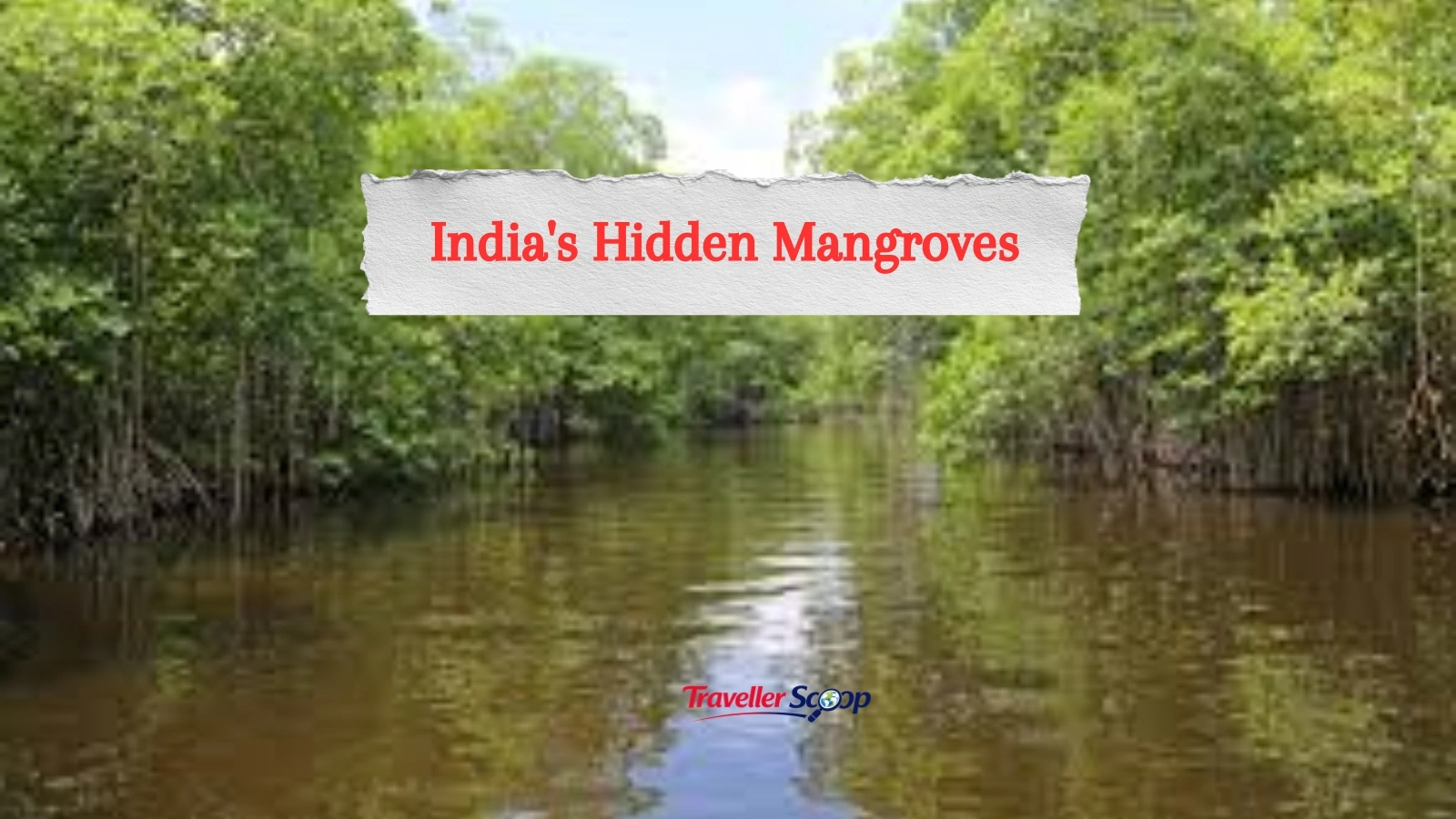
It took a slow boat ride through a silent green tunnel, oars dipping in still water, for me to understand that India’s Hidden Mangroves hold a completely different kind of magic, one that doesn’t shout; it whispers.
Over the last two years, I’ve personally travelled to five of these coastal forests, notebook in hand, mosquito repellent in the other, trying to understand why so few travellers talk about them.
This article is the result of that research: real numbers, real routes, and honest opinions, not copy-pasted tourism brochure lines. If you’re searching for the best hidden mangrove forests in India, the offbeat mangrove destinations in India that don’t show up on every Instagram reel, or you specifically want the Pichavaram mangrove forest boat ride experience or the Bhitarkanika mangrove wildlife sanctuary Odisha details, I’ve covered all of it below.
India’s Hidden Mangroves deserve a spot on every serious traveller’s 2026 list, and by the end of this guide, I think you’ll agree.
What Makes India's Hidden Mangroves So Special
Before I list the destinations, let’s talk numbers, because India’s Hidden Mangroves aren’t just “pretty forests”, they’re a genuine ecological powerhouse.
- India’s total mangrove cover stands at roughly 4,991.68 sq km, about 0.15% of the country’s total geographical area.
- Indian mangroves make up close to 3% of South Asia’s entire mangrove cover.
- Mangrove extent in India actually increased by around 875 sq km between 1987 and 2017, bucking the global trend of mangrove loss.
- Bhitarkanika, one of India’s Hidden Mangroves in Odisha, is the second-largest mangrove ecosystem in India, spread across roughly 650 sq km.
- The same reserve recorded 1,826 saltwater crocodiles in its 2025 census, up from 1,811 the previous year, along with 18 rare albino crocodiles.
- Pichavaram, one of the most visited among India’s hidden mangroves,has over 400 interconnected waterways forming a natural maze that visitors can paddle through for hours.
These aren’t small statistics. They tell you India’s Hidden Mangroves are living, breathing, growing ecosystems, not forgotten swamps. Every time I plan a new trip through India’s Mangroves, these numbers remind me why the silence out there matters more than any five-star resort view.
5. India's Hidden Mangroves
India’s Hidden Mangroves are among the country’s most breathtaking yet least-explored natural treasures, offering travelers a chance to escape the crowds and immerse themselves in a world of peaceful waterways, lush green forests, fascinating wildlife, and incredible biodiversity.
1. Sundarbans: The Crown Jewel Among India's Hidden Mangroves
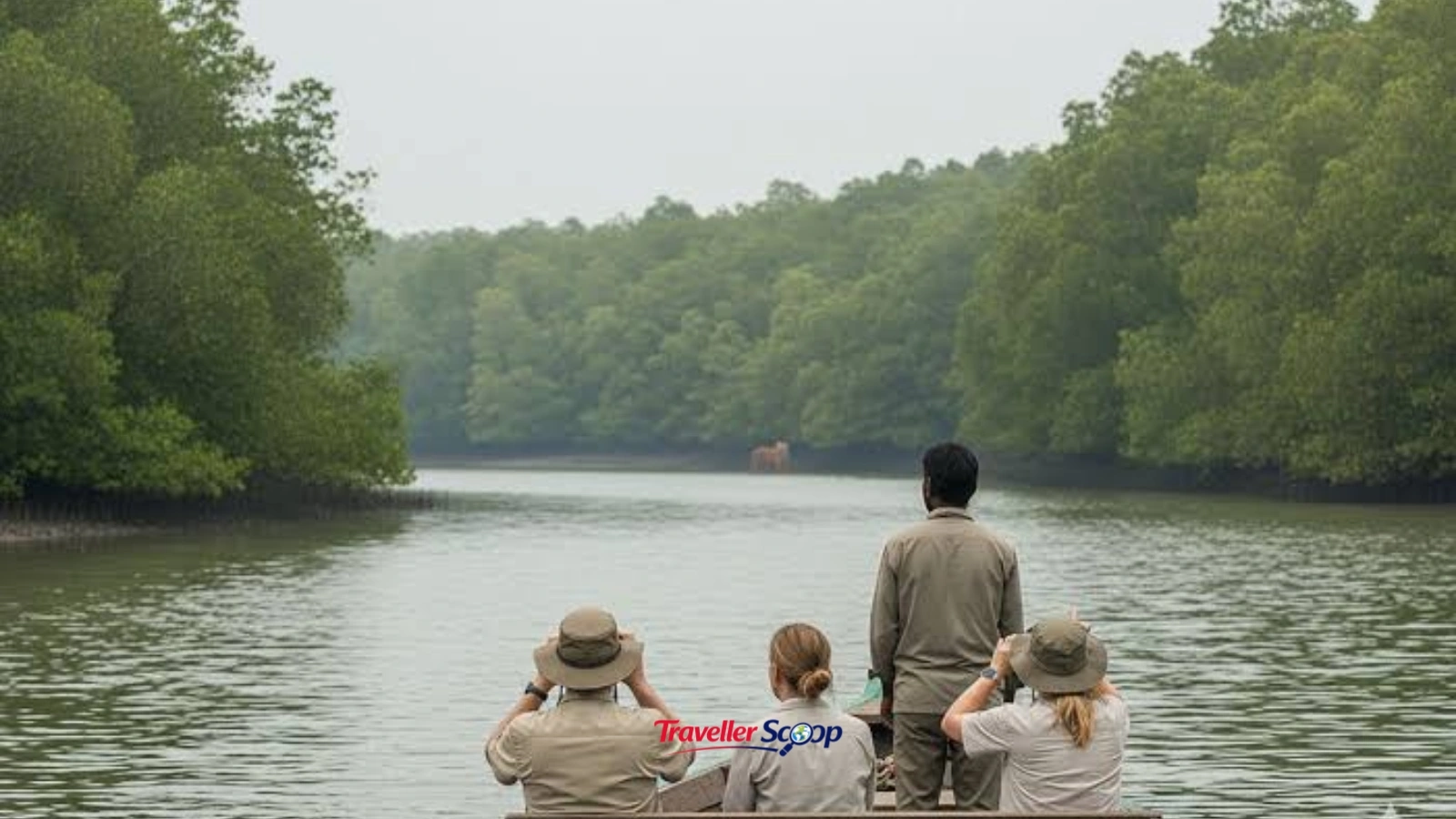
If there’s one name that anchors every conversation about India’s hidden mangroves, it’s the Sundarbans in West Bengal. This is the largest mangrove forest in the world, sitting inside the Ganges delta, and it’s the only mangrove ecosystem on Earth where Bengal tigers actually swim between islands.
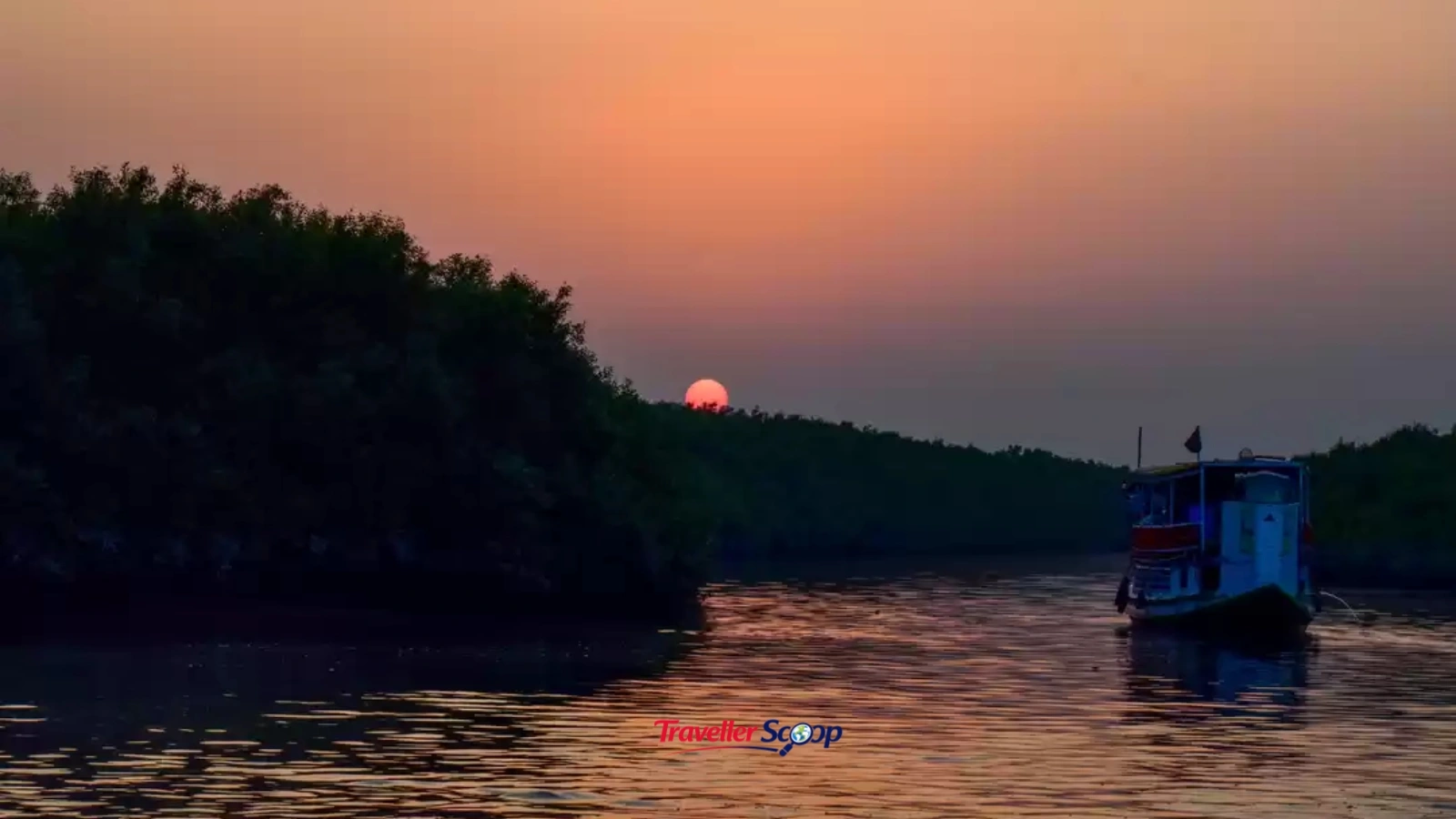
My first boat safari here started before sunrise. The water was flat, almost oily-still, and our guide cut the engine every few minutes just so we could listen. Within twenty minutes we spotted a saltwater crocodile sunning on a mudbank, and by mid-morning, spotted deer drinking cautiously at the water’s edge.
I never saw a tiger; most visitors don’t, but the tension of knowing one could be watching you from the reeds is exactly why the Sundarbans remain the most talked-about of India’s hidden mangroves.
Getting here: fly or train to Kolkata, then a 3-4 hour drive to Godkhali or Sonakhali, followed by a boat into the delta. Most people book a 2-3 day houseboat package, which I’d recommend over a single-day trip; you need at least one full sunrise safari to have any real shot at wildlife sightings.
2. Bhitarkanika: Odisha's Best-Kept Secret Among India's Hidden Mangroves
If Sundarbans is the famous one, Bhitarkanika is the quiet cousin that deserves far more attention. This is genuinely one of the most underrated of India’s Hidden Mangroves, and the crocodile numbers alone should tell you why.
I took a shared boat from Khola near Rajnagar, and within the first hour, I counted at least six crocodiles just floating with only their eyes above the waterline. With 1,826 crocodiles logged in the 2025 census and 608 of them large enough to be genuinely dangerous, this isn’t an exaggerated wildlife claim; it’s documented fact from the forest department’s own reptile survey.
The park also recorded 117 active crocodile nesting sites in 2026, proving the population here is stable and well-managed.
Beyond crocodiles, Bhitarkanika hosts over 263 recorded bird species, king cobras, Indian pythons, and water monitors weaving through the mangrove roots. A heronry inside the park once held over 11,000 nests in a single season, an overwhelming sight if you visit between November and February.
This is easily one of the best hidden mangrove forests in India for anyone who wants Sundarbans-level wildlife without Sundarbans-level crowds.
3. Pichavaram: Tamil Nadu's Maze of India's Hidden Mangroves
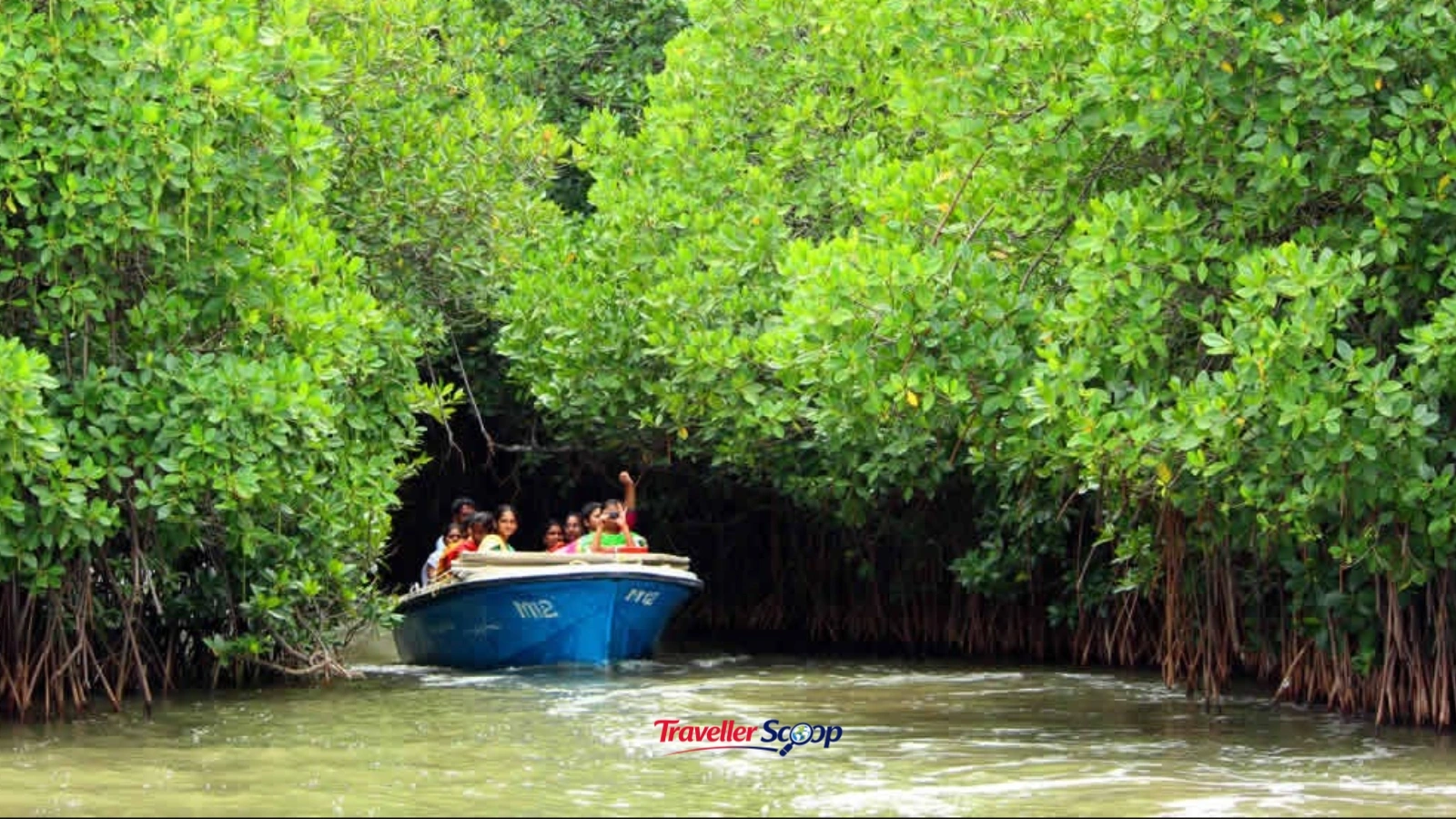
Of all the places I’ve explored, the Pichavaram mangrove forest boat ride is the one I recommend to first-timers and families the most. Located near Chidambaram in Tamil Nadu, Pichavaram is one of the largest mangrove forests in India, and its defining feature is a network of over 400 waterways that genuinely feel like a green labyrinth.
Unlike the tiger-country tension of Sundarbans, Pichavaram is calm, safe, and accessible, you can hire a rowboat for as little as 30-45 minutes or go longer for a full half-day paddle. Sunlight filters through overlapping mangrove canopies, and the water below is often mirror-still, doubling every tree above it.
It’s one of the few spots among India’s hidden mangroves where kids, elderly travellers, or complete beginners can comfortably enjoy the experience.
If you only have time for one entry point into India’s Hidden Mangroves, and you’re travelling with family, Pichavaram should be it.
4. Godavari-Krishna Delta: The Quiet Side of India's Hidden Mangroves
Near Kakinada in Andhra Pradesh lies one of India’s most overlooked among India’s Hidden Mangroves, the Godavari-Krishna delta system, sometimes called Coringa. Traditional wooden boats called “vallams” ferry visitors through lagoons where flamingos and pelicans gather in surprisingly large flocks, especially between December and February.
This delta supports both marine and freshwater fish species and functions as a natural breeding ground for prawns, which locally sustains an entire fishing economy.
Very few tourism blogs cover this region in depth, which is exactly why I’d call it one of the genuinely offbeat mangrove destinations in India worth chasing in 2026 before it gets discovered.
5. Andaman & Nicobar: The Untouched Edge of India's Hidden Mangroves
The Andaman and Nicobar Islands host some of the most biodiverse mangrove belts in the country. Because these islands see limited large-scale development, the mangroves here remain some of the most ecologically intact examples of India’s Hidden Mangroves anywhere in the nation.
Kayaking through Baratang’s mangrove creeks, en route to the limestone caves, is one of the most underrated day trips in the entire archipelago, and almost nobody plans a trip there specifically for the mangroves, even though they should.
Best Time to Visit India's Hidden Mangroves
Timing genuinely changes the experience:
- November to February: best overall window across almost every mangrove region in India; cooler weather, migratory birds, and better wildlife visibility.
- October to March: ideal for Sundarbans and Bhitarkanika safaris specifically, avoiding monsoon water levels.
- December to February: peak flamingo and pelican season at the Godavari-Krishna delta.
- Avoid June to September in most regions; heavy monsoon rains can flood boat routes and reduce visibility.
How to Plan Your Trip to India's Hidden Mangroves (Budget & Tips)
A few things I learned the hard way:
- Book local guides, not just boats. Guides know tide timing, which matters enormously in tidal mangrove systems, arrive at the wrong tide and you simply won’t see wildlife.
- Carry cash. Most boat operators near India’s Hidden Mangroves are small local cooperatives without card machines.
- Pack light, waterproof bags. Splashes are common, and humidity is high year-round.
- Budget realistically. A 2-day Sundarbans houseboat trip typically runs ₹4,000-₹7,000 per person including meals, while a Pichavaram boat ride can cost under ₹500. If you want a clearer daily budget breakdown for a longer coastal itinerary, I’d suggest running your trip through a travel budget calculator before booking anything.
- Check safety advisories, especially for crocodile-heavy zones like Bhitarkanika; a quick look at a destination safety radar style tool can help you time your visit sensibly.
- If mangroves are just one stop on a bigger eastern-India itinerary, browse more destination guides to string together a complete trip.
- For travellers who enjoy this kind of wildlife-first, off-the-beaten-path travel, our adventure travel collection has more ideas beyond just India’s Hidden Mangroves.
Why We Must Protect India's Hidden Mangroves
It’s easy to treat these forests as just another checkbox destination, but mangroves protect coastlines from cyclones, absorb carbon at a rate far higher than regular forests, and support fishing communities that have lived alongside them for generations.
India actually gained mangrove cover over the last three decades even as the global trend moved the other way, proof that focused conservation work is paying off. As visitors, the least we can do is travel responsibly: no littering, no disturbing nesting sites, and always going with a licensed local guide.
Every rupee spent responsibly at India’s Hidden Mangroves goes back into keeping these ecosystems alive for the next generation of nature lovers.
Conclusion
India’s Hidden Mangroves are not a niche curiosity anymore, they’re one of the most rewarding, data-backed, wildlife-rich travel categories in the entire country, and 2026 is a genuinely good year to explore them before mainstream tourism catches on.
Whether it’s the tiger-shadowed channels of the Sundarbans, the crocodile-dense creeks of Bhitarkanika, the family-friendly maze of Pichavaram, the quiet flamingo lagoons of the Godavari delta, or the untouched edges of the Andamans, each of India’s Hidden Mangroves offers something the mountains and beaches simply can’t.
I’ve walked away from every single one of these trips a little quieter, a little more aware of how much life exists in water most people never look twice at. If you’re planning your 2026 travel calendar, give India’s Hidden Mangroves the space they deserve, I promise it’ll be one of the trips you talk about the longest.
FAQs
How much does a mangrove boat trip cost in India?
Prices range widely, from under ₹500 for a short Pichavaram ride to ₹4,000-₹7,000 per person for a multi-day Sundarbans houseboat safari.
Which is the largest among India's Hidden Mangroves?
The Sundarbans in West Bengal is the largest mangrove forest in India and the world, followed by Bhitarkanika in Odisha as the second-largest.
Is it safe to visit crocodile-heavy mangroves like Bhitarkanika?
Yes, as long as you stay inside the boat and follow your guide's instructions. Bhitarkanika's 2025 census counted 1,826 crocodiles, and licensed boat routes are designed to keep safe distances.
What is the best time to explore India's Hidden Mangroves?
November to February is ideal across almost all regions, offering cooler weather and peak bird migration season.
Can families and beginners enjoy a mangrove trip?
Absolutely, Pichavaram in Tamil Nadu is the most beginner and family-friendly of India's Hidden Mangroves, with short, calm boat rides through its 400+ waterways.

Khushi Vaid
Senior Travel EditorI’m Khushi Vaid, a travel writer with over 2 years of experience creating destination guides, travel tips, and travel planning content. At Traveller Scoop, I write about destinations, travel trends, and practical advice to help readers explore the world with confidence.