
Japan Travel Safety: Important Update After Earthquake & Tsunami Warning
Japan travel safety is the first thing that came to my mind when I heard about the recent earthquake news. It would leave anyone feeling nervous and apprehensive about traveling to a destination after hearing of a strong earthquake. Just a few days ago, another major tremor hit near the coast of Japan, and of course, […]
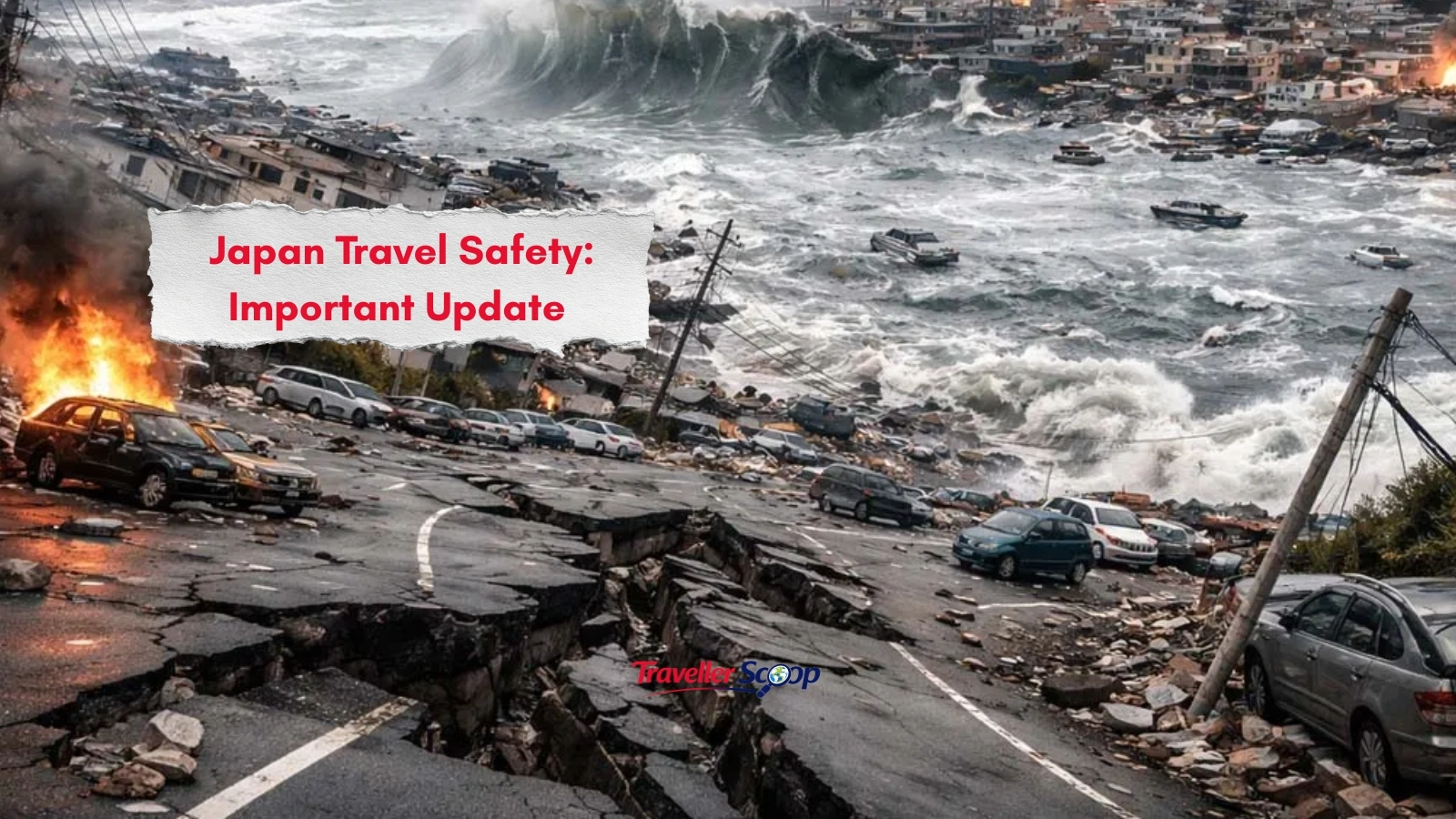
Japan travel safety is the first thing that came to my mind when I heard about the recent earthquake news. It would leave anyone feeling nervous and apprehensive about traveling to a destination after hearing of a strong earthquake. Just a few days ago, another major tremor hit near the coast of Japan, and of course, questions about safety, flights, and travel conditions once again began to emerge.
This is why I waited to see all parts of what is happening before I posted this: a piece that mattered, not in complicated news language, but simply with the words you would expect based on normal travel grumblings.
This move guides you through where the earthquake happened and the tsunami risk is, how it is affecting flights, and what I myself feel like you should do if your visit is just around the corner.
Read more: https://travellerscoop.com/travel-safety-tips-tourist
What exactly happened in Japan?
For this critical Japan travel safety update, allow me to explain in detail what it is that happens and how these incidents are related.
A 7.5-magnitude earthquake rocked Japan’s eastern coast. It struck at a depth of only about 10 km—considered shallow for this type of seismic activity, meaning the shaking was felt strongly in nearby areas, where its epicenter was near the coast off of Sanriku in the Pacific Ocean.
The original magnitude of 7.3 was later upgraded to 7.5, making this a major earthquake event. It was rated an “upper five” on Japan’s own scale of intensity, meaning people had quite a shake; things may have fallen, and movement in some cases would have been difficult.
Areas closest to the impact
The regions most affected by this earthquake include:
- Hokkaido: Northern island with some coastal alerts
- Aomori: Northern Honshu region with noticeable shaking
- Iwate: One of the key coastal areas where warnings were issued
These areas are along Japan’s eastern coastline, which is more exposed to undersea earthquakes.
Why does this matter for Japan travel safety
In terms of Japan travel safety, this kind of earthquake may sound alarming, but there are a few important things I always keep in mind:
Shallow depth = stronger shaking, but faster response:
The earthquake was shallow, which means it was felt strongly but also activated immediate alerts and safety systems.
Japan is built for earthquakes:
In Japan, structures such as buildings and transport systems are designed to withstand significant tremors. This reduces real damage significantly.
Advanced warning systems:
It has one of the best early warning systems in the world, Japan. Alerts arrive seconds later, allowing people time to respond.
Prepared population:
The locals are trained on what to do during tremors, so it does not panic or cause any injuries.
My very simple overview (big update regarding safety travelling in Japan):
Whilst a 7.5 is certainly no walk in the park, it is this management of the situation within Japan that catches my eye as an important update on tourism safety there —
- Strong quake
- Immediate alerts
- Minimal damage
It is this blend that makes Japan such a safe and low-risk place of travel, even when things like this occur within the world.
Is there a tsunami warning right now?
Yes, there was a tsunami warning issued, which is a standard precaution after strong undersea earthquakes.
Authorities warned that waves up to 3 meters high could hit parts of the coastline. However, the actual waves recorded so far have been much smaller:
- Around 40 cm at Miyako port in Iwate
- Small waves detected off the coast of Aomori
Another key point in this important update on Japan is that the Pacific Tsunami Warning Center later lifted its broader warning, which suggests the situation is not escalating.
Still, local authorities advised people in coastal areas to move to higher ground as a precaution.
Evacuation updates (important update on Japan travel safety)
Yes, but it’s very important to note & understand properly if you are concerned about Japan travel safety.
Some coastal areas, as well as those under high alert, had about 128 thousand people advised to evacuate. These notices mostly covered Iwate and central Hokkaido, areas where tsunami warnings and aftershock risks were being tracked.
Much confusion ensues at this point, so let’s break it down and keep it simple in this key update about travel safety in Japan.
- It’s not where someone forced you to evacuate.
- Authorities are urging people to evacuate to safer ground but not forcing them out.
It is a precautionary step:
For risk avoidance, authorities intervene early, before the danger in fact unfolds.
You were taught this in Japan as part of standard safety training:
Japan is also more of a “better safe than sorry” type of environment when it comes to disasters.
Ground reality in affected areas:
But numbers aside, here is what is important:
- No major damage reported
- Nothing indicates mass destruction in these regions.
No injuries confirmed:
This is an exceptionally reliable sign that things are under control.
Situation is stable and monitored:
This is why authorities are monitoring aftershocks and activity in the sea.
So why this actually should be reassuring for travelers:
At first, the above situation may sound menacing from a Japan travel safety standpoint—but look closer and you see something very good:
Fast response system:
The response is immediate, so risks are low.
Highly organized disaster management:
Everything else, including alerts and evacuation routes, is preplanned.
Public awareness is very high:
Avoiding the chaos of everyone acting in their own way: people know exactly what to do.
Safety comes first, always:
It takes care of locals and tourists alike without taking any risks, even the small risks.
In this critical update regarding the safety of traveling to Japan, the evacuation warning actually does one thing for me:
The system is acting as designed.
I no longer look at it as a warning sign. I do, however, see it as evidence that the following is true:
- Authorities are alert
- Systems are active
- People are being protected early
That’s nothing to fear, that should be something that gives confidence when planning a trip to Japan for travelers!
Read more: https://travellerscoop.com/best-time-to-see-sakura-in-japan
Is it safe to travel to Japan right now?
This is honestly the most important question—and I’ll answer it as clearly as I can based on this important update on Japan travel safety.
Right now, Japan travel safety remains strong, and yes, it is generally safe to travel to Japan—but with awareness and basic precautions.
Let me explain why I feel confident saying this.
1. No major damage reported
Even though the earthquake was powerful, there are no reports of large-scale destruction in the affected areas.
- Buildings are intact in most regions
- No widespread infrastructure collapse
- Cities and tourist areas continue to function normally
This is a big sign when we talk about Japan travel safety, because strong earthquakes don’t always lead to serious damage, especially in a country like Japan that is built to handle them.
2. No injuries confirmed
Another very reassuring point in this important update on Japan travel safety is that no injuries have been officially reported so far.
- Emergency systems worked quickly
- People were alerted in time
- Evacuation advisories helped reduce risk
For me, this is one of the clearest indicators that the situation is under control. When an earthquake of this size causes no injuries, it shows how effective the safety systems really are.
3. Safety systems are working perfectly
One thing I always admire about Japan is how prepared it is, and this situation proves it again.
- Earthquake early warning systems activated immediately
- Tsunami alerts were issued within minutes
- Evacuation advisories were sent to affected regions
- Continuous monitoring of aftershocks and sea activity
All of this happened quickly and smoothly. From a Japan travel safety perspective, this is exactly what you want to see during a natural event.
Are flights and airports affected
For travelers, this is one of the major concerns.
The big news in this key update on Japan travel safety is that flights are running to schedule.
Two of the major airports closest to your destination are:
- New Chitose Airport
- Sendai Airport
There is no disruption at both airports. That means:
- Airplanes leaving and arriving
- No major cancellations reported
- Travel schedules are mostly intact
What I recommend: –
No matter how normal things seem, even like before, I check once again:
- Flight status
- Airline notifications
- Airport updates
It does only take a few minutes, but it brings so much peace of mind
Should you cancel your trip?
This is honestly a very personal decision, and there’s no one-size-fits-all answer. But based on this important update on Japan travel safety, I’ll share my honest and practical take so you can decide what feels right for you.
When I look at the current situation, Japan travel safety is still stable, but your comfort level and travel style matter just as much as the facts.
1. I would NOT cancel my trip if:
The following are the instances where I am comfortable moving ahead with my travel plans:
Flight to major cities (Tokyo or Osaka):
These cities are not the most perilous coastal areas and have very good earthquake readiness. The infrastructure, transport, and emergency systems are among the world’s best.
My travel dates are not during the active aftershock warnings:
If there are no immediate alerts or high aftershock risks during my travel window, I would go and proceed with the trip.
I am happy for you to stay in touch; be flexible.
Being well-informed is how I travel safely in Japan, and for me. However, as long as I am happy to check updates and follow recommendations by local authorities and
My personal travel safety tips for Japan right now
Based on this important update on Japan travel safety, here’s what I would follow:
1. Stay informed at all times
- This is my number one, most important rule for Japan travel safety.
- With real-time alerts from the Japan Meteorological Agency, I always stay informed
- I ensure the phone notifications that I receive for emergency warnings are turned on
- If anything suspicious goes down, I look at the local news or any updates from hotels.
Why this matters:
Alerts, for instance, are disseminated in very rapid fashion (Japan ). Being
2. Choose safe and reliable accommodation
Accommodation plays a big role in Japan travel safety, and thankfully, Japan is one of the safest countries in this aspect.
- Most hotels follow strict earthquake-resistant building standards
- Staff are usually trained for emergencies
- Many hotels provide clear evacuation instructions inside rooms
What I do:
I prefer booking well-reviewed hotels in central areas rather than isolated locations, especially during uncertain times
Conclusion
After going through all the updates and information, my conclusion is simple:
Japan travel safety is still strong, even after the recent earthquake.
Yes, the situation sounds serious when you first hear about it. But when you look deeper, you realize:
- Systems are working
- Authorities are proactive
- Travel is continuing normally
This important update on Japan travel safety shows that while natural events can happen, Japan remains one of the safest and most prepared destinations in the world.
If you’re planning a trip, don’t panic, but don’t ignore updates either. Stay informed, travel smart, and you should be able to enjoy your journey without major concerns.
Read more: https://travellerscoop.com/direct-vs-connecting-flights-distance-travel
FAQs
1- Is Japan safe to visit after the earthquake?
Yes, overall, it is safe. There are no major damages or disruptions reported.
2- Is there still a tsunami risk?
Warnings were issued, but major risks have been reduced, and broader alerts have been lifted.
3- Are flights canceled?
No, flights are operating normally from nearby airports.
4- Should I cancel my Japan trip?
Not necessarily. Most travelers can continue their plans with basic precautions.

Khushi Vaid
Senior Travel EditorI’m Khushi Vaid, a travel writer with over 2 years of experience creating destination guides, travel tips, and travel planning content. At Traveller Scoop, I write about destinations, travel trends, and practical advice to help readers explore the world with confidence.