
Morning vs Night Flights: Which Is Better for International Travel?
Morning vs night flights is the question I kept circling back to while researching this guide, because the answer quietly decides how your first 48 hours abroad will feel. But departure time changes your jet lag, your chances of a delay, your hotel bill, and how much of your first day abroad you actually enjoy.In […]

Morning vs night flights is the question I kept circling back to while researching this guide, because the answer quietly decides how your first 48 hours abroad will feel. But departure time changes your jet lag, your chances of a delay, your hotel bill, and how much of your first day abroad you actually enjoy.
In this article, I break down morning vs night flights using official on-time data, circadian-rhythm advice from travel experts, and a simple scoring method I built for Indian travelers flying out of Delhi.
By the end, you will know the best time of day to fly internationally for your route, the cheapest time to fly internationally, how to avoid jet lag on international flights, and when the red eye flight vs day flight choice really matters.
Morning vs Night Flights at a Glance
If you only have thirty seconds, this section answers the morning vs night flights question, and the red eye flight vs day flight dilemma inside it, in the simplest way I could.
In short, morning departures win on reliability and on helping you avoid jet lag on international flights, while night departures win on price and time saved.
The best time of day to fly internationally depends on your route, and so does the cheapest time to fly internationally, so let us go deeper.
Why Flight Timing Matters More Than You Think
About 93% of travelers will be affected by jet lag at some point, according to a flight-timing analysis from The Points Guy. Departure time is one of the few levers you control to avoid jet lag on international flights, and choosing the best time of day to fly internationally is central to any morning vs night flight decision.
Delays matter too, and they shape the red-eye flight vs day flight decision. Over five years in the US, roughly 18% of flights were delayed while only about 2% were canceled, according to Going’s disruption guide. And those delays are not spread evenly across the day.
For Indian travelers, there is one more factor. Many long-haul departures from India to Europe and the USA are scheduled in the dead of night, often between 2 AM and 4 AM, as travel writer Wendy Perrin has pointed out.
So for us, morning vs night flights is rarely about “early” versus “late.” It is about accepting a 3 AM airport run to save money or paying a little more for a civilized daytime departure, which may not be the cheapest time to fly internationally.
Morning Flights: The Pros and Cons
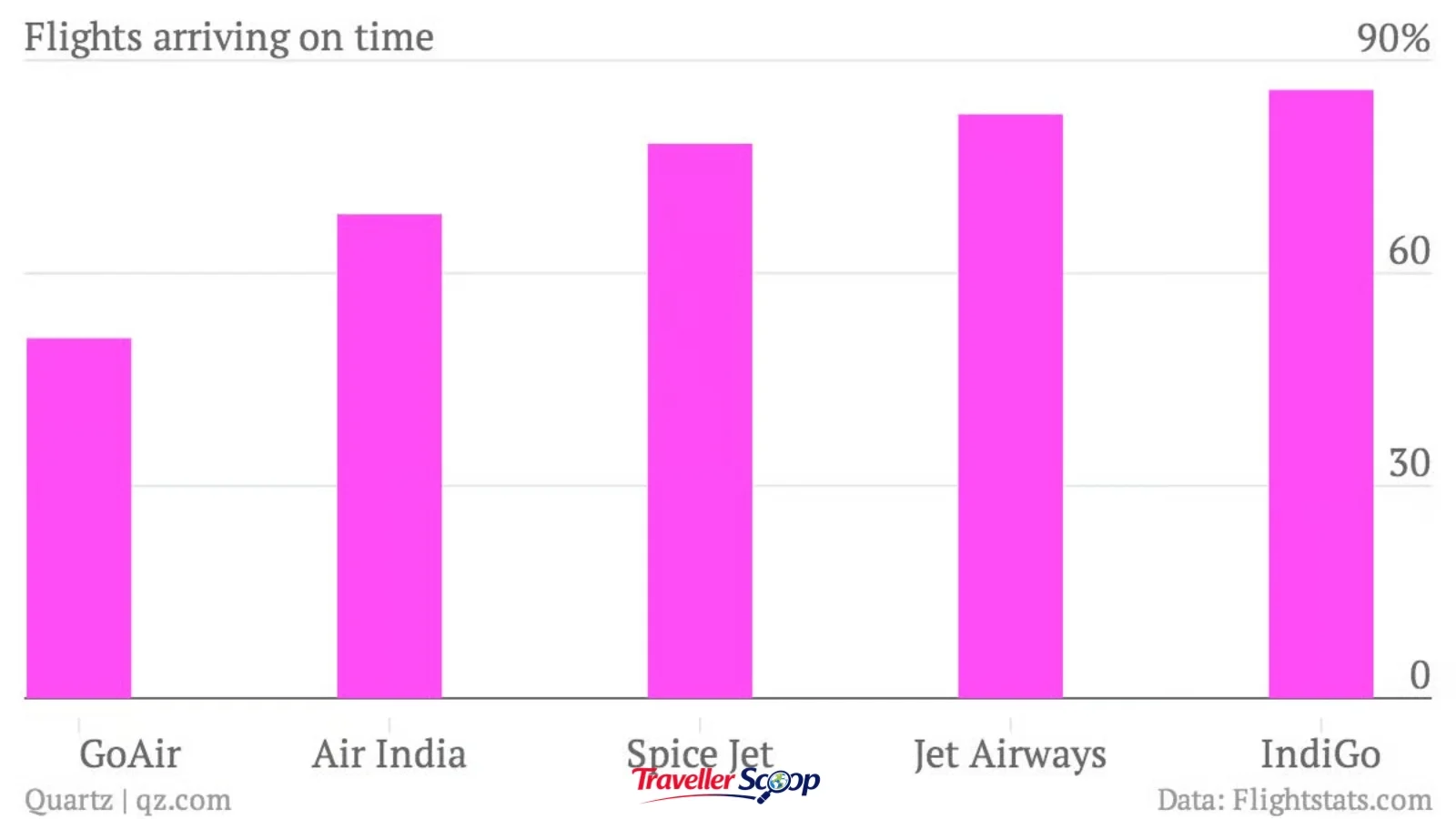
Mornings are the most dependable time to fly. In May 2024, 85.4% of flights departing between 6 and 7 AM arrived on time, while only 65.2% of flights leaving between 5 and 6 PM did, a gap of roughly 20 percentage points (Going, using Department of Transportation figures). Weather is calmer in the morning, and first flights use aircraft that slept at that airport, so they don’t have to wait for a late plane from elsewhere.
AAA Northeast found something similar. Across the US, 72% of flights departed on time from June to August 2025, compared with 78% for the rest of the year. Delays snowball through the day, and morning flights get ahead of the snowball.
That is the strongest argument for treating mornings as the best time of day to fly internationally in the morning vs night flights debate.
Other advantages:
- A sensible arrival hour. A morning departure on a long route often lands you in the evening, so you sleep on local time and avoid jet lag on international flights more easily.
The downside is the alarm clock. A 6 AM international departure means leaving home at 2 or 3 AM. You may also need a hotel on the first night at your destination, which matters when you are hunting for the cheapest time to fly internationally on a tight budget.
Night Flights: The Pros and Cons
Night flights, the red-eye side of the red-eye flight vs day flight choice, leave late and land the next morning. Booking.com’s red-eye guide lists the main benefits: you maximize your time, you skip a hotel night because you sleep on board, and airports are calmer late in the evening.
FareCompare adds that red-eyes are usually less crowded, so better seats are often available, and the cheapest time to fly internationally often falls in this overnight slot.
In the red-eye flight vs day flight contest, the problem is sleep. Sleeping upright is hard, and many routes are too short for a real night’s rest. Experts agree that a red-eye lands you in daylight when your body clock still thinks it is night.
You can also land before hotels allow check-in, and a canceled late-night flight leaves poor fallback options. Night flights pay off only if you can sleep on planes, the first step to avoid jet lag on international flights that land at dawn.
For short routes with a small time difference, though, they are a perfectly sensible choice in the morning vs night flights contest, and sometimes the best time of day to fly internationally.
Red Eye Flight vs Day Flight: What Body-Clock Science Says
Strip away price, and the red eye flight vs day flight question is really about your circadian rhythm, the internal clock that tells you when to sleep. Jet lag happens when that clock is out of sync with local time at your destination, so the goal is to avoid jet lag on international flights by keeping the two aligned.
Safari travel experts quoted by Travel + Leisure recommend landing between 2 PM and 5 PM. That window gives you daylight and lets you stay awake until local bedtime. A morning or midday departure on a long route often lands you in that window, which makes it the best time of day to fly internationally for many travelers, while a red-eye lands you at 6 or 7 AM, a full day away from bedtime.
Direction matters too. Eastbound travel usually causes more intense jet lag than westbound, because advancing your body clock is harder than delaying it. Several circadian-based flight tools reduce the red eye flight vs day flight debate to one rule of thumb: fly the red-eye when traveling east, and take the day flight when traveling west.
It is a heuristic, not a law, but it helps avoid jet lag on international flights. On ultra-long routes of 14 hours or more, you will be on board for most of a day anyway, so the red eye flight vs day flight difference shrinks.
Best Time of Day to Fly Internationally, Route by Route
There is no single best time of day to fly internationally, because it changes with distance and time zones. Here is how I think about popular routes from Delhi (durations are approximate).
| Route | Time Difference from IST | Approx. Flight Time | What I Would Pick |
|---|---|---|---|
| Delhi to Dubai | IST is 1.5 hours ahead | 3.5–4 hours | Cheapest slot; jet lag is minimal |
| Delhi to Bangkok | IST is 1.5 hours behind | 4–4.5 hours | Morning flight, for a free first afternoon |
| Delhi to London | IST is 4.5 hours ahead in UK summer, 5.5 hours in winter | 9–10 hours | Late-morning flight, to land mid-afternoon |
| Delhi to New York | IST is 9.5–10.5 hours ahead | 14–16 hours | Evening or night flight, so I can sleep during the long journey |
On short routes, the best time of day to fly internationally is simply the cheapest time to fly internationally that suits your wake-up tolerance, since a one or two hour clock difference barely causes jet lag.
On medium routes like London, I lean toward mornings. A 10 AM Indian departure lands around 3 PM in the UK, inside the sweet spot experts recommend. A 2:30 AM departure lands around 7:30 AM, and you spend a long day fighting sleep, which makes it harder to avoid jet lag on international flights.
On ultra-long routes like New York, the best time of day to fly internationally flips. With about 15 hours in the air, a night departure lets you sleep for part of the journey.
Cheapest Time to Fly Internationally: Morning or Night?
Early morning and overnight departures are less in demand, so they can be cheaper, as FareCompare explains. Business travelers prefer mid-morning and afternoon, which pushes those fares up. So the cheapest time to fly internationally is frequently the first flight of the day or the last flight of the night, not the midday peak.
But a cheap fare is not the whole bill. Here is a hypothetical. A morning flight costs ₹4,000 more than a red-eye and lands in the evening, so you need a ₹6,000 hotel that night. That is ₹10,000 extra versus the red-eye.
Flip it around: a night flight that saves the hotel night can be the cheapest time to fly internationally even when its fare looks higher. These figures are an example, not live prices. Run your own numbers with our Travel Budget Calculator before booking.
Quick money tips:
- Compare total cost (fare + first-night hotel + airport transfer), not only the fare, before settling on the best time of day to fly internationally.
For more savings ideas, see our budget travel guides. Treat the price gap in morning vs night flights as a pattern, not a rule, because the cheapest time to fly internationally varies by season and airline.
How to Avoid Jet Lag on International Flights
Whichever slot you pick, these habits help you avoid jet lag on international flights.
Before the flight
- Shift your sleep 30-60 minutes a day for 3-4 days toward destination time.
After landing
- Get outdoor daylight quickly; light is the strongest signal to reset your clock.
- Stay awake until local bedtime. A short walk beats a long nap.
To avoid jet lag on international flights, manage light, sleep and timing together rather than relying on one trick. For more planning help, browse our travel tips category.
My Flight Timing Scorecard: A Simple Way to Decide
Most guides stop at pros and cons, so I built a scorecard that turns morning vs night flights into one number. The weights are my editorial judgment for Indian long-haul routes, and you can change them to find your own best time of day to fly internationally.
| Factor | Weight |
|---|---|
| Jet lag impact | 30% |
| On-time reliability | 25% |
| Total cost | 20% |
| Sleep and comfort | 15% |
| Time saved at destination | 10% |
| Total | 100% |
The morning departure wins by nine points, mainly because of jet lag and reliability. Change one input, such as a very expensive morning fare, and the result can flip, along with your cheapest time to fly internationally.
| Factor | Morning (about 10 AM) | Night (about 2:30 AM) |
|---|---|---|
| Jet lag impact | 8 | 5 |
| On-time reliability | 8 | 6 |
| Total cost | 5 | 8 |
| Sleep and comfort | 7 | 5 |
| Time saved | 5 | 7 |
| Weighted score (out of 100) | 69.5 | 60.5 |
That is the value of a scorecard for the morning vs night flights decision: it makes your trade-offs visible. These scores are illustrative judgments, not measured data.
Which One Should You Choose in the Morning vs Night Flights Debate?
- First-time international flyers: In the red eye flight vs day flight debate, pick the day flight for fewer delays and a predictable first day.
- Families with kids: In the red eye flight vs day flight question, a daytime flight that lands in the evening keeps sleep routines closer to normal.
- Business travelers: In the red eye flight vs day flight debate, a night flight into a morning meeting works if you can sleep. Otherwise, arrive a day early.
- Budget travelers: Compare the full cost. The cheapest time to fly internationally may be the red-eye, but only if it saves a hotel night.
- Light sleepers: Choose the day option as your best time of day to fly internationally, which also helps avoid jet lag on international flights. The red eye flight vs day flight comparison favors day flights if you cannot sleep upright.
- Everyone: Confirm your documents with our Visa Requirement Checker first, because the best time of day to fly internationally does not matter if you are missing a visa.
Conclusion
My verdict: Morning vs Night Flights is not a contest with one winner. Morning flights win on reliability, with 85.4% of 6-7 AM flights arriving on time in the May 2024 data I cited, and they usually give you an easier landing window.
Night flights win on price and time saved, particularly on ultra-long routes where the red eye flight vs day flight difference shrinks. The best time of day to fly internationally is the one that matches your route, your sleep style, and your total budget, and the cheapest time to fly internationally is not always the cheapest fare once you count a hotel night.
Use the scorecard, follow the habits that help you avoid jet lag on international flights, and book the slot that makes your first day abroad count.
Planning your next trip? Check our international travel guides for destination ideas, and tell me in the comments which side of morning vs night flights you are on.
FAQs
Are morning flights really less likely to be delayed?
Yes. In May 2024, 85.4% of 6-7 AM flights arrived on time versus 65.2% of 5-6 PM flights, and AAA Northeast found early departures had the lowest delay risk in summer 2025. It is not a guarantee, but the odds favor you, and calmer mornings also help you avoid jet lag on international flights.
Which is better, morning vs night flights, for international travel?
For most medium-haul routes, morning flights are better because they are more reliable and make it easier to avoid jet lag on international flights. Night flights suit ultra-long routes or travelers hunting the cheapest time to fly internationally.
Is a red eye flight vs day flight choice better for jet lag?
In the red eye flight vs day flight comparison, Booking.com notes that long red-eyes across many time zones can intensify jet lag. Many circadian-based tools favor the day flight westbound and the red-eye eastbound.
What is the best time of day to fly internationally?
Ideally one that lands you between 2 PM and 5 PM local time, so you can stay awake until bedtime. On very long routes, an evening departure so you can sleep on board may work better.
What is the cheapest time to fly internationally?
Often the first flight of the morning or the last flight at night, since both are less in demand. Always add the hotel cost and transfers before deciding.

Khushi Vaid
Senior Travel EditorI’m Khushi Vaid, a travel writer with over 2 years of experience creating destination guides, travel tips, and travel planning content. At Traveller Scoop, I write about destinations, travel trends, and practical advice to help readers explore the world with confidence.