5 Most Dangerous Countries for Solo Travelers: Shocking Safety Risks You Should Know
Most dangerous countries for solo travelers, that’s the exact phrase I typed into Google the night before my own first solo trip, terrified I’d pick the wrong place. I’ve lost count of how many times someone has messaged me since then asking the same thing: “Khushi, I want to travel solo, but I’m scared of picking […]
Most dangerous countries for solo travelers, that’s the exact phrase I typed into Google the night before my own first solo trip, terrified I’d pick the wrong place. I’ve lost count of how many times someone has messaged me since then asking the same thing: “Khushi, I want to travel solo, but I’m scared of picking the wrong country.”
That fear is valid. When you actually research this properly, the data can be genuinely eye-opening, some destinations look perfectly fine on Instagram but score dangerously high on real risk indexes once you factor in crime, healthcare access, and how safe locals themselves feel walking around at night.
I dug into the latest 2026 solo travel risk data, the kind insurance companies use to price your policy, not just blogger opinions, and pulled together this list of the most dangerous countries for solo travelers, along with the exact numbers behind each ranking.
If you’re planning a solo trip this year, this is the safety research I wish someone had handed me before my first solo flight.
What Actually Makes a Country Dangerous for Solo Travelers?
Before jumping into the list, it’s worth understanding what “dangerous” actually means in this context. When researchers and travel insurers calculate a solo travel risk index, they’re not just looking at crime headlines. They typically weigh:
- Violent and petty crime rates: robbery, assault, and scams targeting tourists
- Political stability: protests, unrest, coups, and government transitions
- Healthcare access: how quickly and reliably you could get treated in an emergency
- Infrastructure quality: roads, public transport, and emergency response systems
- Perceived safety: what percentage of residents say they feel safe walking alone at night (this one matters more than people think)
A country doesn’t need war or terrorism to be risky for solo travelers, it can simply be a place where, if something goes wrong and you’re alone, help is slow, unreliable, or nonexistent.
That combination is exactly why some of the most dangerous countries for solo travelers in 2026 might surprise you.
The 5 Most Dangerous Countries for Solo Travelers in 2026 (Ranked by Risk Index)
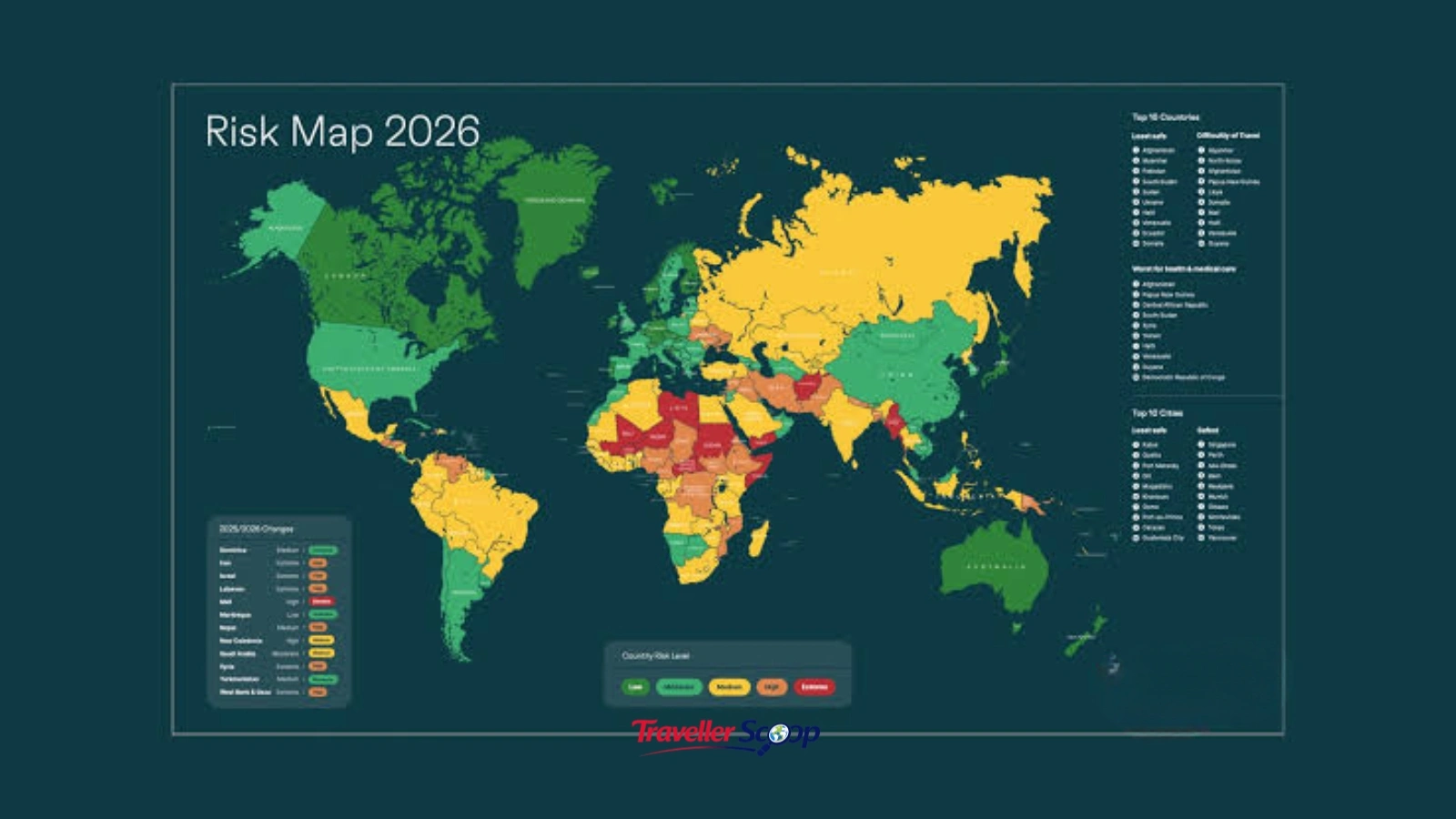
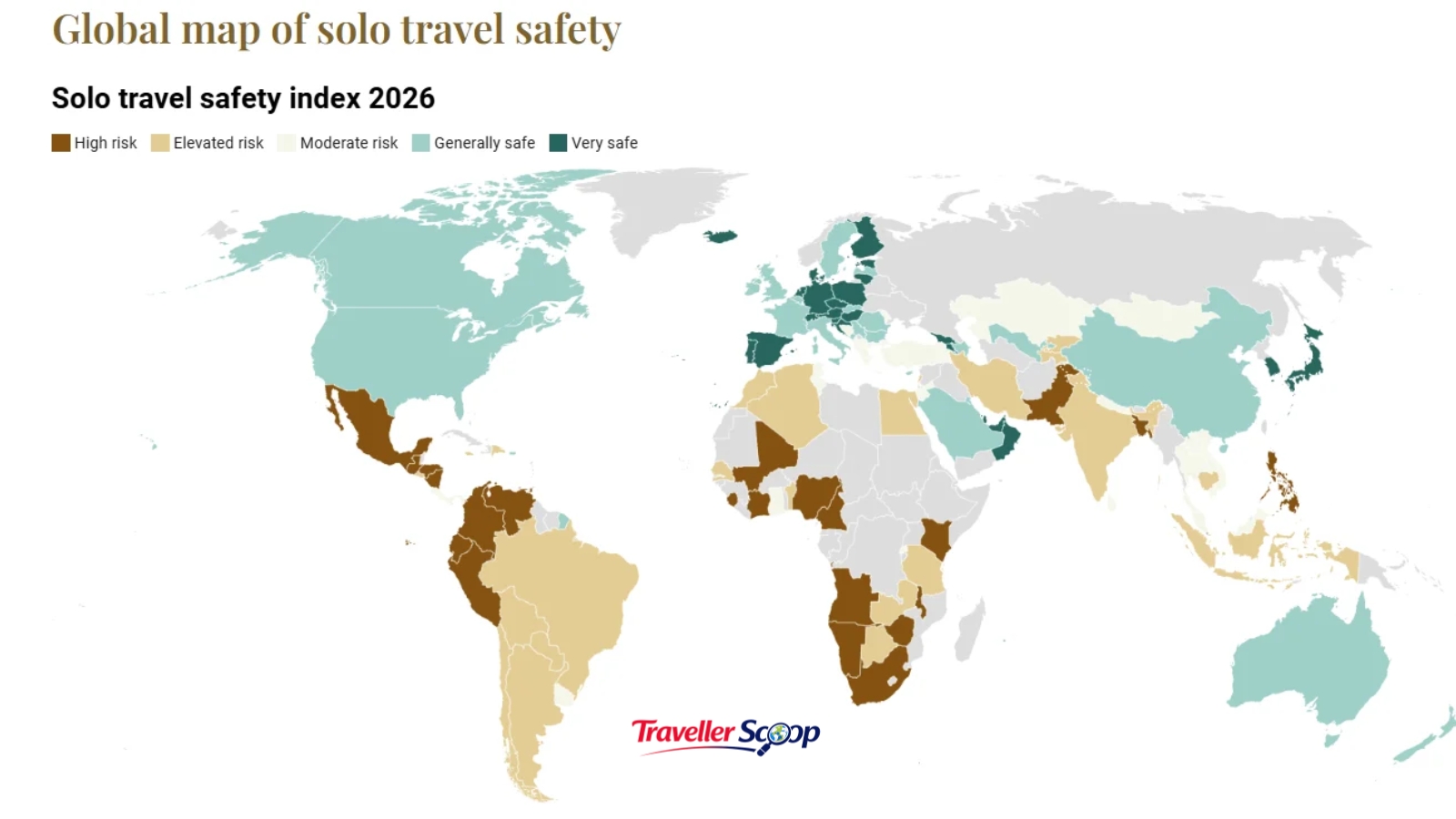
This ranking is pulled from Squaremouth’s 2026 Solo Travel Risk Index, which scored 113 countries on a 10-point scale using crime data, healthcare quality, infrastructure, and local safety perception.
Their analysis named Venezuela, Peru, and Gabon as the highest-risk destinations for solo travelers, and found that South American countries account for half of the 10 highest-risk destinations identified. Here are the top five.
1. Venezuela: Risk Index: 9.74/10
Venezuela tops nearly every list of countries to avoid solo travel 2026, and the numbers back it up. The country earned this ranking largely because very few people feel safe walking alone at night there, compounded by poor healthcare and weak infrastructure.
Combine that with an unstable economy and unpredictable political situation, and you get the single riskiest destination on the index for anyone traveling alone
2. Peru: Risk Index: 8.87/10
This one genuinely surprised me, because Peru is such a popular backpacker destination (hello, Machu Picchu).
But popularity doesn’t equal safety. Petty theft, scams targeting solo tourists, and pockets of higher-altitude regions with limited emergency infrastructure push Peru into second place among the most dangerous countries for solo travelers.
3. Gabon: Risk Index: 8.51/10
Gabon rarely makes mainstream “danger” lists, which is exactly why it’s worth knowing about if you’re researching solo travel safety risks by country.
Limited tourism infrastructure, sparse healthcare access outside the capital, and difficult terrain mean a solo traveler here has very little margin for error if something goes wrong.
4. Colombia: Risk Index: 8.38/10
Colombia has done an enormous amount to rebuild its tourism image over the last decade, and cities like Medellín and Cartagena genuinely are safer than they once were.
But at a country level, crime targeting tourists, particularly scams, theft, and, in rarer cases, kidnapping in specific regions- still keeps it firmly among the riskier choices if it is safe to travel alone in South America is a question on your mind.
5. Bolivia: Risk Index: 8.37/10
Bolivia rounds out the top five, driven mostly by road safety issues, altitude-related health risks, and limited emergency medical infrastructure outside La Paz. For solo travelers without a support network nearby, that combination can turn a minor incident into a genuinely dangerous one.
Rounding out the wider top 10:
Jamaica (8.27), Guyana (8.21), Ecuador (8.12), Trinidad and Tobago (8.11), and South Africa (8.04), so if you’re weighing a trip anywhere in this list, extra preparation isn’t optional.
Common Warning Signs Every Solo Traveler Should Watch For
Beyond the country-level data, there are pattern-level red flags I’ve learned to watch for personally, and that come up again and again in solo female travel safety risks research specifically:
- Being approached by overly friendly strangers immediately after landing
- Unmarked taxis waiting right outside arrival gates instead of official ranks
- ATMs in isolated, poorly lit areas
- Locals actively warning you to avoid a specific neighborhood after dark
- Accommodation with no working locks, cameras, or front-desk staff overnight
None of these guarantee danger on their own. But two or three together, in a country already flagged on a solo travel risk index, is a strong signal to change your plans.
How to Stay Safe: A Practical Solo Travel Safety Checklist
I’m not saying skip these destinations entirely — some of the most rewarding trips I’ve read about from other solo travelers happened in “risky” countries, done carefully. If you’re set on visiting one of the most dangerous countries for solo travelers on this list, here’s what actually reduces risk:
- Register with your embassy or use a travel-tracking app before you land
- Buy travel insurance that covers medical evacuation, not just trip cancellation
- Share your live location with at least one trusted person at all times
- Book accommodation with 24-hour staff and verified reviews, not the cheapest option
- Avoid arriving or moving around after dark, especially in unfamiliar cities
- Keep a secondary card and cash hidden separately from your main wallet
- Learn a handful of local-language safety phrases — even basic ones change how you’re perceived
If you want a faster way to check risk before booking, run the destination through our Destination Safety Radar, it pulls live advisory data so you’re not relying on outdated blog posts.
Safer Alternatives If You Still Want the Adventure
If this list has you rethinking your itinerary, you don’t have to give up on solo travel altogether. San Marino, Andorra, and Singapore currently rank as the lowest-risk destinations for solo travelers, alongside Austria, the Czech Republic, and Estonia.
These offer nearly all the same “step outside your comfort zone” energy new language, new culture, full independence with a fraction of the risk. I’ve got detailed breakdowns of solo-friendly, lower-risk destinations in our Solo Travel and Women Safe Travel sections if you want somewhere to actually start planning.
And if budget is part of your decision-making too, our Compare Destinations tool lets you weigh cost against safety side by side, so you’re not choosing blind.
Conclusion
Researching the most dangerous countries for solo travelers is not about creating fear or telling people to stop exploring the world. It is about understanding the risks before you go and making smarter travel decisions. Solo travel gives you freedom, but it also means you are responsible for your own transport, accommodation, belongings, communication and emergency plans.
In 2026, Venezuela, Peru, Gabon, Colombia and Bolivia are among the destinations that can require extra caution for solo travelers, particularly because of concerns such as crime, unreliable infrastructure, difficult transportation, limited access to healthcare in some areas and security issues that can vary significantly between cities and regions.
However, risk is rarely the same across an entire country. A popular tourist area can have a very different safety situation from a remote border region or isolated rural location.
For solo travelers, the biggest concern is often not one dramatic incident but a combination of smaller challenges. Getting lost in an unfamiliar area, using an unverified taxi, carrying expensive belongings openly, travelling after dark or staying somewhere with poor security can increase vulnerability.
Language barriers and limited local support can make these situations more difficult when you are travelling alone.
That does not automatically mean these countries should be removed from your travel bucket list. If you decide to visit, preparation can make a significant difference. Research your specific destination rather than relying only on country-wide statistics, choose well-reviewed and secure accommodation, use trusted transportation, keep important documents and emergency contacts accessible, and share your itinerary with someone you trust.
Travel insurance with appropriate medical and emergency coverage is also worth considering.
It is equally important to understand that safety conditions can change quickly. Government travel advisories, local conditions, weather, protests, transport disruptions, and regional security situations can affect the experience even after you have planned your trip.
And if you are a first-time solo traveler, there is no need to begin with a high-risk destination. There are plenty of places around the world where you can enjoy solo travel while dealing with fewer logistical and safety challenges.
The goal is not to avoid adventure, it is to choose a destination that matches your experience level, preparation and comfort with uncertainty.
FAQs
Should I cancel my trip if my destination is on this list?
Not necessarily. Being on this list means extra preparation is essential, not that travel there is impossible. Insurance, embassy registration, and avoiding high-risk areas within the country go a long way.
What is the most dangerous country for solo travelers in 2026?
Venezuela currently ranks highest on the 2026 Solo Travel Risk Index, with a risk score of 9.74 out of 10, driven by low perceived safety, weak healthcare access, and political instability.
Is it safe for women to travel solo to these countries?
It's riskier than average, but not automatically off-limits. Solo female travel safety risks are generally higher in countries with lower perceived-safety scores, so extra precautions, daytime-only movement, vetted accommodation, and local guides — matter more here than elsewhere.
Are popular tourist destinations like Peru or Colombia really that dangerous?
Popularity doesn't equal safety. Both countries have well-developed tourist zones that feel very safe, but at a national level, crime and infrastructure gaps outside those zones push their overall risk index higher.
How is a country's solo travel risk actually calculated?
Most risk indexes combine crime statistics, healthcare quality, infrastructure reliability, and, importantly, the percentage of local residents who report feeling safe walking alone at night.

Khushi Vaid
Senior Travel EditorI’m Khushi Vaid, a travel writer with over 2 years of experience creating destination guides, travel tips, and travel planning content. At Traveller Scoop, I write about destinations, travel trends, and practical advice to help readers explore the world with confidence.