
New Immigration Rules & Higher Passport Fees,6 Crucial Updates Every Indian Traveller Must Know: Urgent Travel Alert
New Immigration Rules have quietly rewritten the rulebook for every Indian who travels abroad, and I found this out the expensive way, three weeks ago, sitting at the Passport Seva Kendra, when the counter staff told me my renewal fee had jumped from ₹1,500 to ₹2,500. I hadn’t read the notification, I hadn’t budgeted for […]
New Immigration Rules have quietly rewritten the rulebook for every Indian who travels abroad, and I found this out the expensive way, three weeks ago, sitting at the Passport Seva Kendra, when the counter staff told me my renewal fee had jumped from ₹1,500 to ₹2,500. I hadn’t read the notification, I hadn’t budgeted for it, and I definitely wasn’t the only one caught off guard that morning.
Between the new immigration rules for Indian travellers rolling out this year and the biggest passport fee hike in 14 years, 2026 is turning into one of those years where “I’ll figure it out at the airport” simply doesn’t work anymore.
So I sat down, went through the actual government notifications, called a friend at a travel agency, and pulled together everything an Indian traveller genuinely needs to know right now, no fluff, just the numbers and the changes that matter.
If you’re planning to fly out this year, these new immigration rules will touch your passport, your visa, your budget, and even how fast you clear the airport.
What Do the New Immigration Rules Mean for Indian Travellers in 2026?
For Indian travellers, 2026 is becoming a year where international travel requires a little more preparation than simply booking a flight and arranging a visa. Changes in passport fees, immigration procedures, visa requirements and digital border checks mean travellers need to pay closer attention to the rules before leaving India.
The important thing to remember is that there isn’t one single immigration rule that applies to every country. Each destination has its own entry requirements, and these can change throughout the year.
Some countries are introducing digital travel authorisations and stronger border checks, while others are changing visa procedures or application fees.
Passport costs are also something travellers need to consider when planning their budget, particularly if they are applying for a new passport or renewing an existing one. I’d recommend checking the latest fee on the official Passport Seva website rather than relying on older articles or social media posts.
Visa requirements also need to be checked separately for every destination.
Some countries offer visa-free entry, visa-on-arrival or e-visa facilities to Indian passport holders, while others require a visa before departure. Depending on the destination, travellers may also need proof of accommodation, return tickets, sufficient funds, travel insurance or other supporting documents.
Digital immigration systems are becoming increasingly common too, with some airports using electronic gates, biometric verification and online arrival forms.
This makes it especially important to ensure that your passport number, name and other details match across all your travel documents.
For me, the biggest lesson is simple: don’t wait until you reach the airport to discover an immigration requirement. Before travelling internationally, check your passport validity, visa or travel authorisation, entry forms, insurance requirements, accommodation details and return-ticket requirements. Immigration rules can change, so verifying the latest information through the destination country’s official government or immigration website is always the safest approach.
International travel hasn’t necessarily become difficult in 2026, but being prepared has become much more important.
A few minutes of checking the rules before your trip can save you from unexpected expenses, delays and unnecessary stress at the airport.
6 New Immigration Rules & Higher Passport Fees
New immigration rules and higher passport fees are making international travel more expensive and paperwork-heavy for Indian travellers in 2026, making it more important than ever to check the latest requirements before booking your trip.
1. India Passport Fee Hike 2026: What Changed After 14 Years
Let’s start with the update that hit my wallet directly. The Ministry of External Affairs notified the Passports (Amendment) Rules, 2026 on June 25, and the new fee structure kicked in from July 1, 2026, replacing rates that hadn’t been touched since 2012.
This is the piece of the new immigration rules for Indian travellers that almost everyone underestimates, because a passport renewal feels routine until the bill lands.
The government has cited three reasons for the revision: rising operational costs, the addition of security features like biometric chips, and the ongoing modernization of the Passport Seva system.
Whatever the reasoning, the outcome is simple: getting or renewing an Indian passport now costs 60-75% more depending on the category. This is, without doubt, one of the most talked-about new immigration rules of the year, and if you’re due for a renewal in the next 12 months, it changes your travel budget math immediately.
2. New Passport Fees List: Normal, Tatkal, Renewal & Replacement
Here’s the actual breakdown, because vague headlines don’t help when you’re filling out a form:
- 36-page passport (adult, fresh or renewal), normal processing: ₹1,500 → ₹2,500
- 60-page passport (adult), normal processing: ₹2,000 → ₹3,500
- Tatkal passport (fresh, ordinary booklet): now ₹5,000
- Lost or damaged passport replacement: now matches the new Tatkal fee slab
- Police Clearance Certificate (PCC) & surrender certificate: ₹750 in India, USD 40 outside India
- Certificate of Identity: ₹1,000 in India, USD 50 outside India
A 10% discount still applies to fresh applications for children under 8 and senior citizens above 60, but this concession does not extend to reissue or renewal applications, which is something I almost missed while budgeting for my parents’ passports.
Minors under 18 (who make up nearly 25-30% of all Indian passports issued annually) are also affected by these new immigration rules, so if you’re planning a family trip, factor this in for every family member, not just yourself.
My tip: if your passport expires within the next year, renewing now under whichever notification window is still open can save you real money compared to applying after further revisions. Rules like these rarely go backward.
3. New Immigration Rules for Indian Travellers Beyond the Passport
The passport fee hike is only one part of the story. Several new immigration rules for Indian travellers are reshaping how we cross borders in 2026, and most of them are procedural, not just financial.
India itself has tightened processes at entry and exit points as part of the broader compliance push tied to these new immigration rules, expect more consistent document checks, especially around proof of onward travel and visa validity. If you’ve been travelling on a “figure it out at immigration” basis, this is the year that habit stops working.
Globally, immigration authorities are leaning hard into digital verification. That means fewer manual stamps, more biometric scans, and stricter matching between your passport data and your visa application data.
For Indian travellers used to physical passport stamps as trip souvenirs, this is a genuine shift, and one more reason the new immigration rules deserve your attention before, not during, your trip.
4. Schengen & EU Entry/Exit System: What It Means for Your Europe Trip
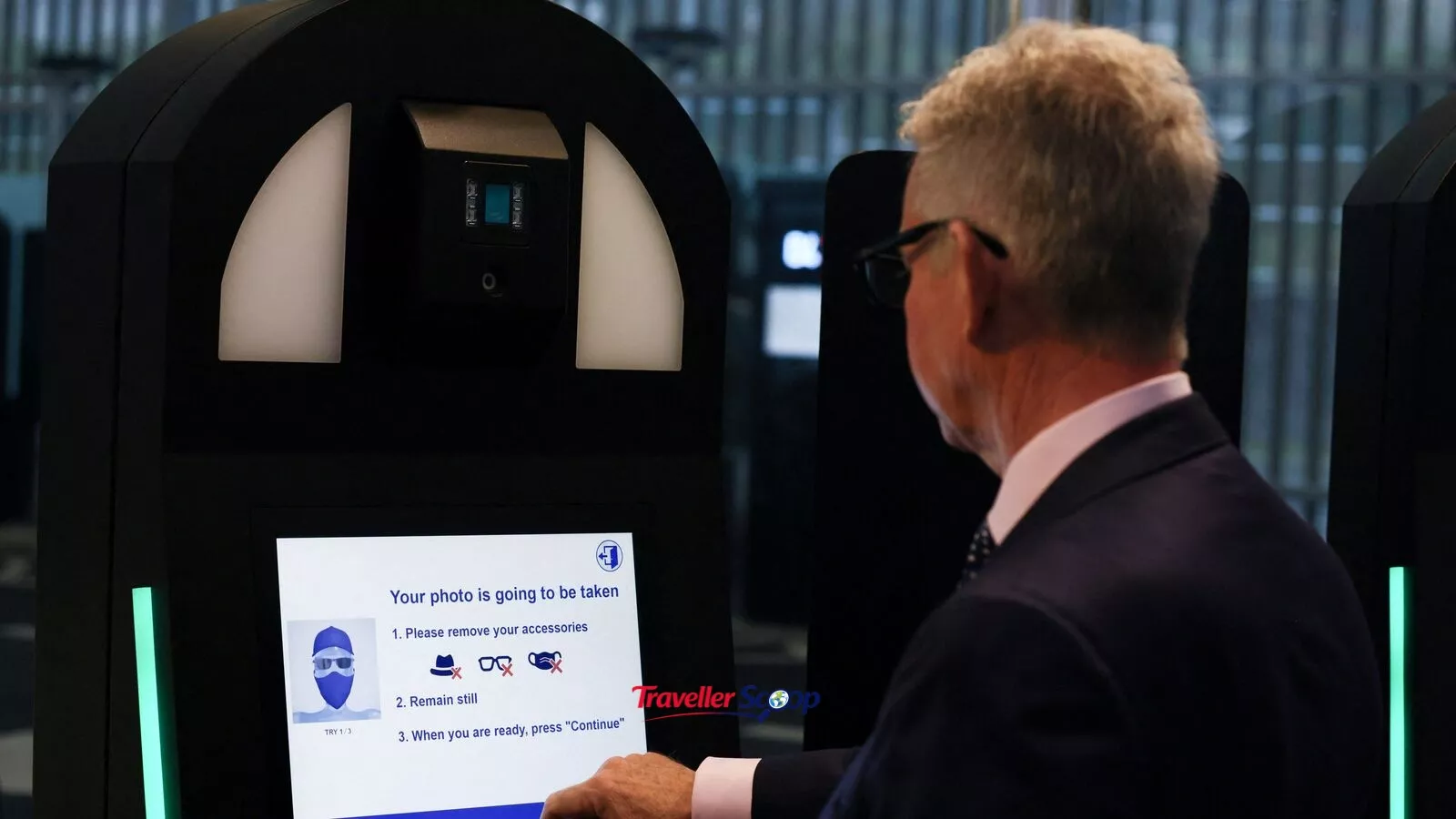
If Europe is on your list this year, this update matters more than any other. The EU’s Entry/Exit System (EES) began rolling out on October 12, 2025, and is expected to be fully operational across all Schengen checkpoints by April 10, 2026.
It replaces manual passport stamping with digital biometric checks, fingerprints and facial scans recorded at the border instead of an ink stamp in your booklet.
Alongside EES, the Cascade Regime is now active for eligible Indian travellers, offering a pathway to 2-year and eventually 5-year multiple-entry Schengen visas for those with a clean travel history.
Combined, these are some of the most significant new immigration rules Indian travellers to Europe have seen in years. First-time applicants should expect slightly longer border processing initially as the biometric system settles in, while frequent travellers stand to benefit from longer visa validity down the line.
5. US Visa Integrity Fee & DV Lottery Changes for Indians
The United States has introduced a mandatory Visa Integrity Fee of USD 250 for most non-immigrant visa categories starting in 2026, covering tourist, student, and work visas. This is a direct added cost on top of your existing visa application fee, and it’s non-negotiable under the current framework.
Separately, Indian applicants are not eligible for the Diversity Immigrant Visa (DV) Program for fiscal year 2026, since India is classified as a “high-admission” country; more than 50,000 Indian nationals have immigrated to the US in the past five years through other visa categories, which disqualifies the country from that year’s lottery.
If US travel or relocation is part of your plan, budget for the integrity fee now and don’t count on the DV route as a backup this cycle.
6. India's Fast Track Immigration: Trusted Traveller Programme (FTI-TTP)
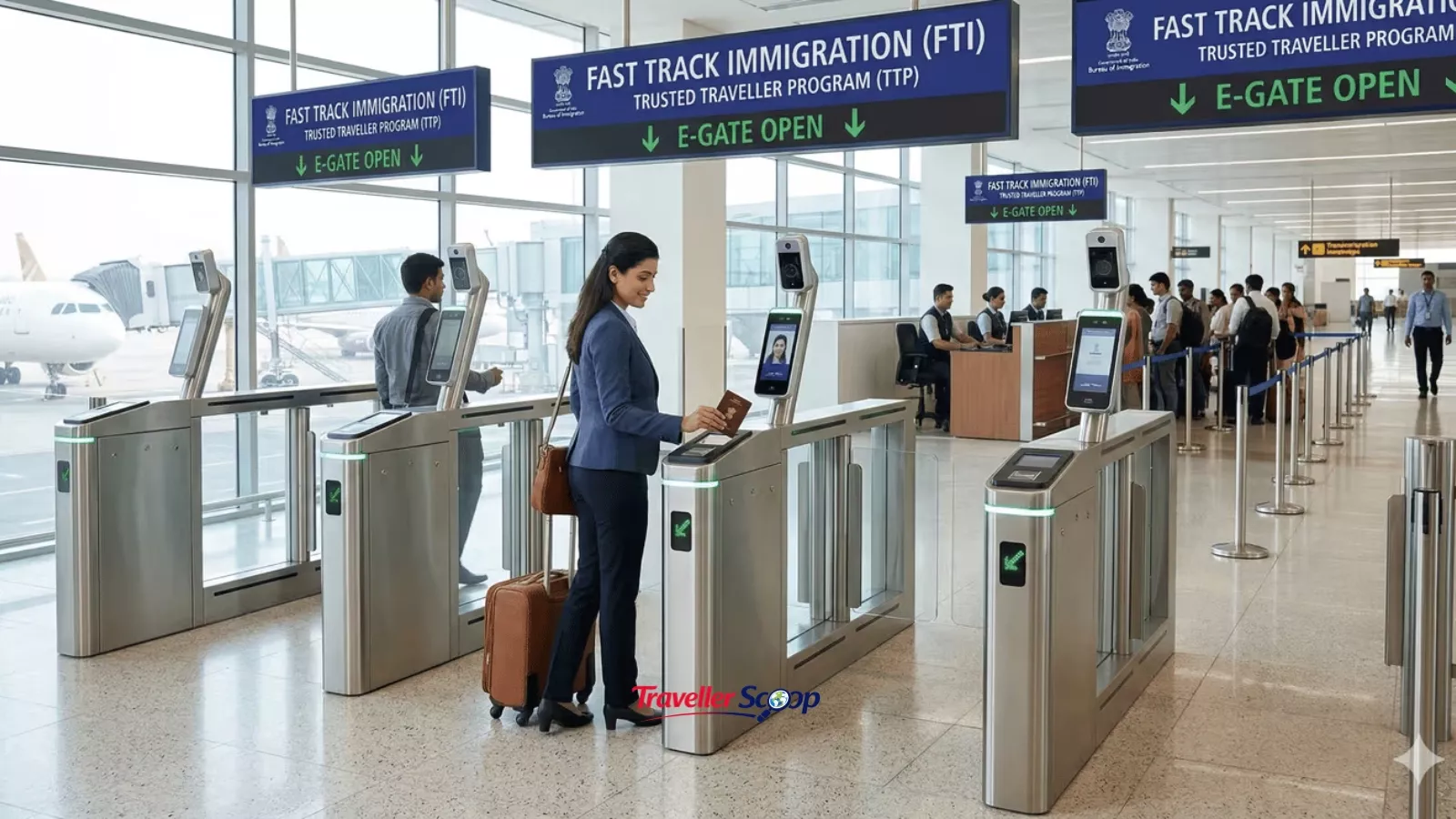
Not every update is bad news. India’s Fast Track Immigration Trusted Traveller Programme has expanded to 13 major airports, including Delhi, Mumbai, Bengaluru, Chennai, Hyderabad, and Kolkata.
Once you enrol with your biometric data, fingerprints and a facial scan, you can use automated e-gates for immigration clearance instead of the regular queue.
This is genuinely one of the more traveller-friendly new immigration rules on this list. For anyone who flies frequently, this alone can save 20-30 minutes at peak travel times, and I’d recommend enrolling before your next long-haul trip rather than waiting in line to sign up on travel day.
How These New Immigration Rules Will Affect Your Next Trip
Putting it all together, here’s how I’m personally adjusting my own travel planning this year:
- Renew early if your passport expires within 12 months, before further fee revisions.
- Budget an extra ₹1,000-₹3,500 depending on your passport category and processing type.
- Add USD 250 to any US visa budget for the new integrity fee.
- Register for FTI-TTP if you fly internationally more than twice a year.
- Check Schengen entry requirements closely if you haven’t travelled to Europe since the EES rollout — the process at the border looks different now.
- Double-check visa-free destinations before booking, India’s visa-free access shifted from 57 to 55 destinations this year, with new access to Malaysia and Kazakhstan, but a loss of visa-free entry to Iran.
If you’re mapping out a longer itinerary, our detailed Europe visa guide for Indian travellers and international travel insurance checklist go into these points in more depth.
For domestic trips, our pre-flight documents checklist is worth a look too, since Indian airports are also tightening document verification this year.
Conclusion
If there’s one thing this year has made clear, it’s that the new immigration rules aren’t a one-time headline, they’re a running list of small, practical changes that add up fast: a costlier passport, a different border-crossing experience in Europe, a new fee for US-bound travellers, and a genuinely useful fast-track option at Indian airports.
I’d rather deal with these updates on my own schedule, well before a trip, than get the surprise I got at the passport office. My honest advice: check your passport’s expiry date today, register for FTI-TTP if you travel often, and build the new fees into your next travel budget before you book anything.
Staying ahead of these new immigration rules is, frankly, the cheapest insurance you can buy for a smooth trip this year.
FAQs
Is there any discount on the new passport fees?
A 10% discount applies to fresh applications for children under 8 and senior citizens above 60, but this doesn't apply to renewal or reissue applications.
What are the new immigration rules for Indian travellers in 2026?
The 2026 changes include a major Indian passport fee hike, the EU's biometric Entry/Exit System replacing passport stamps, a new US Visa Integrity Fee of USD 250, and India's expanded Fast Track Immigration, Trusted Traveller Programme at 13 airports.
How much has the Indian passport fee increased in 2026?
A standard 36-page adult passport now costs ₹2,500 (up from ₹1,500), and a 60-page passport costs ₹3,500 (up from ₹2,000). Tatkal and replacement fees have also risen by 60-75%.
When did the new passport fees come into effect?
The revised fees took effect from July 1, 2026, under the Passports (Amendment) Rules, 2026, notified by the Ministry of External Affairs on June 25.
Do the new passport fees apply to renewals too?
Yes. Both fresh applications and renewals fall under the revised fee structure, there's no separate, lower rate for renewals.

Khushi Vaid
Senior Travel EditorI’m Khushi Vaid, a travel writer with over 2 years of experience creating destination guides, travel tips, and travel planning content. At Traveller Scoop, I write about destinations, travel trends, and practical advice to help readers explore the world with confidence.