
Schengen’s Major New Border Rules Explained: What the New Entry-Exit System Means for Travelers
Schengen’s Major New Border Rules Explained, that’s exactly what I set out to research after three of my own trips to Europe suddenly involved fingerprint scanners instead of the familiar blue passport stamp.If you’re planning a Schengen trip anytime after October 2025, you’re not walking into the same border process your parents or even your […]

Schengen’s Major New Border Rules Explained, that’s exactly what I set out to research after three of my own trips to Europe suddenly involved fingerprint scanners instead of the familiar blue passport stamp.
If you’re planning a Schengen trip anytime after October 2025, you’re not walking into the same border process your parents or even your last trip experienced. The EU has quietly rolled out one of the biggest overhauls to European border control in over three decades, the Entry-Exit System (EES), and it’s now fully live at every single external border of the Schengen Area as of 10 April 2026.
I’ve spent the last few weeks going through official EU documentation, embassy advisories, and real traveller experiences to put together this one honest, no-fluff guide. No jargon, no copy-pasted government text, just what you, as an Indian or non-EU traveller, actually need to know before you fly.
If you haven’t already checked whether your passport even needs a Schengen visa in the first place, that’s a good place to start before reading further.
What Exactly Is the Schengen Entry-Exit System (EES)?
The EES is a fully digital, biometric border-registration system built by the EU to replace manual passport stamping for non-EU nationals. Instead of an immigration officer physically stamping your passport, a machine now records your fingerprints, a live facial scan, your passport details, and the exact date, time, and location of your entry and exit every single time you cross a Schengen external border.
This is the core of what people mean when they talk about Schengen’s major new border rules explained in the news lately.
It isn’t a new visa. It isn’t an extra fee. It’s a replacement for the old stamping system, built specifically to catch overstayers, reduce document fraud, and speed up repeat crossings once your biometric data is on file.
Here’s the number that surprised me most during my research: since the phased rollout began, over 52 million border crossings have already been logged through EES, more than 27,000 travellers have been refused entry, and around 700 people have been flagged as security risks- numbers that would have been almost impossible to track accurately under the old paper-stamp system.
When Did the New Border Rules Officially Start?
The EU Entry-Exit System didn’t launch overnight, it was rolled out in two phases:
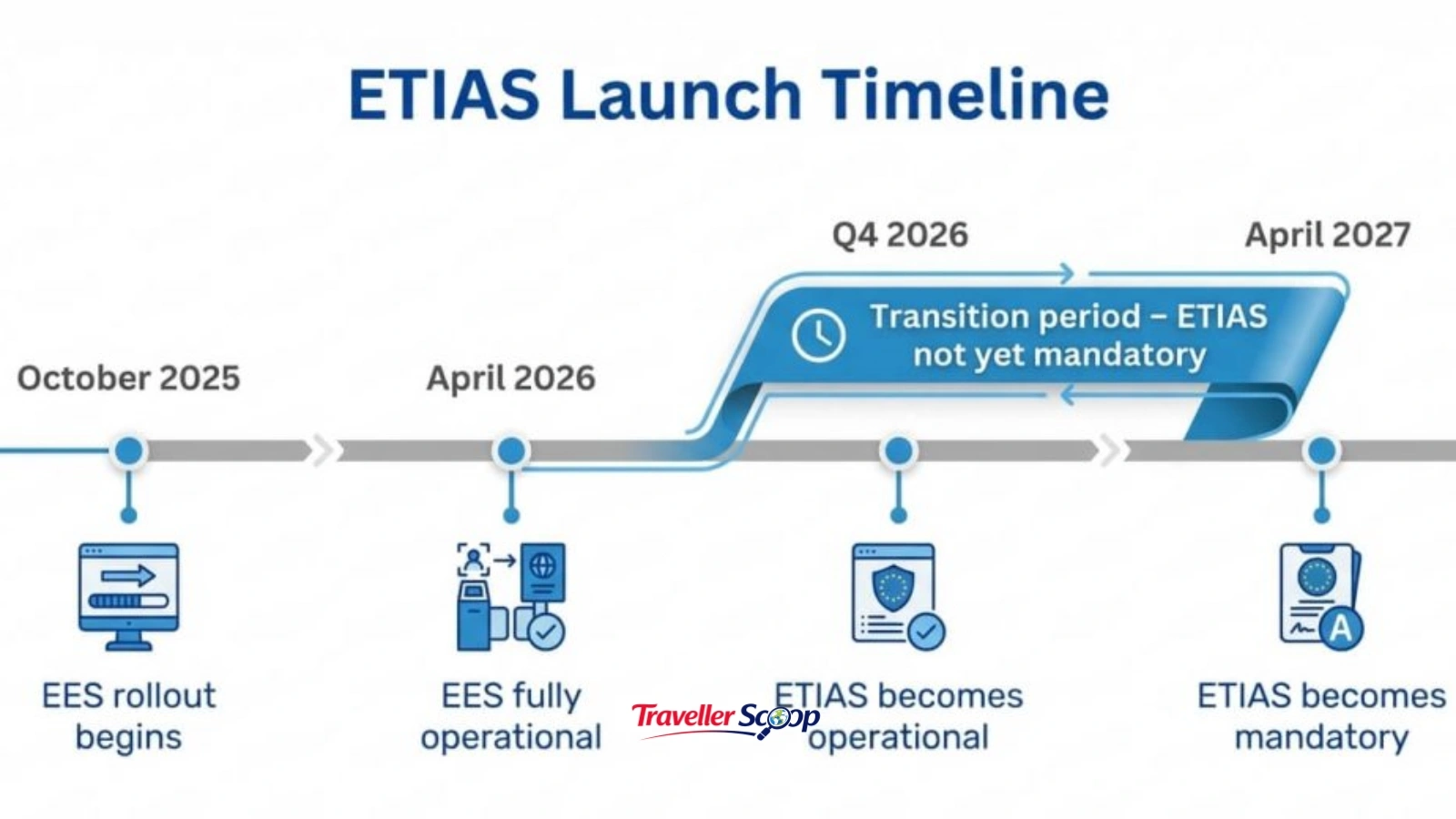
- 12 October 2025: Progressive rollout began. Some airports and land borders started using EES at select checkpoints, while others still stamped passports manually.
- 10 April 2026: Full implementation. As of this date, every one of the 29 Schengen countries must run EES at all their external border crossing points.
So if you’re travelling in 2026 or later, assume you will go through EES, there’s no “old system” fallback left to rely on anymore, though some airports may still allow limited manual flexibility during extremely busy summer periods to manage queues.
Which 29 Countries Are Covered Under the New EES Rules?
The EES applies across the entire Schengen Area, which currently includes:
Austria, Belgium, Bulgaria, Croatia, Czech Republic, Denmark, Estonia, Finland, France, Germany, Greece, Hungary, Iceland, Italy, Latvia, Liechtenstein, Lithuania, Luxembourg, Malta, Netherlands, Norway, Poland, Portugal, Romania, Slovakia, Slovenia, Spain, Sweden, and Switzerland.
Ireland and Cyprus are not part of the Schengen Area and are exempt from EES. If your itinerary includes a stop in either country, that specific leg won’t involve biometric registration, but every other Schengen country on your route will.
Interestingly, if you’re travelling from the UK via the Port of Dover, Eurotunnel Le Shuttle at Folkestone, or Eurostar at St Pancras, your EES checks actually happen before you leave British soil, not after you land in France.
How Does the EES Registration Process Actually Work?
This is the part most travelers worry about, so let me break it down step by step based on official EU border guidance:
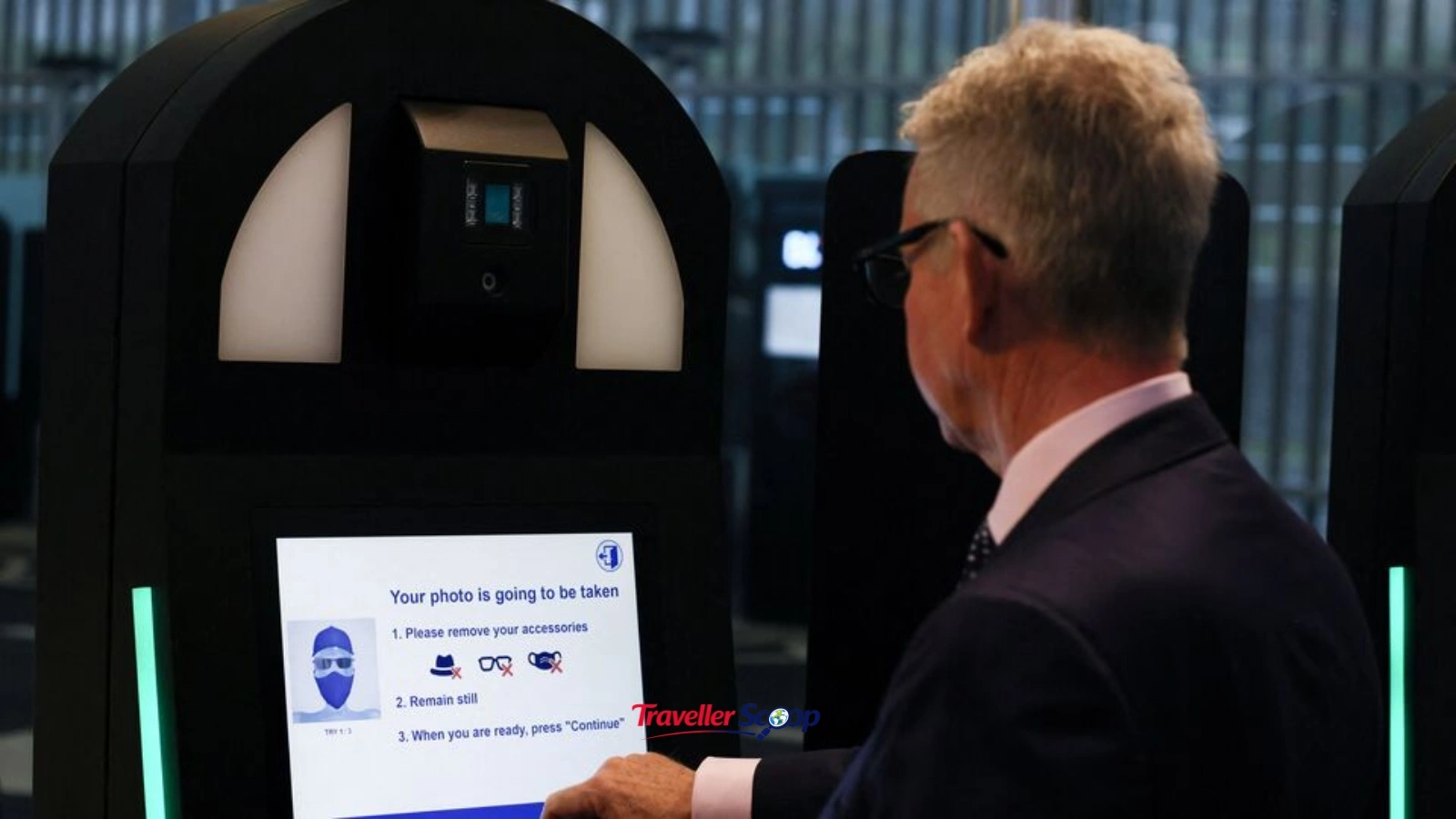
- First-time crossing: You’ll be directed to a self-service kiosk or an immigration counter. You’ll submit fingerprints (all ten, generally) and have a facial photo captured.
- Data collected: Your name, travel document number, nationality, biometric data, and your entry date, time, and border point are all stored digitally.
- Processing time: The European Commission states first-time registration takes roughly 70 seconds per traveller, noticeably longer than a simple passport stamp, which is why early queues have been longer than usual.
- Repeat visits: Once you’re in the system, future crossings are meant to be faster since your biometric profile already exists, usually just a quick facial or fingerprint match.
- Exit registration: You’ll also register when you leave the Schengen Area, which is how the system automatically calculates whether you’ve overstayed your permitted 90-day window.
One detail that matters if you’re travelling with family: children under 12 are exempt from fingerprinting, though their facial image and document data are still recorded.
Do You Still Need a Schengen Visa? (Yes Here's Why That Confuses People)
This is genuinely the most common mix-up I found while researching this piece: the EES is not a visa, and it does not replace your visa requirement.
If your passport requires a Schengen visa today, it still will after EES. The EES only changes how your entry and exit are recorded once you’ve already been granted permission to travel, it doesn’t decide whether you’re eligible to enter in the first place. For Indian passport holders specifically, you’ll still need to:
- Apply for your Schengen visa through the relevant embassy or VFS centre, well before travel
- Carry proof of accommodation, travel insurance, and return tickets
- Ensure your passport is valid for at least 3 months beyond your planned return date
Your EES biometric history may now also be referenced during future visa applications, so consistent, honest travel records matter more than ever going forward.
EES vs ETIAS: Don't Confuse the Two
A lot of readers ask me this, so it’s worth a dedicated section. These are two completely different systems that people often mix up:
| System | What it is | Status |
|---|---|---|
| EES | Digital border registration replacing passport stamps | Fully live since 10 April 2026 |
| ETIAS | Pre-travel authorisation for visa-exempt travellers, similar to the US ESTA | Not yet launched; expected later in 2026 |
If you’re from a visa-exempt country, ETIAS will eventually require you to apply online before your trip. Indian travellers, who already need a Schengen visa, won’t need ETIAS separately, but it’s worth tracking this space since dates are still being finalised.
How Will This Affect Your Actual Airport Experience?
Realistically, expect longer queues, especially during summer 2026 and other peak travel windows, as more travellers register for the first time. Aviation bodies, including ABTA, have already flagged concerns to the European Commission about airport congestion and have pushed for contingency measures to keep things moving during busy periods.
My honest, practical advice based on everything I’ve read and cross-checked:
- Arrive at least 30–45 minutes earlier than you normally would for international departures and arrivals within the Schengen Area.
- Keep your passport, visa, and hotel booking confirmations easily accessible; border staff may still ask for these even with EES running.
- Don’t panic if asked for fingerprints twice on a multi-country trip, each new border checkpoint may still capture your data depending on how systems sync in your specific route.
- Refusing to provide biometric data will lead to automatic denial of entry, so there’s no opting out if you intend to travel.
If you’re mapping out a longer Europe route across multiple countries, it’s worth reading through a proper international travel planning guide before you lock in your flights, since border timing can now genuinely affect your itinerary.
Quick Numbers Recap: EES So Far (as of mid-2026)
- 52+ million border crossings logged since the system went live
- 70 seconds average processing time for first-time registrations
- 27,000+ travellers refused entry under EES
- 700 individuals flagged for security-related concerns
- 29 Schengen countries now running EES at all external borders
- 90 days within any 180 days the short-stay limit EES actively tracks
Tips for a Stress-Free Border Crossing Under the New Rules
- Double-check your 90/180-day stay window using an online calculator before finalising return flights
- Travel with printed and digital copies of your visa and accommodation proof
- If you’re a frequent Schengen traveller, keep a personal log of entry and exit dates, EES tracks this automatically, but your own record helps you plan future trips confidently
- Budget extra buffer time into layovers if you’re connecting through a Schengen hub airport
- Use a reliable travel budget calculator to also account for potential itinerary shifts caused by longer border processing
Conclusion
If there’s one thing I’d want every reader to walk away with, it’s this: Schengen’s major new border rules explained in one line are simply “your passport gets replaced by biometrics, not your visa requirement.”
The EES doesn’t make travel to Europe harder in terms of eligibility, it makes it more digitally tracked, more secure, and occasionally slower at the airport, especially during your first crossing. Plan a little extra time, keep your documents handy, and the rest of your Schengen trip should feel exactly as magical as it always has.
Planning your next Europe trip around these new rules? Explore more destination guides on Traveller Scoop to plan your route with confidence, or browse our full travel blog for more up-to-date visa and border updates.
FAQs
Does EES apply to children?
Facial images are captured for all travellers, but children under 12 are exempt from fingerprint collection.
Is the Entry-Exit System (EES) a new visa requirement?
No. EES is a digital border-registration system, not a visa. If you already needed a Schengen visa, you still need one, EES simply changes how your entry and exit are recorded.
Which travellers does EES apply to?
Which travellers does EES apply to?
Is there any cost for EES registration?
No, EES registration is free. There's nothing to pay and nothing to apply for online in advance.
What happens if I refuse to give my fingerprints or facial scan?
Refusal to provide biometric data results in automatic denial of entry into the Schengen Area.

Khushi Vaid
Senior Travel EditorI’m Khushi Vaid, a travel writer with over 2 years of experience creating destination guides, travel tips, and travel planning content. At Traveller Scoop, I write about destinations, travel trends, and practical advice to help readers explore the world with confidence.