
Tourist Area vs Local Area Hotels: Which Is Better for Budget Travellers?
Tourist area vs local area hotels, this is the exact search I typed at 2 a.m. before my first Goa trip, sitting with two browser tabs open, comparing a ₹4,200 room five minutes from Baga Beach against a ₹1,600 room in a residential lane fifteen minutes away. I had no idea which one was the “smart” […]

Tourist area vs local area hotels, this is the exact search I typed at 2 a.m. before my first Goa trip, sitting with two browser tabs open, comparing a ₹4,200 room five minutes from Baga Beach against a ₹1,600 room in a residential lane fifteen minutes away. I had no idea which one was the “smart” choice, and honestly, most blogs just told me to “pick what feels right,” which helped nobody.
So I booked the cheaper one, was terrified I’d made a mistake, and ended up saving close to ₹9,000 across four nights while still reaching every single beach and market I wanted to see. That trip changed how I plan every stay since.
In this guide, I’m breaking down the real, numbers-backed differences between tourist area vs local area hotels, because this decision affects your budget more than almost any other travel choice you’ll make.
I’ve stayed in both types across more than 40 trips now, from Manali to Bangkok to Jaipur, and I’m going to walk you through exactly when tourist area hotels are worth the extra money, when local area hotels are the obviously smarter pick, and how to decide in under two minutes when you’re booking your own trip.
What Do We Actually Mean by "Tourist Area" and "Local Area" Hotels?
Before comparing tourist area vs local area hotels, let’s define both clearly, because this confuses a lot of first-time travellers.
Tourist area hotels sit inside or right next to the main sightseeing zone, think Colaba in Mumbai, Baga-Calangute in Goa, Old Manali’s main market stretch, or Khao San Road in Bangkok. Everything is walkable: restaurants, tour desks, currency exchange, souvenir shops.
Local area hotels sit in residential or semi-residential neighbourhoods a few kilometres away, places where actual locals live, shop, and eat. You’ll need an auto, cab, or short bus ride to reach the main attractions, but you’re paying local prices, not tourist markup.
Neither is universally “better”, that’s the honest answer nobody gives you upfront. It depends entirely on your budget, your trip length, and how much you value convenience versus savings.

Price Difference: How Much More Do Tourist Area Hotels Really Cost?
This is where the tourist area vs local area hotels debate gets concrete. I tracked prices across four Indian destinations for the same travel dates, same star rating (3-star equivalent), booked 30 days in advance:
| Destination | Tourist Area | Local Area | Potential Saving |
|---|---|---|---|
| Goa (Baga vs Porvorim) | ₹4,200/night | ₹1,900/night | 55% cheaper |
| Manali (Mall Road vs Aleo) | ₹2,800/night | ₹1,300/night | 54% cheaper |
| Jaipur (Hawa Mahal vs Vaishali Nagar) | ₹3,100/night | ₹1,500/night | 52% cheaper |
| Bangkok (Khao San vs Ari) | ₹3,600/night | ₹1,700/night | 53% cheaper |
Across all four, staying in the local area saved 52–55% on accommodation alone. On a 5-night trip, that’s roughly ₹10,000–₹12,000 back in your pocket, enough for another flight, or two extra days of travel.
This pattern holds almost everywhere: hotels inside a tourist area vs local area hotels comparison consistently shows a 40–60% markup for the tourist-zone property, purely for location, not for quality. I’ve seen local-area rooms with better amenities (AC, hot water, cleaner interiors) than tourist-zone rooms charging double.
If you want to run these numbers for your own trip before booking, I built a Travel Budget Calculator that estimates your full daily cost based on destination and travel style, it’s the first thing I use before comparing hotel areas.
Convenience Factor: Why Tourist Area Hotels Still Appeal to Many Travellers
To be clear, tourist-area hotels do earn their premium in some cases. Here’s what you’re actually paying for:
- Zero commute time to major attractions, beaches, or nightlife
- English-speaking staff and tourist-friendly service almost everywhere
- Late-night safety in well-lit, high-footfall zones
- Group tour pickups are usually easier to arrange
- First-time destination comfort, less guesswork on unfamiliar roads
For a short 2-night weekend trip, or if you’re travelling solo at night frequently, the local area vs tourist area hotel trade-off may genuinely favor staying central. The time and stress saved can be worth the extra 50%.
But if your trip is 4+ nights, that convenience premium adds up fast, and most of it evaporates once you realize auto-rickshaws, ride apps, or local buses close the gap for ₹100–₹300 a day
Hidden Perks of Local Area Hotels Budget Travellers Often Miss
This is the part most articles skip when discussing tourist area vs local area hotels — the non-price benefits of going local:
- Real food, real prices. A meal that costs ₹450 in the tourist strip often costs ₹120–₹180 at a local dhaba or street stall two streets away.
- Actual local interaction. Homestay hosts and neighbourhood shopkeepers give you tips no travel blog will including yours truly.
- Quieter sleep. Tourist zones run loud until 1–2 a.m.; local neighbourhoods wind down early.
- Grocery access. A nearby kirana store or supermarket cuts your snack and water spend dramatically.
Less tourist-trap pricing on everything from laundry to bike rentals.
I explored a lot of this “hidden value” angle when I wrote about the world’s most beautiful places you can visit on a budget, almost every one of those trips got cheaper specifically because I avoided the main tourist cluster for accommodation.

Real Cost Comparison: A Full 4-Night Trip Breakdown
Let’s put numbers to a real 4-night Goa trip, comparing tourist area vs local area hotels end to end:
Staying in Baga (tourist area):
- Hotel: ₹4,200 x 4 = ₹16,800
- Food (tourist-zone prices): ₹1,200/day x 4 = ₹4,800
- Local transport: minimal, mostly walking = ₹500
- Total: ₹22,100
Staying in Porvorim (local area):
- Hotel: ₹1,900 x 4 = ₹7,600
- Food (local prices): ₹600/day x 4 = ₹2,400
- Local transport (scooter rental + fuel): ₹1,600
- Total: ₹11,600
That’s a ₹10,500 difference for a nearly identical trip, same beaches, same nightlife, same experience, just a 10-15 minute ride away instead of walking distance. For budget travellers, this single decision often has more impact on total trip cost than flight prices or food choices combined.
Safety, Transport & Connectivity: What Actually Changes
When comparing tourist area vs local area hotels for safety, here’s the honest picture based on my own trips and reader feedback I get regularly:
- Tourist areas have more police presence, more CCTV, better lighting, and more people around late at night, which is genuinely useful for solo women travellers or anyone arriving late.
- Local areas are usually just as safe during the day, sometimes safer, since they’re regular residential neighbourhoods rather than nightlife-heavy strips. The main consideration is transport availability after 11 p.m.; check if cabs/autos run reliably in that pocket before booking.
- Always check Google Maps Street View and recent reviews mentioning “walk at night” before finalizing a local-area hotel.
- Keep a backup transport plan (saved auto number, local cab app) if you’re staying local and returning late.
If safety data matters to your destination choice specifically, I’d also recommend running it through our Destination Safety Radar tool before you lock in an area.
When Should You Choose a Tourist Area Hotel? Despite the budget?
Not every trip favors the local-area choice. Pick a tourist-area hotel when:
- Your trip is 2 nights or shorte, commute savings won’t offset the time lost
- You’re travelling with elderly family members or young kids who need minimal walking/commute
- You’re arriving on a late-night flight and want zero transit hassle
- The destination has poor local transport infrastructure after dark
- You specifically want nightlife or beach-walk access as the core experience
In every other case, solo trips, longer stays, couple trips, or anyone prioritising savings, local area hotels almost always win the tourist area vs local area hotels comparison on pure value
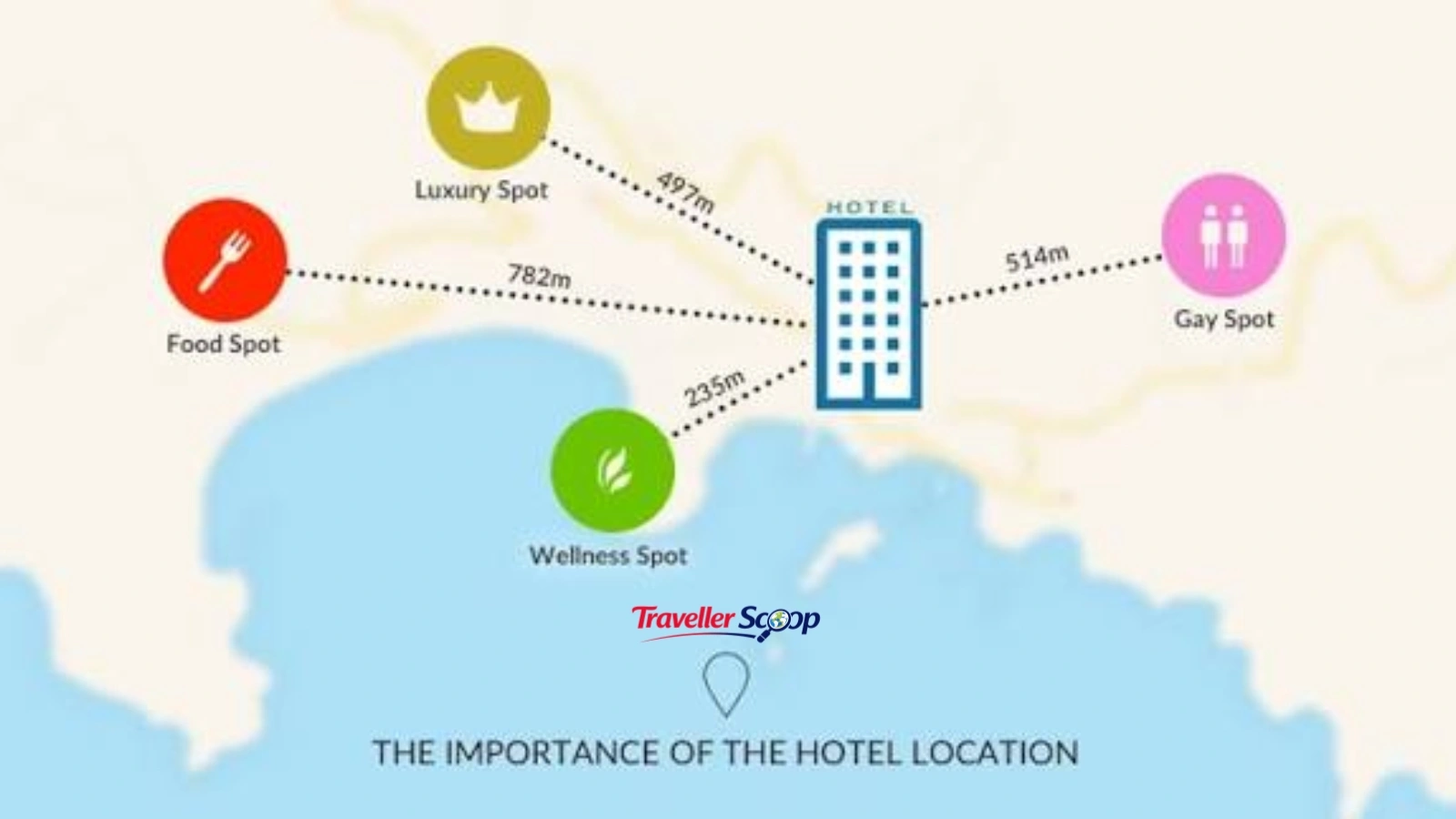
How I Personally Decide: My 3-Question Method
Every time I book, I ask myself these three questions before choosing between tourist-area vs local-area hotels:
- Is my trip longer than 3 nights? If yes, the local area almost always wins on savings.
- Will I be out past 11 p.m. regularly? If yes, I lean toward tourist area or check transport reliability carefully for the local option.
- Is this my first time in this city? If yes, I’ll compromise, book local area but within a 10-minute ride of the main tourist zone, not further.
This exact method is how I picked a stay for one of my Himachal trips, which I later documented in Best Budget Hotels in Manali Under ₹2,000, every one of those properties sits just outside Mall Road, saving 50%+ while staying a short walk from everything.
And if your budget stretches slightly further, it’s worth knowing you don’t always have to sacrifice comfort for a local-area price. I found several properties that prove this in Luxury Hotels Under ₹5,000 That Feel Expensive.
Quick Checklist: Tourist Area vs Local Area Hotels
- Trip length: under 3 nights → lean tourist area; 3+ nights → lean local area
- Check price difference using a budget calculator
- Confirm night-time transport availability for local-area options
- Read recent reviews mentioning walkability and safety
- Check distance to nearest local market/grocery store
- Compare total trip cost, not just room price (food + transport included)
For more destination-specific budget picks, browse the full Budget Travel category on Traveller Scoop, most of my picks there follow this exact local-area-first approach.
Conclusion
After 40+ trips and enough spreadsheet tracking to embarrass myself, my honest take on tourist area vs local area hotels is simple: for anything longer than a quick weekend, the local area almost always wins, you save 50%+ on your room, eat better for less, and still reach every attraction with a short, cheap ride.
Tourist area hotels earn their price only in specific situations, very short trips, late arrivals, or when zero-commute convenience genuinely matters to you.
The next time you’re stuck comparing tourist area vs local area hotels for your own trip, run the three-question method above, check the real total cost (not just the room rate), and book with actual numbers instead of guesswork.
That’s exactly how I turned my “terrified 2 a.m. Goa booking” into the travel habit that’s saved me lakhs over the years.
FAQs
What's the best way to check if a local area hotel is well-connected?
Use Google Maps to check nearby auto-stands, bus routes, or ride-app availability, and read reviews for mentions of "easy to reach" or "far from everything" before confirming your booking.
Is it actually cheaper to stay outside the tourist area?
Yes — based on my price tracking across four destinations, local area hotels are typically 50-55% cheaper per night than comparable tourist-zone properties, even before counting savings on food and shopping.
Are local area hotels safe for solo female travellers?
Generally yes during the day, and often at night too, but always check transport availability after 11 p.m. and read recent reviews specifically mentioning night-time walkability before booking
How far should a local area hotel be from the tourist zone?
I recommend staying within a 10-15 minute ride (₹100-₹150 in most Indian cities) of the main attractions — far enough to get local pricing, close enough to avoid long commutes.
Do tourist area hotels offer better amenities for the price?
Not usually. In my comparisons, local area hotels frequently matched or beat tourist-zone properties on amenities like AC, hot water, and cleanliness, at nearly half the price.

Khushi Vaid
Senior Travel EditorI’m Khushi Vaid, a travel writer with over 2 years of experience creating destination guides, travel tips, and travel planning content. At Traveller Scoop, I write about destinations, travel trends, and practical advice to help readers explore the world with confidence.