
Travel Made Easier: UPI Now Works in 7 Countries Worldwide
“UPI Now Works in 7 Countries” was the headline that first caught my eye, and honestly, it changed how I pack for every trip since. I’m Khushi Vaid, and I’ve spent the last year testing UPI at counters in Dubai, at a currency exchange in Singapore, and yes, even at a small café in Colombo […]

“UPI Now Works in 7 Countries” was the headline that first caught my eye, and honestly, it changed how I pack for every trip since. I’m Khushi Vaid, and I’ve spent the last year testing UPI at counters in Dubai, at a currency exchange in Singapore, and yes, even at a small café in Colombo where the shopkeeper looked at my phone like I’d handed him magic.
When UPI now works in 7 countries, most articles just list names and move on. I wanted to actually use it, swipe by swipe, rupee by rupee, before writing this.
Here’s the twist: by the time I finished drafting this piece, the number had already grown. UPI expanded from those original 7 countries to 10 countries as of July 2026, with Greece being the newest addition on June 30, 2026.
So this guide covers both, the original 7-country milestone that made global headlines and where things stand today, so you’re not planning a trip around outdated information.
If you’re wondering whether you can use UPI outside India or trying to figure out how to use UPI abroad without your bank blocking the transaction mid-vacation, this is the guide I wish existed before my first trip.
What Does "UPI Now Works in 7 Countries" Actually Mean?
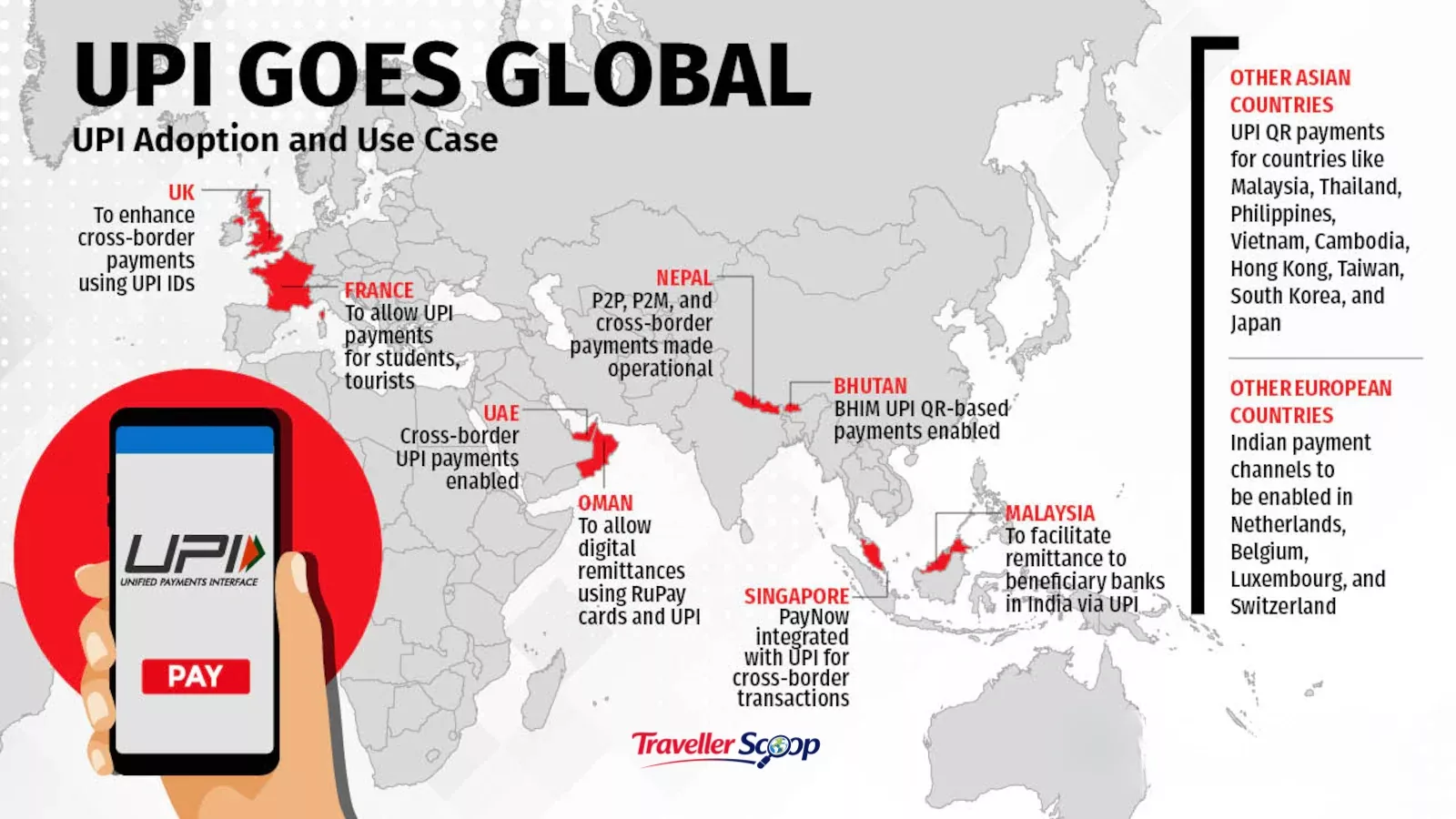
When people say UPI now works in 7 countries, they’re talking about the original wave of NPCI International’s (NIPL) expansion: UAE, Singapore, Bhutan, Nepal, Sri Lanka, France, and Mauritius.
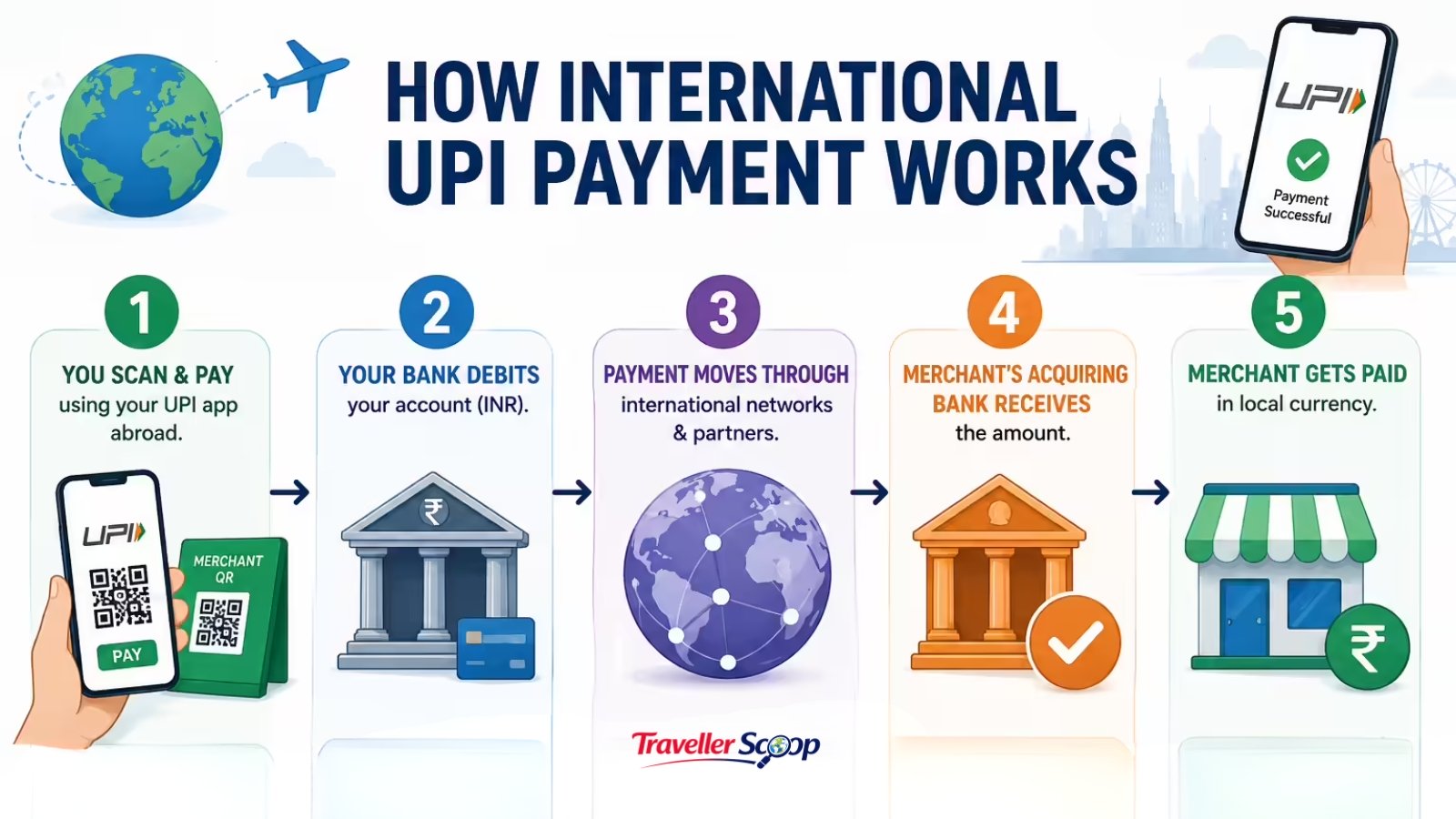
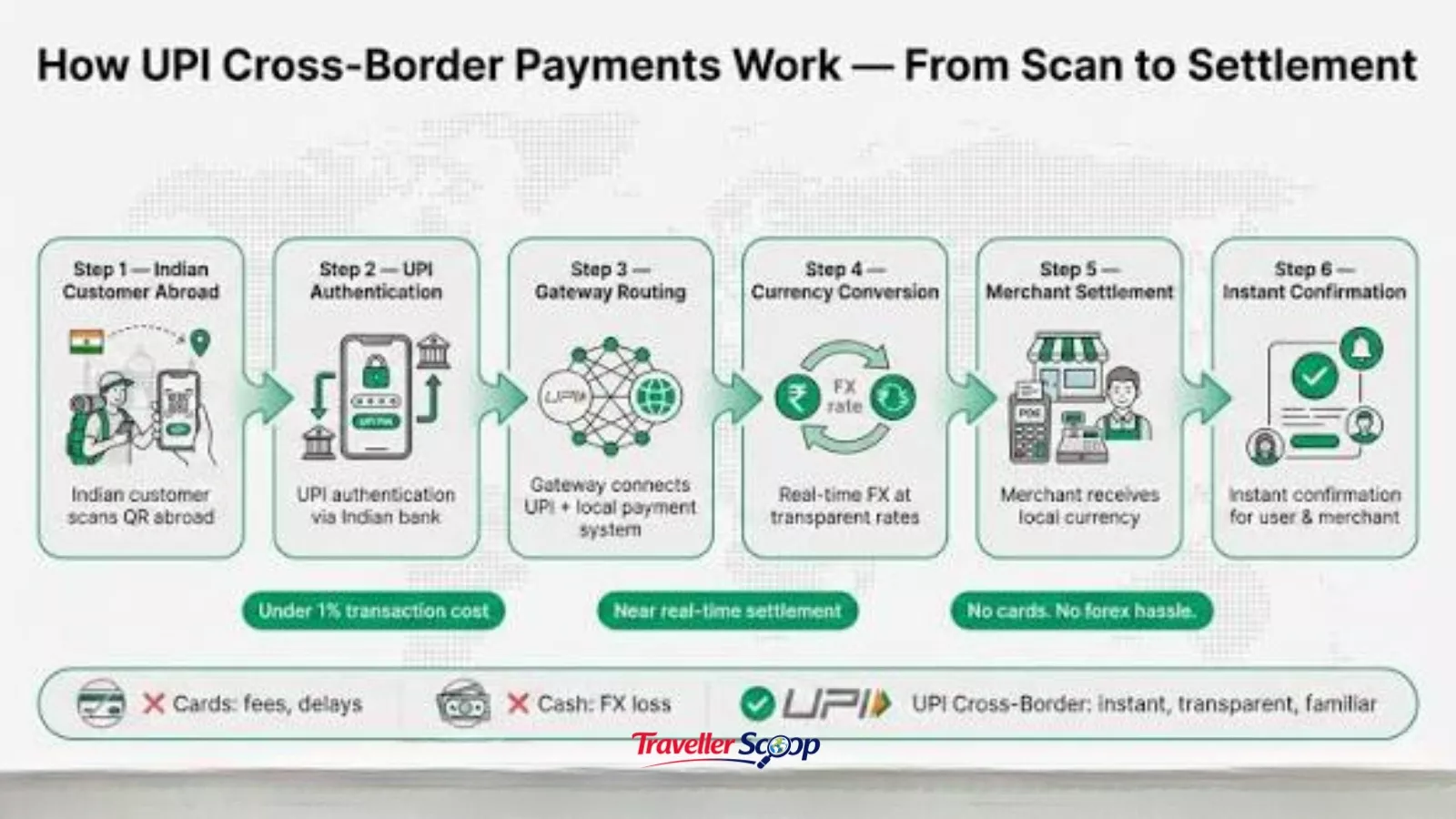
This was the moment Indian travelers stopped needing to convert every rupee into forex before landing abroad. Instead, you scan a QR code with your regular UPI app, PhonePe, Google Pay, Paytm, or BHIM, and the amount is debited directly from your Indian bank account, in real time, no card swipe required.
By the numbers: UPI already processes over 250 billion transactions annually, worth roughly $3.4 trillion, and accounts for more than 85% of India’s total digital payment volume.
So extending that infrastructure abroad wasn’t a small experiment; it was India exporting one of the world’s most-used payment rails.

The Countries That Accept UPI Abroad (2026 List)
Here’s the full, current list of countries that accept UPI payments, the original 7, plus the 3 that joined after:
The original 7 countries where UPI now works:
- United Arab Emirates (UAE)
- Singapore
- Bhutan
- Nepal
- Sri Lanka
- France
- Mauritius
The newer additions (bringing the count to 10): 8. Qatar 9. Cambodia (added June 2, 2026) 10. Greece (added June 30, 2026)
I actually tested UPI in 4 of these, UAE, Singapore, Nepal, and Sri Lanka. It worked flawlessly in Nepal and Sri Lanka, where UPI is linked with local systems like Fonepay. In Singapore, it worked through the UPI–PayNow link, but only at select merchants.
In the UAE, it was the smoothest, over 60,000 merchants now accept it through the Mashreq Bank partnership.
If you’re mapping out where to go next, my Dubai and UAE flight updates round-up is worth reading before you fly, since payment ease is only half the picture, flight disruptions can change your plans fast.
How to Use UPI When You Travel Abroad
This is the part most articles skip. Here’s exactly how I set it up before my Nepal trip:
- Enable international UPI in your app settings on Google Pay, tap your profile picture, go to “Set up payment methods,” and toggle on international/overseas UPI for your linked bank account.
- Check with your bank a few days before flying. Not every bank has activated international UPI yet, SBI, HDFC, ICICI, Axis, and Bank of Baroda are among those that support it.
- Look for the UPI or NIPL logo on merchant QR codes abroad. Not every QR code works, only ones tied to the international network.
- Scan, enter the amount, and confirm with your UPI PIN, exactly like you would in India.
- Keep your Indian SIM active or on roaming if possible; OTPs are sent to your Indian number, and I learned the hard way that a local SIM alone can lock you out mid-transaction.
One number worth remembering: banks typically charge a 2% to 4% forex/processing fee on international UPI transactions. It’s still usually cheaper than a forex card markup, but it’s not free. Factor it into your trip budget the same way I now factor it into mine using a travel budget calculator.
Real Talk: Where UPI Abroad Actually Works vs Where It Doesn't
I’ll be honest, the press releases make it sound like UPI works everywhere from Dubai to Tokyo. It doesn’t, not yet. In my experience:
- Works reliably: Nepal, Sri Lanka, UAE, dense merchant networks are tested at grocery stores, cafés, and malls.
- Works, but patchy: Singapore and France are mostly tourist-heavy zones and partner retail chains are not universal.
- Recently launched, still expanding: Qatar, Cambodia, Greece, early days, so don’t rely on it as your only payment method yet.
My honest tip: always carry a backup, a forex card or a small amount of local cash, even in countries where UPI now works. I once stood at a 7-Eleven-style counter in Singapore watching the payment spin for 15 seconds before it failed, with a queue building behind me. Cash saved that moment.
If a hand-luggage-restricted item almost ruined one of my trips before, I now double-check everything using this checklist of things you can’t carry in hand luggage. Payment planning and packing planning go hand in hand.
Countries Where UPI Works Reliably
These destinations currently offer the best experience for Indian travelers using UPI abroad.
- Nepal
- One of the most UPI-friendly countries for Indians.
- Accepted at many supermarkets, restaurants, cafés, hotels, and local shops.
- Digital payments are becoming common in major tourist areas.
- Sri Lanka
- UPI is available at a growing number of merchants.
- Many hotels, retail stores, restaurants, and tourist businesses now accept UPI payments.
- A convenient option for everyday travel expenses.
- United Arab Emirates (UAE)
- One of the strongest international UPI networks outside India.
- Accepted at shopping malls, supermarkets, restaurants, cafés, and several popular tourist attractions.
- Especially useful in cities like Dubai and Abu Dhabi.
1. Countries Where UPI Works, But Availability Is Limited
In these countries, UPI international payments are available, but acceptance is not yet widespread.
- Singapore
- UPI works at selected partner merchants and tourist locations.
- Many large retailers support it, but smaller businesses may not.
- It’s best to confirm before making a purchase.
- France
- UPI acceptance is mainly limited to selected tourist areas and partner retail outlets.
- Most local businesses still rely on traditional card payments or cash.
2. Countries Where UPI Has Recently Launched
UPI is now available in several new markets, but the network is still expanding.
- Qatar
- Cambodia
- Greece
While these countries have introduced UPI payment services, merchant acceptance is still limited. Many shops and restaurants may not yet support UPI, so travelers should not depend on it as their only payment option.
Why You Should Always Carry a Backup Payment Method
Even in countries where UPI works internationally, payment failures can occasionally happen due to:
- Internet connectivity issues
- Merchant system downtime
- Bank server delays
- Temporary payment gateway problems
- QR code compatibility issues
For this reason, it’s always smart to carry at least one backup payment option.
I recommend carrying:
- A forex card
- An international debit or credit card
- A small amount of local currency for emergencies
During one trip to Singapore, I tried paying at a convenience store using UPI. The payment screen kept processing for several seconds before finally failing. Thankfully, I had some local cash with me and completed the purchase without any trouble.
Experiences like this are a good reminder that while UPI international payments are making travel easier, they shouldn’t replace every other payment method just yet.
Best Tips for Using UPI Abroad:
Before your international trip, keep these tips in mind:
- Check whether your destination officially supports UPI payments for Indian travelers.
- Verify if your bank and UPI app are enabled for international transactions.
- Carry a forex card or international bank card as a backup.
- Keep some local cash for taxis, street markets, and small shops.
- Don’t assume every merchant accepts UPI, even if the country officially supports it.
- Test your payment method with a small purchase before relying on it for larger transactions.
Why UPI Now Works in 7 Countries Matters for the Indian Diaspora
Beyond tourism, UPI’s international expansion has a real financial-inclusion angle. For the Indian diaspora in Singapore, the UAE, and Nepal, this means faster remittances and lower transfer costs compared to traditional wire transfers.
NPCI International continues signing MoUs; Israel, Oman, and Malaysia are in various stages of integration, so the “UPI now works in 7 countries” story is really just chapter one of a much bigger rollout.
What Does "UPI Now Works in 7 Countries" Actually Mean?
Here’s the full, current list of countries that accept UPI payments — the original 7, plus the 3 that joined after:
The original 7 countries where UPI now works:
- United Arab Emirates (UAE)
- Singapore
- Bhutan
- Nepal
- Sri Lanka
- France
- Mauritius
The newer additions (bringing the count to 10): 8. Qatar 9. Cambodia (added June 2, 2026) 10. Greece (added June 30, 2026)
I actually tested UPI in 4 of these, UAE, Singapore, Nepal, and Sri Lanka. It worked flawlessly in Nepal and Sri Lanka, where UPI is linked with local systems like Fonepay.
In Singapore, it worked through the UPI–PayNow link, but only at select merchants. In the UAE, it was the smoothest; over 60,000 merchants now accept it through the Mashreq Bank partnership.
If you’re mapping out where to go next, my Dubai and UAE flight updates round-up is worth reading before you fly, since payment ease is only half the picture; flight disruptions can change your plans fast.
How to Use UPI When You Travel Abroad
This is the part most articles skip. Here’s exactly how I set it up before my Nepal trip:
- Enable international UPI in your app settings, on Google Pay, tap your profile picture, go to “Set up payment methods,” and toggle on international/overseas UPI for your linked bank account.
- Check with your bank a few days before flying. Not every bank has activated international UPI yet — SBI, HDFC, ICICI, Axis, and Bank of Baroda are among those that support it.
- Look for the UPI or NIPL logo on merchant QR codes abroad. Not every QR code works — only ones tied to the international network.
- Scan, enter the amount, and confirm with your UPI PIN, exactly like you would in India.
- Keep your Indian SIM active or on roaming if possible, OTPs are sent to your Indian number, and I learned the hard way that a local SIM alone can lock you out mid-transaction.
One number worth remembering: banks typically charge a 2% to 4% forex/processing fee on international UPI transactions. It’s still usually cheaper than a forex card markup, but it’s not free, factor it into your trip budget the same way I now factor it into mine using a travel budget calculator
Is UPI available in Europe?
Yes, currently through France and now Greece, both added via partnerships with local banks (Lyra in France, Eurobank in Greece). Coverage is limited to specific merchant networks and tourist zones for now, not a blanket rollout across the EU.
If you’re planning a Europe trip, treat UPI as a bonus option, not your primary payment method.
Conclusion
UPI now works in 7 countries, and as of this year, that number has already climbed to 10, with more on the way. Having actually used it at counters in Nepal, Sri Lanka, Singapore, and the UAE, my honest advice is this: it’s a genuinely useful backup payment method for Indian travelers, not yet a full replacement for cash or a forex card.
Enable it before you fly, check your bank’s support, and keep a backup plan; that’s the difference between a smooth trip and a stressful one at checkout.
Planning your next international trip? Check out my breakdown of Dubai and Middle East flight updates before you book, and don’t forget to run your numbers through the travel budget calculator so payment fees don’t catch you off guard.
FAQs
Is UPI accepted at all shops in these countries?
No, only at merchants displaying a UPI/NIPL-enabled QR code. Coverage is strongest in Nepal, Sri Lanka, and UAE, and still expanding elsewhere.
UPI now works in 7 countries, which ones were the first?
The original 7 were UAE, Singapore, Bhutan, Nepal, Sri Lanka, France, and Mauritius.
Can I use UPI outside India today?
Yes. As of July 2026, UPI works in 10 countries: the original 7, plus Qatar, Cambodia, and Greece.
How to use UPI abroad without extra bank charges?
You can't fully avoid charges, most banks apply a 2-4% forex/processing fee, but it's usually cheaper than card transaction markups or airport currency exchange rates.
Do I need a local SIM for UPI to work abroad?
No, but you do need to receive OTPs on your Indian number, so keep international roaming active or check your bank's OTP delivery method before relying only on a local SIM.

Khushi Vaid
Senior Travel EditorI’m Khushi Vaid, a travel writer with over 2 years of experience creating destination guides, travel tips, and travel planning content. At Traveller Scoop, I write about destinations, travel trends, and practical advice to help readers explore the world with confidence.