
5 Amazing Walkable Cities in the World You’ll Love
Walkable Cities in the World, these four words completely changed the way I travel.I still remember the moment it clicked. I was standing on the Charles Bridge in Prague, coffee in hand, absolutely no GPS needed, just wandering from one beautiful street to the next.No taxis, no metro maps, no confusion, just my feet, a comfortable […]

Walkable Cities in the World, these four words completely changed the way I travel.
I still remember the moment it clicked. I was standing on the Charles Bridge in Prague, coffee in hand, absolutely no GPS needed, just wandering from one beautiful street to the next.
No taxis, no metro maps, no confusion, just my feet, a comfortable pair of sneakers, and a city that felt designed for me. That’s when I became obsessed with finding the best walkable cities in the world for every kind of traveler.
If you, like me, love slow travel, meaningful exploration, and the kind of accidental discoveries that only happen when you’re walking, this article is your ultimate guide.
According to a 2026 study by Tourlane, over 73% of travelers say walkability is now a top factor when choosing a travel destination. And GuruWalk’s 2025 ranking analyzed 100 cities globally to rank the best places to explore on foot, and the results are stunning.
In this guide, I’m covering the 5 most amazing walkable cities in the world, with real data, insider tips, image references, internal resources, and everything you need to plan a walk-only adventure.
Whether you’re looking for the best cities to explore on foot in Europe or hunting for pedestrian-friendly cities for tourists across Asia and Latin America, I’ve got you covered.
Let’s walk.
Why Walkable Cities in the World Are Trending Right Now
Before we dive into the list, let me share something interesting. The concept of walkable cities in the world isn’t new, but it’s exploding in popularity right now, and for very good reasons.
According to Time Out’s global city survey of 18,500 residents across 50+ countries, cities where walking was rated “good” or “amazing” scored the highest in overall happiness and quality of life. Meanwhile, a 2024 Insider Monkey study found that pedestrian-friendly cities for tourists drive nearly 40% more tourism revenue than car-centric destinations.
Because when a city is built for walking, your travel experience changes completely. You spend less on transport. You discover hidden cafes, local markets, and street art that no tour bus ever stops at.
You stay healthier, studies show tourists in top walking destinations worldwide average 12,000–15,000 steps per day, compared to just 4,000 in car-heavy cities.
I’ve personally visited dozens of cities across four continents, and I can tell you the best cities to explore on foot give you something money simply cannot buy, the feeling of truly belonging to a place.
Now, let’s get into the list.

5 Cities in the world that you love to explore
The world is full of incredible destinations, but these 5 cities stand out for their unique blend of culture, history, architecture, food, and unforgettable experiences, making them places every traveler should explore at least once in their lifetime.
1. Prague, Czech Republic: The Crown Jewel of Walkable Cities in the World
If there’s one city that belongs at the top of every walkable city in the world list, it’s Prague.
Known as the City of a Hundred Spires, Prague’s entire historic core, a UNESCO World Heritage Site, can be explored entirely on foot in just 2–3 days.
The distance between the Old Town Square and the famous Charles Bridge is just 650 meters. Prague Castle, the largest ancient castle complex in the world at 70,000 square meters, sits a short uphill walk from the riverside, and every step of that walk is worth it.
Here’s why Prague is my personal favorite among pedestrian-friendly cities for tourists:
- Walking score: 90+/100 (WalkScore data)
- Average steps between major attractions: Under 4,500 steps
- Car-free zones: The entire Old Town, Malá Strana, and Jewish Quarter
- Crime index for pedestrians: Low (score: 26.9 — one of Europe’s safest)
- Average daily walking temperature: 18–22°C in spring/fall, perfect for foot travel
What I personally love is that Prague doesn’t feel like a tourist trap when you’re walking it. You’ll stumble onto quiet courtyards, hidden bookshops, and tiny beer gardens that guidebooks don’t even mention.
This is what sets it apart as one of the true top walking destinations worldwide.
Start your walk at 7 AM at Charles Bridge, before the crowds arrive, it’s absolutely magical. Then head uphill to the castle by 9 AM and walk back down through Malá Strana for lunch.

2. Kyoto, Japan: A Spiritual Walking Experience
When people ask me about city travel without a car done to absolute perfection, I always say “Kyoto.”
Kyoto is not just a pedestrian-friendly city for tourists, it’s a walking meditation. With over 1,600 Buddhist temples, 400 Shinto shrines, and some of the world’s most iconic walking trails, this city rewards every single step you take.
The numbers speak for themselves:
- Fushimi Inari trail: 4 km loop through 10,000 torii gates
- Philosopher’s Path: A 2 km canal-side walk connecting 7 major temples
- Arashiyama Bamboo Grove: Accessible entirely on foot from central Kyoto
- Gion District: Japan’s most preserved geisha district—walk-only streets, zero cars
- Walking between 5 major attractions: Average 6,200 steps—deeply manageable
In Kyoto, city travel without a car isn’t just possible; it’s preferred. The city’s ancient street grid, called a “cho,” was designed centuries ago when walking was the only way to move. Even today, locals choose to walk rather than drive in the historic core.
According to Skyscanner’s 2026 walkability study, Japanese cities dominate top walking destinations worldwide because of their low crime rates, clean air, clear signage (in English!), and extraordinarily compact attraction clusters.
Buy a 1-day bus pass (¥700 = approx. ₹430) as backup, but I promise you’ll barely use it. I walked in Kyoto for 3 full days and never once felt the need.

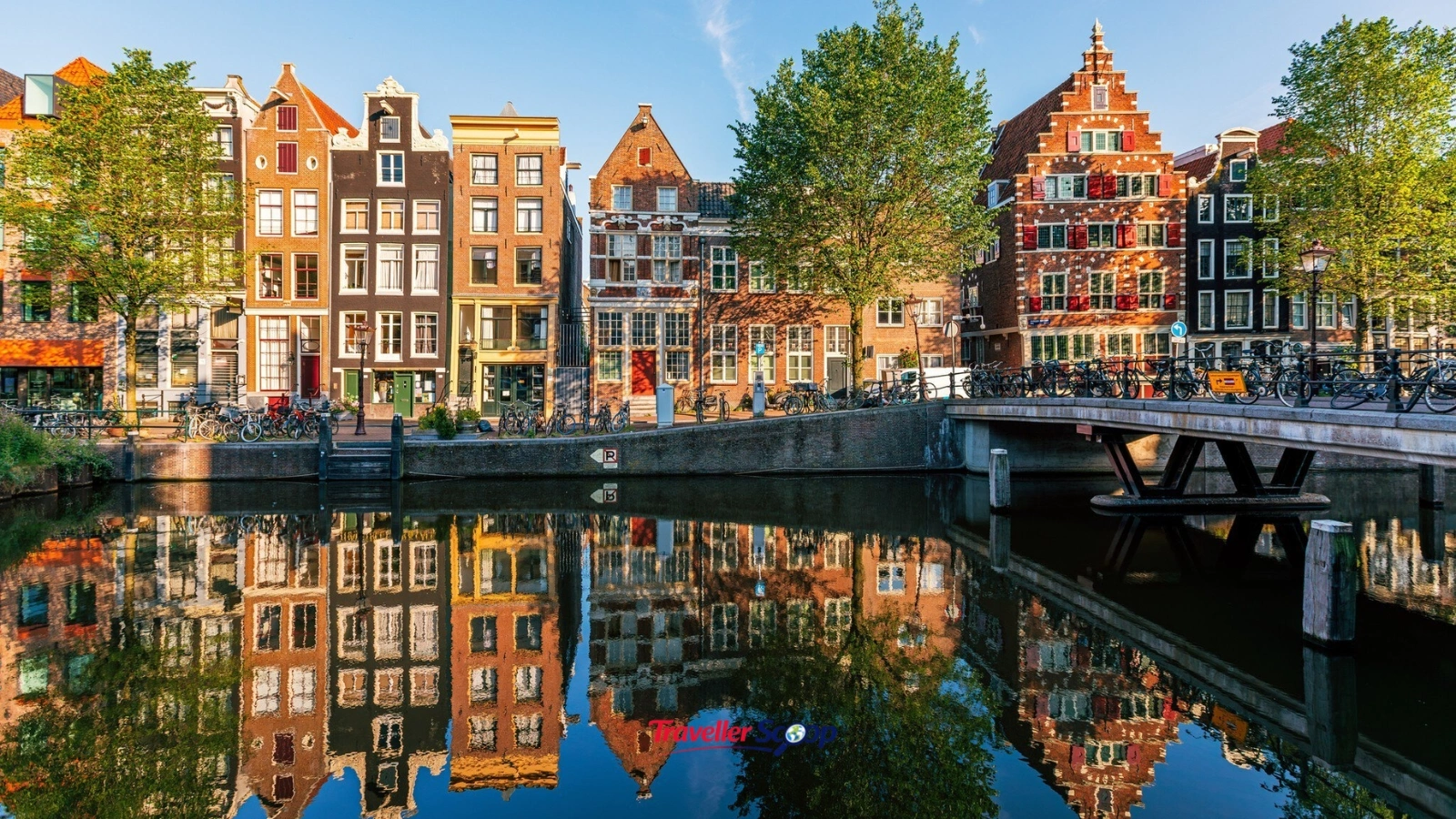
3. Amsterdam, Netherlands: Best Cities to Explore on Foot
Amsterdam might be famous for its bicycles, but it’s equally one of the best cities to explore on foot, and most tourists don’t even realize it.
The entire historic canal ring of Amsterdam, again, a UNESCO World Heritage Site, measures just 4 kilometers across. That means you can cross the entire city center on foot in under an hour. But why rush? Every canal bridge, every narrow gabled house, and every floating flower market is worth pausing for.
Here’s what makes Amsterdam stand out among walkable cities in the world:
- Walking distance: Anne Frank House to Rijksmuseum: Just 1.8 km
- Pedestrian streets in the city center: Over 40 car-free zones
- Number of bridges: 1,281 bridges in the city—creating some of the world’s most scenic walking routes
- Safety score for pedestrians: 82/100 — excellent
- Jordaan District walk: 3 km loop covering Amsterdam’s most charming neighborhood
What I didn’t expect when I first visited Amsterdam was how quiet the city is on foot. Away from the main tourist drags like Damrak, you’ll find streets so peaceful you’ll forget you’re in a European capital of nearly 1 million people.
The Jordaan District is my personal highlight. It’s a maze of independent galleries, antique shops, local cafes, and canal-side benches, best explored without a map. Everything is on budget; it’s the most important thing about traveling. This is city travel without a car at its most rewarding.
Walk along the Prinsengracht Canal at sunset; it’s free, it’s gorgeous, and it’s the kind of moment that makes you fall in love with travel all over again.
4. Florence, Italy: Where Every Street is a Work of Art
Florence is the kind of city where you’ll stop every 50 steps because something breathtaking is blocking your path, a 600-year-old church, an outdoor sculpture, or a view that belongs on a postcard.
As one of the most celebrated walkable cities in the world, Florence is essentially an open-air museum. The city’s historic center, covering just about 5 square kilometers, is home to more UNESCO-listed masterpieces per square meter than anywhere else on Earth.
The data for pedestrian-friendly cities for tourists in Italy rarely gets more impressive than this:
- Walking distance: Uffizi Gallery to Ponte Vecchio: Just 500 meters
- Walking distance: Ponte Vecchio to Piazzale Michelangelo viewpoint: 1.2 km (worth every step)
- Florence’s Walk Score: 86/100
- Car-restricted zone (ZTL): Covers the entire historic center—meaning the streets belong to pedestrians
- Average tourist walking per day in Florence: 18,000 steps (2025 Tourlane data)
Florence rewards slow walkers. I cannot stress this enough. Every alley has a story. A small wooden door leads to a secret courtyard. A side street off the main piazza hides a 500-year-old leather workshop.
This is why Florence consistently ranks among the best cities to explore on foot, not just for its famous sights, but for everything between them.
Do the Oltrarno walk, across Ponte Vecchio, and head into the less-touristy south bank of Florence, and you’ll find local trattorias, artisan workshops, and zero tour groups. Best 2 hours I’ve spent in Italy.

5 Medellín, Colombia: The Unexpected Star of Top Walking Destinations Worldwide
If you haven’t heard of Medellín as one of the walkable cities in the world yet, you’re about to.
Once infamous for crime, Medellín has undergone one of the most remarkable urban transformations in modern history. Today, it’s recognized globally as a model pedestrian-friendly city for tourists and won the Lee Kuan Yew World City Prize for its urban innovation.
It’s also one of the fastest-growing top walking destinations worldwide for young, adventurous travelers.
Here’s what the numbers look like:
- El Poblado neighborhood walk: 3 km in a compact, hilly area with 200+ restaurants, bars & cafes
- Laureles-Estadio district: A flat, 4 km walk through local Colombian life, with almost zero tourists
- Urban escalators: The famous Comuna 13 escalators climb 384 meters vertically, free for all, connecting hilltop communities on foot
- Average temperature: 22°C year-round (known as the City of Eternal Spring), ideal for city travel without a car
- Safety improvement: Crime rates dropped by over 95% since the early 1990s; the city now ranks among South America’s safest for travelers
What makes Medellín special in my experience is the energy. Unlike Europe’s hustle, walking in Medellín feels joyful and local. Street vendors, live music, and colorful street art (especially in Comuna 13) make every walk feel like a celebration.
Walk the Botanical Garden (free entry!) in the morning, then take the metro cable up to Parque Arví for a forest walk with breathtaking city views.

How to Plan the Perfect Walk-Only Trip to Any of These Cities
Whether you’re headed to Prague, Kyoto, or Medellín, here are the practical tips that will make your city travel without a car seamless:
- Choose accommodation in the walkable core. Don’t stay in the suburbs to save $15/night; you’ll spend it on transport. Book inside the walking zone. Use filters like “walkable neighborhood” on Booking.com.
- Pack for walking, not fashion. Merino wool socks, cushioned insoles, and a pair of well-broken-in walking shoes are worth more than any travel gadget. Blisters have ended more travel days than bad weather.
- Use offline maps. Download Maps.me or Google Maps offline for your destination. These are your lifeline in pedestrian-friendly cities for tourists, where WiFi can be spotty.
- Walk at off-peak hours. The best cities to explore on foot are magical before 9 AM and after 6 PM. Avoid the midday tourist rush.
- Budget your steps. Seriously. Most people can comfortably walk 10–12 km per day. Plan your itinerary so that your walking route is circular, not back-and-forth.
Conclusion
After everything I’ve shared, I hope you see what I see: the most walkable cities in the world aren’t just convenient; they’re transformative.
Whether it’s the fairy-tale lanes of Prague, the sacred trails of Kyoto, Amsterdam’s canal-lined streets, Florence’s museum-on-every-corner magic, or Medellín’s inspiring urban renaissance, each of these cities has one thing in common: they give you the world at a walking pace. And that’s exactly the pace at which the best travel memories are made.
As someone who has traded taxis for trails and tour buses for cobblestones, I can tell you: there is no better way to truly feel a city than on foot.
These are the best cities to explore on foot, the most pedestrian-friendly cities for tourists, and the top walking destinations worldwide, all wrapped into one unforgettable list.
So lace up your shoes. Pick a city. And start walking.
FAQs
Which walkable cities in the world are most budget-friendly?
Medellín and Prague offer the best value for pedestrian-friendly travel. In Medellín, you can walk for free all day with zero transport costs.
What are the most walkable cities in the world for first-time travelers?
For first-timers, Prague, Florence, and Amsterdam top the list. All three are compact, English-friendly, incredibly safe, and packed with famous attractions within easy walking distance.
Which walkable cities in the world are best for solo female travelers?
Kyoto and Amsterdam rank highest for solo female safety. Kyoto has an exceptionally low crime rate, clear signage in English, and a deeply respectful local culture. Amsterdam's pedestrian-friendly city infrastructure, well-lit streets, and strong LGBTQ+ inclusive culture make it one of the most welcoming top walking destinations worldwide for women traveling alone.
How many steps do you walk per day in walkable cities in the world?
Based on 2025 Tourlane data, tourists in the best cities to explore on foot average between 12,000 and 18,000 steps per day. In Florence specifically, the average is 18,000 steps, roughly 13–14 km. Comfortable walking shoes are essential.
Can you do city travel without a car in all of these cities?
Absolutely. All 5 cities on this list Prague, Kyoto, Amsterdam, Florence, and Medellín can be explored entirely on foot. Public transit exists as a backup in each, but for the core historic and cultural zones, walking is not just possible but preferred.

Khushi Vaid
Senior Travel EditorI’m Khushi Vaid, a travel writer with over 2 years of experience creating destination guides, travel tips, and travel planning content. At Traveller Scoop, I write about destinations, travel trends, and practical advice to help readers explore the world with confidence.