
Digi Yatra vs Traditional Airport Check-In: Which Is Better?
Digi Yatra vs Traditional Airport Check-In is a comparison I never thought I’d care about until I stood in a 25-minute CISF queue at Delhi’s T3 at 6 AM, watched the passenger beside me walk through a Digi Yatra e-gate in under 6 seconds, and genuinely felt like I’d made a wrong life choice that […]
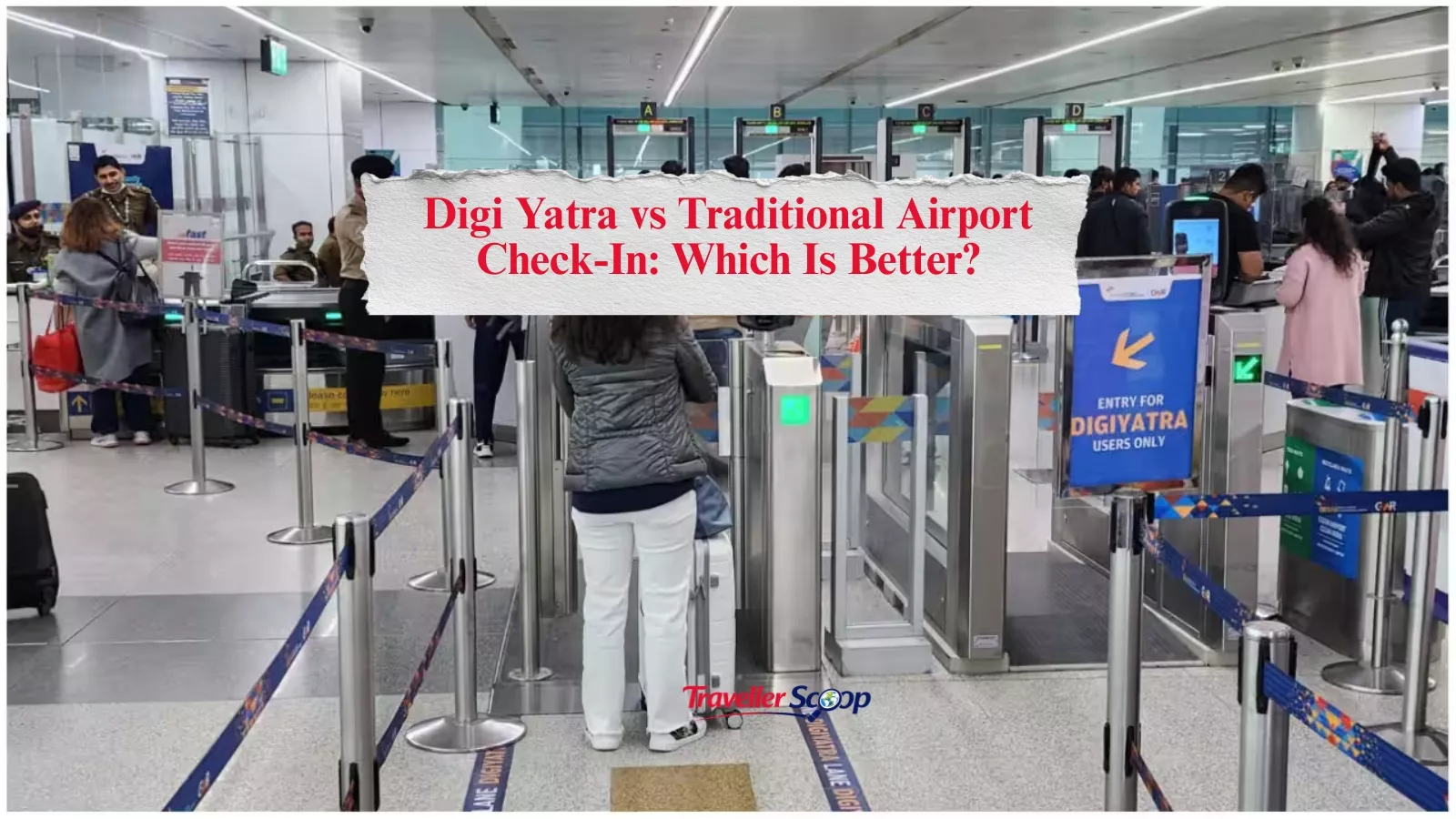
Digi Yatra vs Traditional Airport Check-In is a comparison I never thought I’d care about until I stood in a 25-minute CISF queue at Delhi’s T3 at 6 AM, watched the passenger beside me walk through a Digi Yatra e-gate in under 6 seconds, and genuinely felt like I’d made a wrong life choice that morning.
That single moment sent me down a rabbit hole, testing Digi Yatra across four different airports over two months, timing every queue, reading every government data release, and talking to Digi-Buddies (the helpdesk staff AAI has posted at gates) about what actually breaks when the system fails.
This article is the result of that research, and it’s the honest, numbers-backed answer to which system actually serves you better in 2026.
I’ll be upfront: this isn’t a “Digi Yatra is the future, throw away your ID card” piece. Both systems have real trade-offs, and by the end of this guide, you’ll know exactly which one to pick depending on the airport, the time of day, and even your own comfort with biometric data.
What Exactly Is Digi Yatra?
Digi Yatra is a facial-recognition-based digital identity system run by the Digi Yatra Foundation, a joint venture between the Airports Authority of India (which holds a 26% stake) and five major private airport operators.
It’s coordinated under the Ministry of Civil Aviation and lets domestic passengers move through terminal entry, security pre-checks, and in some cases, boarding gates using nothing but their face.
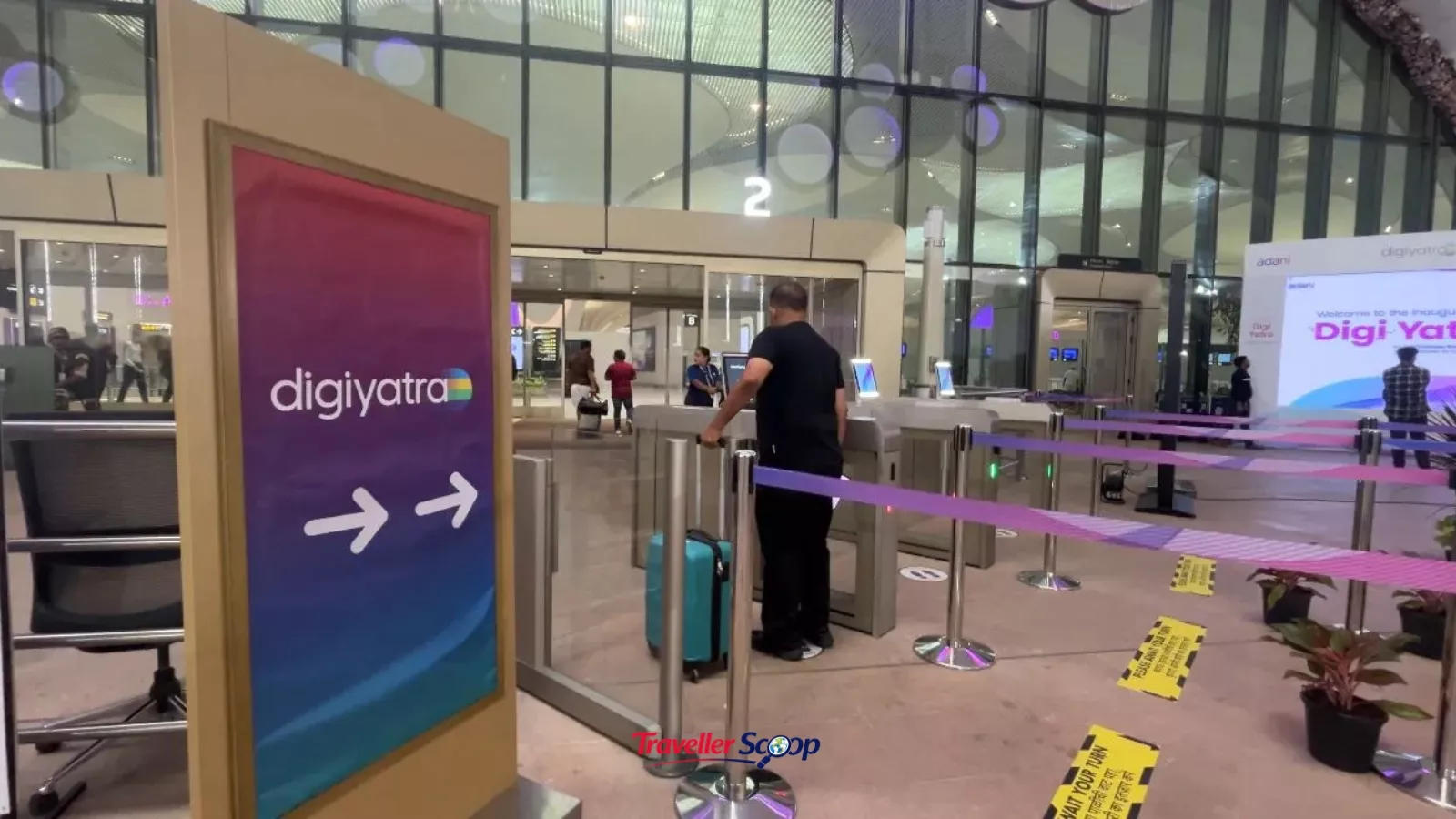
Here’s how the Digi Yatra vs traditional airport check-in debate actually starts making sense once you understand the mechanics: instead of a human checking your boarding pass and ID at every touchpoint, a camera captures your face, matches it against a token stored locally on your phone (not on a central government server), and opens the gate automatically.
According to the Ministry of Civil Aviation’s own figures released this year, the system has cut airport entry processing time from around 15 seconds per passenger down to nearly 5 seconds, and as of mid-2026, Digi Yatra has crossed 10 crore (100 million) cumulative passenger usage across 38 airports, with the app itself downloaded more than 2.4 crore times.
What Does a Traditional Airport Check-In Process Actually Look Like?
Before comparing it with Digi Yatra, it’s important to understand how the traditional airport check-in process works. Even today, millions of passengers in India use this method every day, and it remains the standard process at all airports.
Unlike Digi Yatra, which relies on facial recognition, the traditional system depends on manual document verification at multiple stages of your journey. Every checkpoint involves an airport official verifying your identity before allowing you to move to the next step.
Here’s how the process typically works:
1. Arrive at the Airport
- Passengers are generally advised to arrive:
- 2 hours before a domestic flight.
- 3 hours before an international flight.
- During peak travel seasons or festivals, arriving even earlier is recommended because queues can become significantly longer.
2. Identity Verification at the Airport Entrance
- Before entering the terminal, a CISF (Central Industrial Security Force) officer or airport security personnel manually checks:
- Your boarding pass (printed or digital).
- A valid government-issued photo ID, such as:
- Aadhaar Card
- Passport
- Driving Licence
- Voter ID
- PAN Card (where accepted)
- The officer confirms that the name on the boarding pass matches the ID before allowing entry into the terminal.
3. Airline Check-in (If Required)
- If you haven’t checked in online, you’ll need to visit your airline’s check-in counter.
- Here you can:
- Verify your booking.
- Collect your boarding pass.
- Drop off checked baggage.
- Receive baggage tags for your luggage.
- Passengers traveling with only cabin baggage and an online boarding pass can usually skip this step.
4. Security Screening
- Next, you proceed to the security checkpoint.
- Your cabin baggage passes through an X-ray scanner.
- You walk through a metal detector or body scanner.
- Security personnel may conduct a manual frisking if required.
- Once the screening is complete, your cabin baggage receives a security stamp or approval tag where applicable.
5. Wait at the Boarding Gate
- After clearing security, passengers wait at the assigned boarding gate until boarding begins.
- Airlines typically announce boarding 30–45 minutes before departure.
6. Final Boarding Verification
- Before entering the aircraft, airline staff perform one final verification.
- They:
- Scan your boarding pass barcode.
- Confirm your identity if necessary.
- Verify your flight details before allowing you to board.
Why the Traditional Process Takes Longer
One of the biggest limitations of the traditional airport check-in system is that every major checkpoint depends on manual verification by airport staff. Each passenger must be checked individually, making the process slower during busy travel periods.
Some common reasons for delays include:
- Long queues at airport entry gates.
- Manual ID and boarding pass verification.
- Crowded airline check-in counters.
- Longer security screening lines during peak hours.
- Additional document checks for certain passengers.
During busy morning and evening travel windows, these queues can grow quickly. At major airports such as Delhi, Mumbai, Bengaluru, and Hyderabad, passengers often spend 15–25 minutes or more just waiting to enter the terminal before completing the remaining security and boarding formalities.
Digi Yatra vs Traditional Airport Check-In: Head-to-Head Comparison
| Factor | Digi Yatra | Traditional Check-In |
|---|---|---|
| Average Entry Time | ~5 seconds per passenger | ~15 seconds per passenger |
| Peak-Hour Queue Time | 3–5 minutes | 18–25 minutes |
| Documents Needed | No physical ID at entry (facial recognition + QR code on phone) | Physical or digital government ID + boarding pass |
| Identity Verification | Facial recognition at e-gates | Manual verification by CISF/security personnel |
| Setup Required | One-time registration (approximately 4 minutes) | No prior registration required |
| Airport Coverage (2026) | Available at 38+ airports, expanding to 60+ | Available at all Indian airports |
| Data Storage | Encrypted facial credentials stored on the user’s device (Self-Sovereign Identity model) | No biometric data stored |
| International Flights | Not supported (Domestic flights only) | Supported for both domestic and international flights |
| Backup if System Fails | Reverts to the traditional manual verification process | Not applicable (manual process is the default) |
| Best For | Frequent domestic travelers who want faster airport entry | First-time travelers, international passengers, and those who prefer manual verification |
How Much Time Does Digi Yatra Actually Save?
Numbers matter more than opinions here, so let’s look at what’s actually been measured. Government data shared by the Ministry of Civil Aviation this year confirms average savings of roughly 8–15 minutes per flight for Digi Yatra users, and that gap widens significantly during morning and evening rush hours.
Independent tracking of Digi Yatra walk-throughs at Delhi T3, Bengaluru T2, and Hyderabad during March–April 2026 peak periods found a mean kerb-to-boarding time of 18 minutes for Digi Yatra users versus 31 minutes for manual queue users, a reduction of nearly 42%.
That’s the kind of margin that decides whether you make a tight connecting flight or not, which is exactly why I now build extra buffer time into my itinerary only when I know Digi Yatra isn’t available at my departure airport.
Digi Yatra Pros and Cons for Indian Travelers
Weighing Digi Yatra pros and cons honestly is where most articles on this topic get lazy — they either oversell it or fearmonger about privacy without nuance. Here’s the balanced picture from someone who’s actually used it repeatedly.
Pros:
- Consistently faster at 38+ airports, with entry time cut roughly two-thirds compared to manual checks
- No physical documents to fumble for at the gate
- Registration takes about 4 minutes if your Aadhaar is mobile-linked
- Data is stored on-device, not on a central government server, by design
- Free to use, with no separate app fee
Cons
- Currently domestic-flights-only; international travellers still need traditional check-in
- Not yet live at every regional or Tier-3 airport (though 60+ more are activating through 2026)
- A January 2024 survey found 29% of enrolled passengers said they were signed up without clearly understanding the process — a real onboarding and consent gap that hasn’t fully been fixed
- If the app or e-gate goes down (as happened during a major 2024 outage), you fall back to manual queues anyway, sometimes with added confusion.
Is Digi Yatra Safe to Use?
This is the question I get asked most, and it deserves a straight answer rather than corporate copy-paste reassurance. The system uses a self-sovereign identity model; your facial template and ID data live encrypted on your own phone, not in one central database.
When you reach the airport, your device shares a temporary token with the e-gate for verification, and that token is deleted within 24 hours of your flight’s departure, according to the Digi Yatra Foundation’s published architecture and confirmed in parliamentary committee responses.
That said, privacy advocacy groups like the Internet Freedom Foundation have flagged real governance gaps, including the survey finding that a meaningful share of passengers were enrolled without full awareness and concerns that India still doesn’t have a fully implemented data protection law specifically governing biometric use in aviation.
My honest take: for a routine domestic flight, the practical risk is low, but you should register consciously rather than let staff enroll your face for you at a kiosk without asking questions first.
How to Register for Digi Yatra: Step by Step
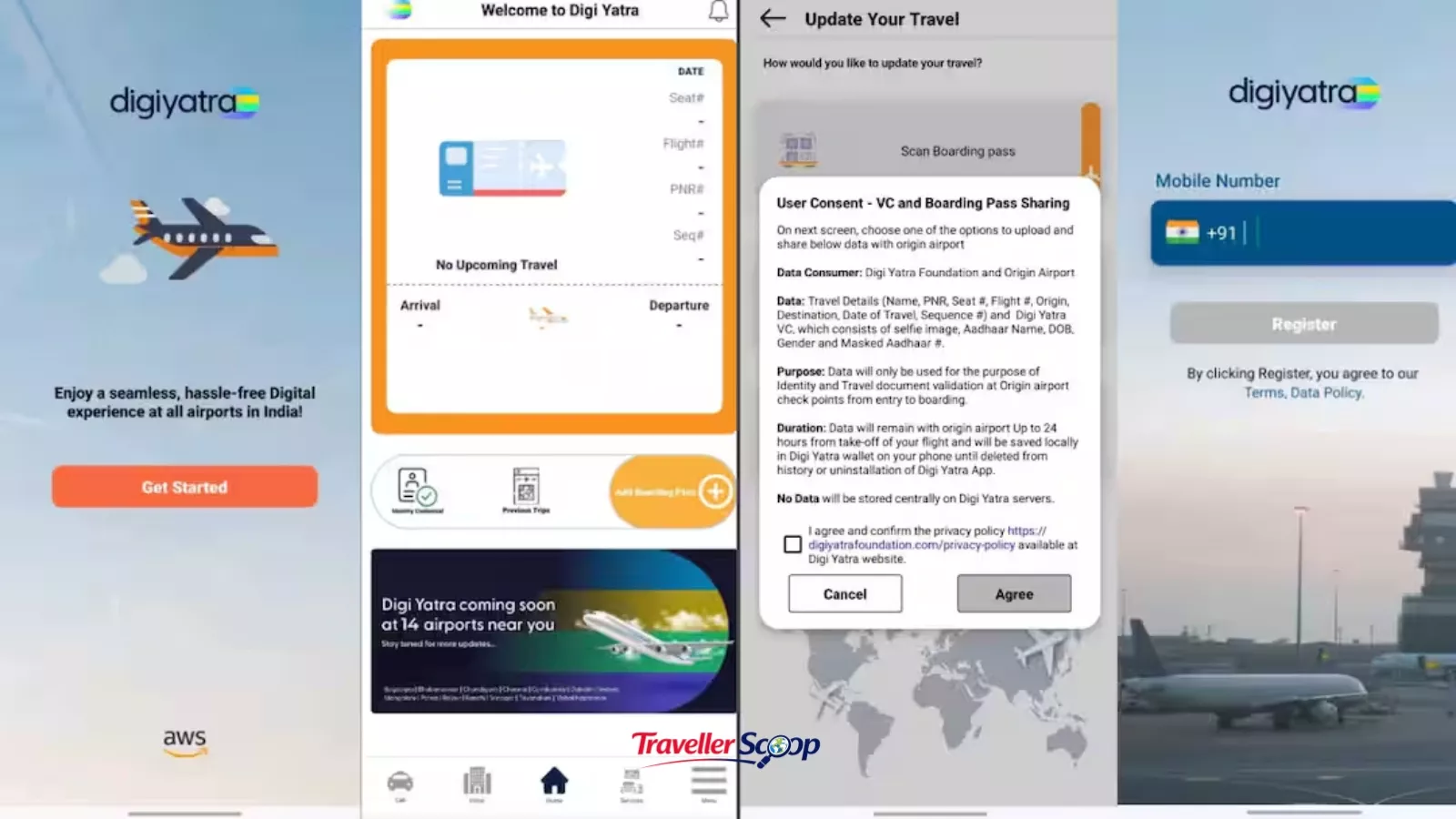
- Download the official “DigiYatra” app and confirm the publisher is listed as “DigiYatra Foundation” to avoid lookalike apps.
- Enter your Aadhaar number and verify via the OTP sent to your Aadhaar-linked mobile.
- Take a clear enrollment selfie in daylight, without glasses, against a plain background.
- Add your flight details (PNR) before you leave for the airport; this step is easy to forget, and it’s the one that actually generates your entry token.
- At the airport, head straight to the Digi Yatra e-gate lane instead of the regular queue.
Traditional Check-In: When It Still Makes Sense
I’d be doing you a disservice if I pretended traditional check-in is obsolete. It’s still the only option for international departures, for Tier-3 airports where Digi Yatra hasn’t rolled out yet, for travelers without Aadhaar-linked mobile numbers, and for anyone who’s simply not comfortable with facial recognition being part of their travel routine.
Digi Yatra vs Traditional Airport Check-In: Which Should You Choose?
For my own trips, the answer depends on the journey.
If I’m taking a domestic flight from an airport that supports Digi Yatra, I’d choose Digi Yatra because it saves time and reduces the hassle of repeated document checks.
But if I’m flying internationally, traveling from an airport where Digi Yatra isn’t available, or simply don’t want to rely on my phone, I’d stick with the traditional check-in process.
Conclusion
After two months of timing queues, reading government aviation data, and talking to airport staff on the ground, my conclusion on Digi Yatra vs traditional airport check-in is this: Digi Yatra wins decisively on speed for domestic travel at supported airports, but traditional check-in still earns its place for international flights, smaller airports, and travelers who want more time before trusting facial recognition with their identity.
The smartest approach isn’t picking a side, it’s registering for Digi Yatra now (it only takes 4 minutes) so it’s ready whenever your route supports it, while keeping your physical ID handy for everywhere else.
FAQs
What happens if the Digi Yatra app or e-gate isn't working?
You simply move to the regular manual queue, Digi Yatra is designed as an optional fast lane, not a replacement for traditional check-in infrastructure.
Is Digi Yatra faster than traditional airport check-in?
Yes. Measured data shows Digi Yatra typically processes passengers in about 5 seconds versus roughly 15 seconds for manual checks, and it can cut total curb-to-boarding time by around 40% during peak hours.
Is Digi Yatra safe to use for regular flyers?
For domestic travel, yes your data is encrypted on your device, and the airport only receives a temporary token that's deleted within 24 hours. The main caution is around consent during enrollment, not the technology's day-to-day security.
Can I use Digi Yatra for international flights?
Not yet. Digi Yatra currently only covers domestic travel in India, though the government has indicated plans to explore global interoperability.
Do I need Aadhaar to register for Digi Yatra?
Yes, the current registration process is Aadhaar-based, using either DigiLocker or offline Aadhaar XML verification along with a live selfie.

Khushi Vaid
Senior Travel EditorI’m Khushi Vaid, a travel writer with over 2 years of experience creating destination guides, travel tips, and travel planning content. At Traveller Scoop, I write about destinations, travel trends, and practical advice to help readers explore the world with confidence.