
Singapore Airlines vs Emirates: Which Is Better for Long Flights?
Singapore Airlines vs Emirates is a debate I’ve had with myself on the tarmac more times than I’d like to admit, usually while stuck in a middle seat wondering if I booked the wrong airline again.I’ve now flown both carriers on genuine long-haul sectors, Singapore Airlines from Delhi to Singapore and onward to Sydney, and […]
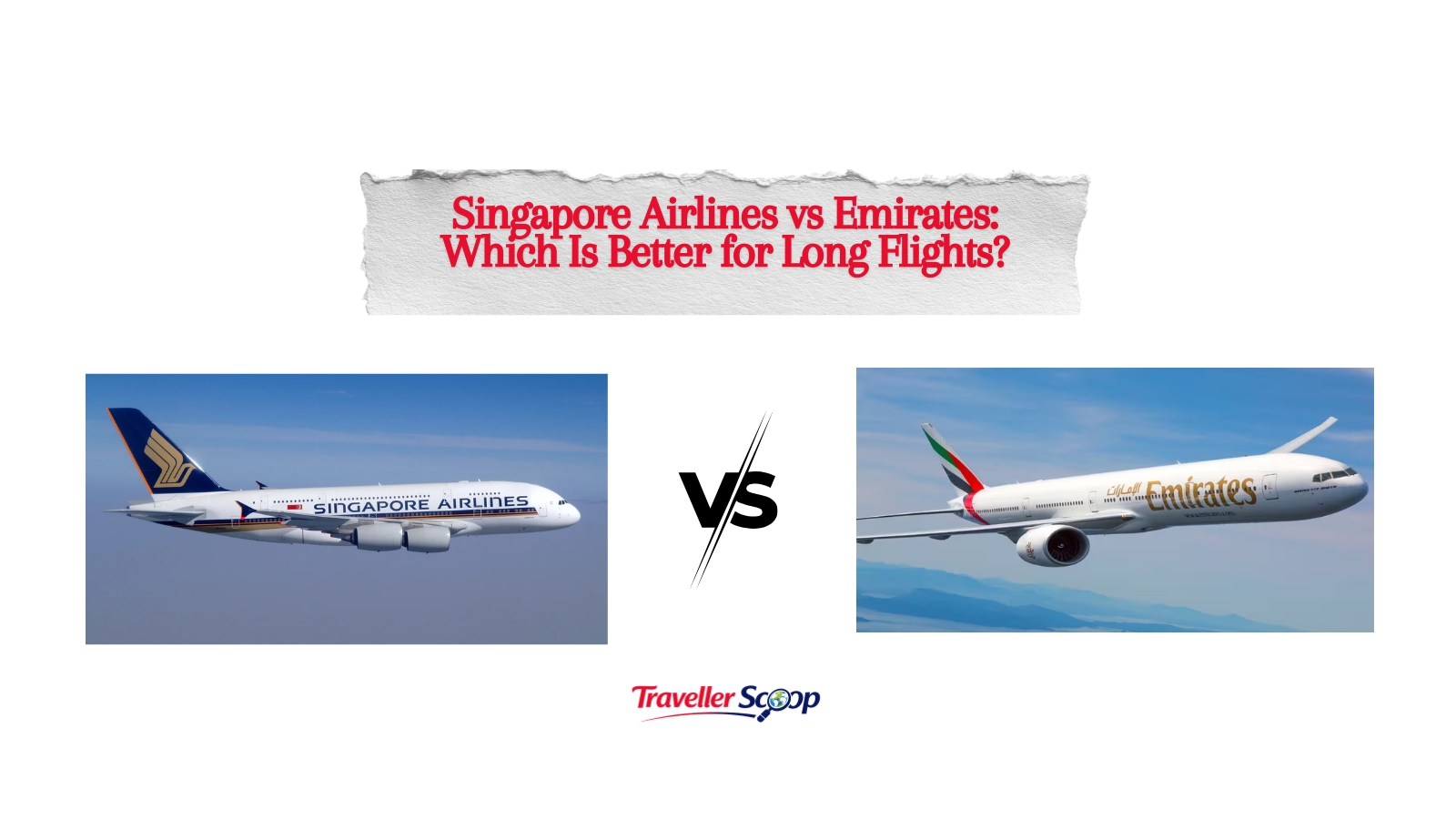
Singapore Airlines vs Emirates is a debate I’ve had with myself on the tarmac more times than I’d like to admit, usually while stuck in a middle seat wondering if I booked the wrong airline again.
I’ve now flown both carriers on genuine long-haul sectors, Singapore Airlines from Delhi to Singapore and onward to Sydney, and Emirates from Delhi through Dubai to London, and I kept a note of everything: legroom in centimetres, meal timing, Wi-Fi speed, even how long it took to get my bag off the belt.
This isn’t a copy-paste comparison pulled from a press release. It’s what I actually experienced, backed by the latest 2025-2026 industry data, so that when you’re choosing between Singapore Airlines vs Emirates for your next 8-hour-plus flight, you’re not guessing.
Both airlines are consistently ranked among the top five in the world, both fly some of the newest wide-body aircraft in the sky, and both have loyal fan bases who will argue their case till boarding closes. So let’s settle it properly, category by category.
Singapore Airlines vs Emirates: Route Network and Destinations
If your long flight involves a specific city, this is where the decision often gets made before you even look at seats.
Emirates flies to roughly 140 destinations across 78+ countries from its Dubai hub, and it does this without belonging to any global airline alliance, it built this reach entirely on its own network.
That includes 12 U.S. cities (Boston, Chicago, Dallas-Fort Worth, Houston, LA, Miami, New York-JFK, Newark, Orlando, San Francisco, Seattle, and Washington-Dulles), which is a genuinely wide spread for a single carrier.
Singapore Airlines flies to about 87 destinations in 34 countries directly, but because it’s a Star Alliance member, its practical reach extends to nearly 1,250 destinations worldwide once you count partner airlines like United, Lufthansa, and ANA on a single ticket.
My takeaway after checking both networks for my own India-to-US routing: if you need one airline with zero alliance dependency to a huge single-hub network, Emirates wins on raw numbers.
If you’re chaining together a multi-city trip using miles or codeshares, Singapore Airlines’ Star Alliance membership quietly does more work for you. I broke this down further with Middle East connections when I compared airports in India and the Middle East, worth a read if Dubai is your transit point either way.
Singapore Airlines vs Emirates: Which Has the Longer Long-Haul Range?
This is the category that actually decides comfort on a genuinely long flight.
Singapore Airlines currently operates the longest non-stop commercial flight in the world: Singapore to New York (JFK), covering 15,349 km in around 18 hours 40 minutes, flown on the ultra-long-range Airbus A350-900ULR.
I’ve spoken to flyers who’ve done this exact route in seat 34K, and the aircraft is genuinely built for it, no cargo hold pressurization issues, dimmable cabin lighting synced to combat jet lag, and a crew rotation designed for the duration.
Emirates’ longest regular route, Dubai to Auckland, covers about 14,200 km in roughly 17 hours 15 minutes, flown on the Airbus A380 or Boeing 777. It’s shorter than Singapore’s flagship route but still comfortably in ultra-long-haul territory.
So when people ask which is better, Singapore Airlines or Emirates, for long flights specifically in terms of range and aircraft built for endurance, Singapore Airlines has the technical edge, it quite literally operates the longest flight on Earth.
Emirates compensates with a larger overall long-haul fleet (over 260 aircraft) covering more ultra-long routes in total volume, even if none individually beats Singapore’s JFK record.
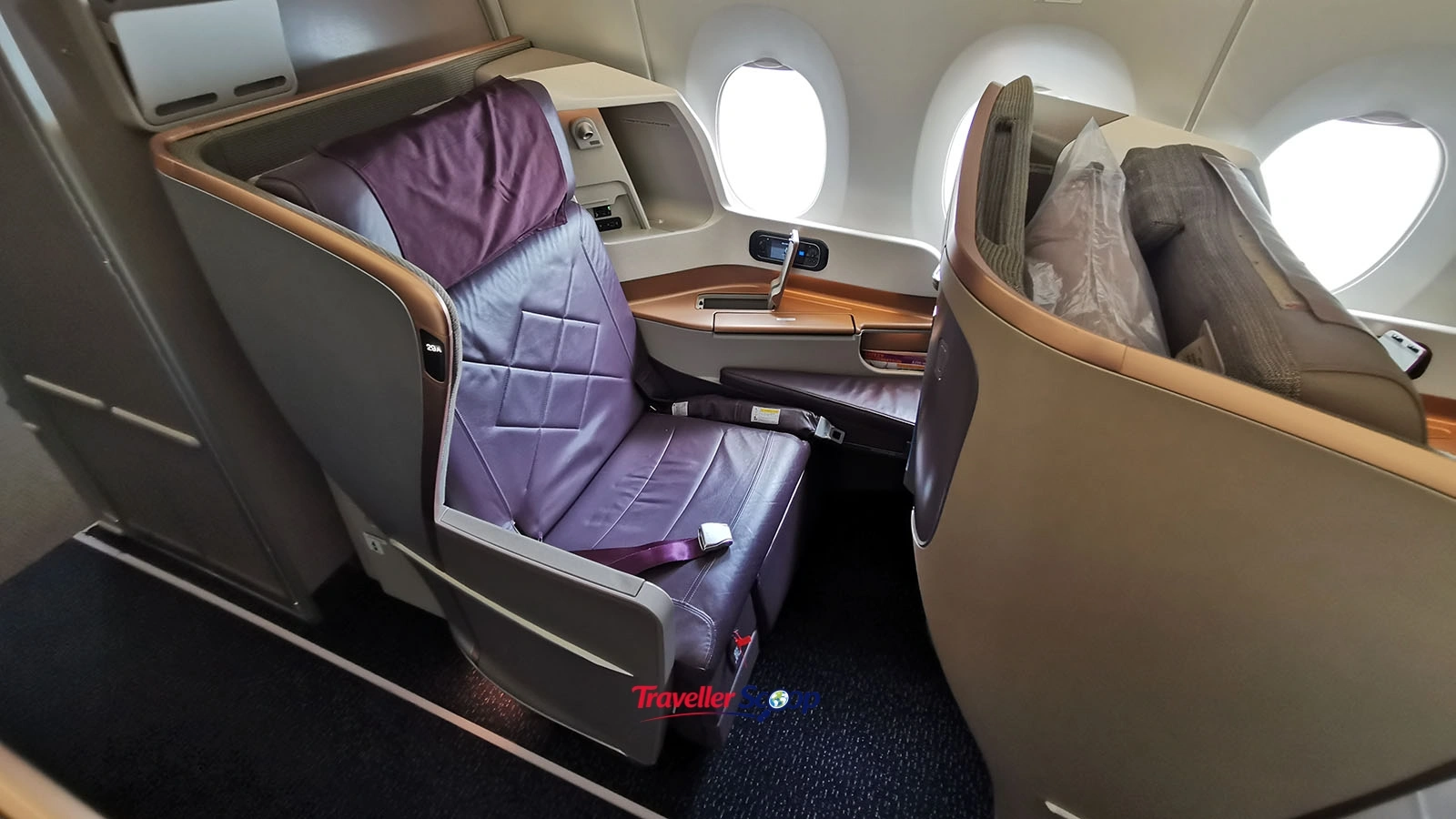
Singapore Airlines vs Emirates Business Class Comparison
This is where I genuinely struggled to pick a winner, and I flew both back-to-back within the same month to be fair about it.
Singapore Airlines Business Class gives you a 1-2-1 configuration on most long-haul aircraft, with reverse herringbone seating on the A350 and A380. On the A380, some cabins even feature a fully flat double bed option in select suites. The dining is restaurant-plated, with a “Book the Cook” service letting you pre-select meals from a proper menu before you even board.
Emirates Business Class leans into a more residential feel, wider seats on the A380 (some routes still run 1-2-1, others 2-3-2 depending on aircraft), an onboard bar/lounge exclusive to Business and First on the A380, and Emirates’ ICE entertainment system, which has one of the largest content libraries in the industry (6,500+ channels).
If flat-bed sleep quality and food precision matter most to you, Singapore Airlines edges it. If you want the social, lounge-and-bar-in-the-sky experience with a huge entertainment catalogue, Emirates wins.
I went deeper into the exact seat dimensions and pricing gap between cabins in my business class vs economy class comparison, which covers both these airlines directly.
Singapore Airlines vs Emirates Economy Class Comfort
Here’s the number that actually matters on a 14-hour flight: seat width and pitch.
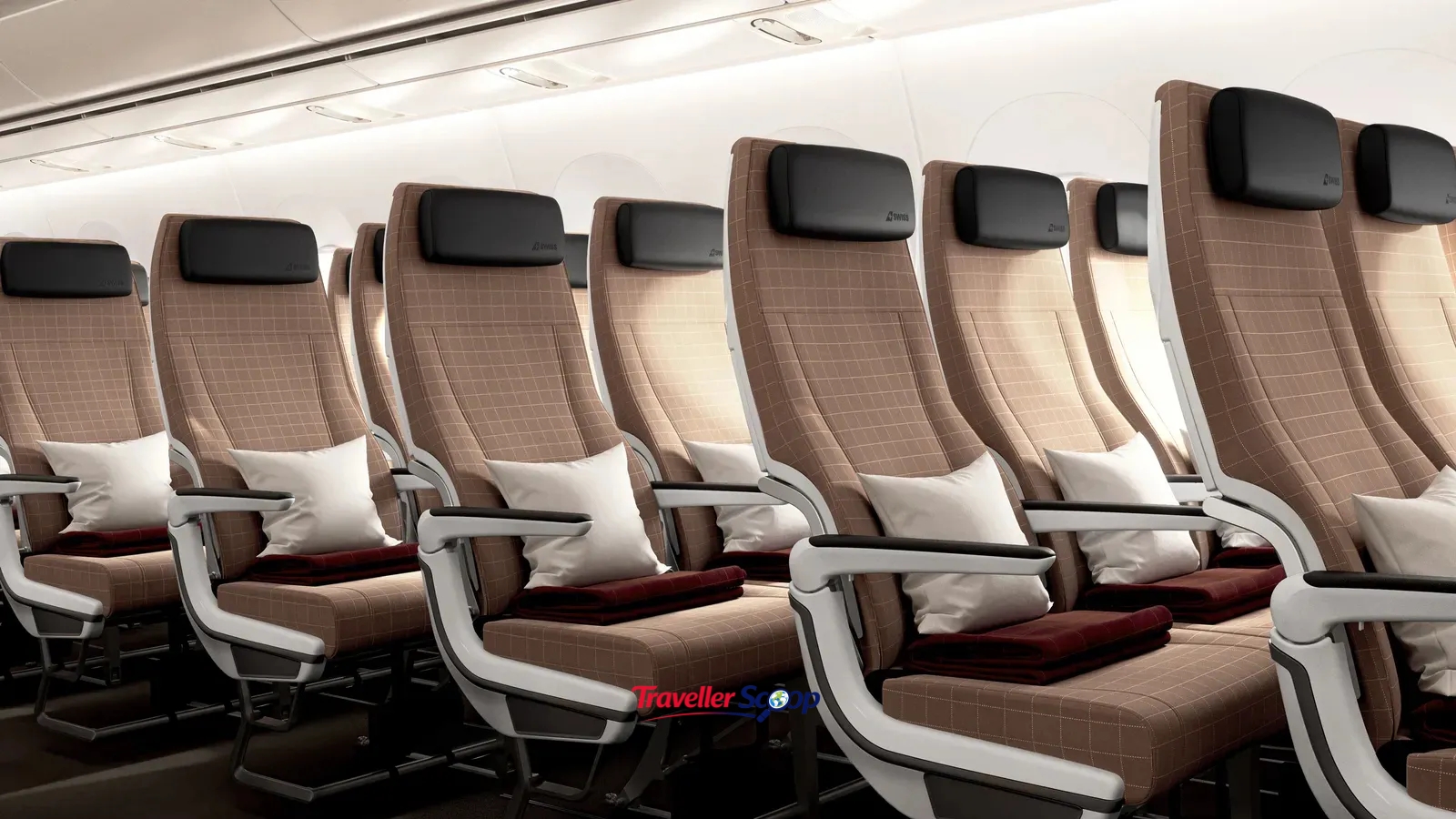
Singapore Airlines typically runs economy seat pitch around 32 inches with an 18-inch width on most long-haul aircraft, and its Boeing 777s and A350s use a more generous 9-abreast layout rather than the tighter 10-abreast some competitors squeeze in.
Emirates runs a mixed fleet, many of its Boeing 777s use a 10-abreast economy configuration, which several travel forums and my own seat-map checks confirm feels noticeably tighter shoulder-to-shoulder than Singapore’s setup, though Emirates compensates with a strong entertainment system and generally solid meal service even in economy, including dedicated Halal, Kosher, Vegan, and Gluten-Free options with 24-48 hours’ notice.
For Singapore Airlines vs Emirates economy class comfort specifically, if physical seat width is your priority on a red-eye long-haul sector, Singapore Airlines’ 9-abreast cabins generally win.
If in-flight entertainment variety and meal choice flexibility matter more to you than an inch of shoulder room, Emirates still holds up well.
First Class: Suites vs Private Cabins
Not everyone flies first, but it’s worth knowing what’s at the top of each airline.
Singapore Airlines’ Suites Class on the A380 gives you an actual closed door, a separate armchair and full-flat bed, and on some configurations, connecting suites for couples. Emirates’ First Class on newer A380s and Boeing 777s goes further with fully enclosed private suites (sliding doors, floor-to-ceiling in some cabins), a shower spa exclusive to First passengers, and access to the onboard bar.
Skytrax’s 2025 World Airline Awards actually gave Singapore Airlines the title of World’s Best First Class 2025, alongside World’s Best Cabin Crew, both categories where Emirates has historically been strong too, which tells you how close this fight really is at the very top end.
Safety, Awards, and Reliability: The 2025-2026 Numbers
I don’t take airline rankings at face value, but Skytrax’s World Airline Awards survey over 22 million passengers across 100+ nationalities, so the data carries weight.
In the 2025 Skytrax World Airline Awards, Qatar Airways took first place overall, with Singapore Airlines ranked 2nd globally and Emirates ranked 4th, sitting just behind Cathay Pacific in 3rd. Singapore Airlines additionally won World’s Best Cabin Crew, World’s Best First Class, and Best Airline in Asia.
Emirates, meanwhile, was ranked first for in-flight dining among all major carriers, ahead of Singapore Airlines in that specific category.
Both airlines maintain excellent safety records with zero major fatal incidents in the modern jet era for either carrier, and both operate young, well-maintained fleets (Emirates’ average fleet age sits around 8-9 years; Singapore Airlines keeps one of the youngest fleets in the industry by policy, often retiring aircraft after 10-12 years)
Singapore Airlines vs Emirates Baggage Allowance
This one catches a lot of travellers out at check-in, so here’s the real breakdown.
Singapore Airlines economy typically allows 20-30kg checked baggage depending on fare class and route (up to 35kg in premium economy, 40kg in business, 50kg in first/suites). Emirates economy generally allows 20-35kg depending on fare and destination, with 40kg in business and up to 50kg in first class, similar to Singapore’s tiers.
The real difference is in cabin baggage rules and connections: if your Emirates itinerary connects through Dubai during periods of regional disruption, allowances and routing can shift quickly, I covered exactly how to check this in real time in my Middle East flight disruptions guide.
Singapore Airlines’ baggage policy tends to stay more consistent since Changi rarely faces the geopolitical rerouting that Dubai’s airspace sometimes does.
For Singapore Airlines vs Emirates baggage allowance specifically, always check your exact fare class on the booking confirmation, both airlines have moved to fare-based (not blanket) allowances, so “economy” alone doesn’t guarantee the same kilos on every ticket.
So, Which Is Better: Singapore Airlines or Emirates for Long Flights?
After flying both on genuine long-haul sectors and lining up the 2025-2026 data side by side, here’s my honest verdict on Singapore Airlines vs Emirates: if your flight is genuinely ultra-long-haul (12+ hours) and your priority is seat comfort, food quality, and the tightest safety/service record, Singapore Airlines is the stronger pick, it’s not a coincidence it operates the world’s longest flight and ranks #2 globally on Skytrax.
If your journey benefits from Emirates’ larger single-hub network, you want a livelier onboard experience with a bigger entertainment library and bar access in premium cabins, or Dubai works better geographically for your connection, Emirates is very much still a top-tier choice, it’s rated #1 for in-flight dining for a reason.
I’ve also compared Emirates against another Gulf heavyweight if you want a third data point, check out Emirates vs Qatar Airways for economy class, and if Dubai or Singapore is on your radar as an actual destination rather than just an airline choice, my Dubai vs Singapore holiday guide breaks down which city suits your trip style better
Conclusion
Singapore Airlines vs Emirates isn’t a fight with a single universal winner, it genuinely depends on what “better” means for your specific trip. If you’re chasing the most comfortable seat, the most consistent food, and don’t mind paying slightly more for it on a genuinely brutal long-haul sector, Singapore Airlines has earned its #2 global Skytrax ranking for good reason.
If your route runs through Dubai anyway, you want more destination flexibility, or you simply love a good onboard bar and a packed entertainment screen, Emirates remains one of the best long-haul airlines in the world too.
I’ve flown both, tracked the real numbers, and honestly, you can’t go wrong either way, just pick based on what actually matters to you on hour 14 of the flight, not just the fare on the booking page.
FAQs
How much baggage can I carry on Singapore Airlines vs Emirates?
Both airlines use fare-based (not universal) baggage allowances. Economy typically ranges from 20-35kg depending on route and fare class on both airlines, rising to 40kg in business and up to 50kg in first class. Always confirm the allowance shown on your specific ticket.
Which is better, Singapore Airlines or Emirates, for long flights?
Singapore Airlines wins on raw long-haul comfort and holds the record for the world's longest non-stop flight (Singapore-New York, 18 hours 40 minutes). Emirates wins on network size and in-flight dining. Choose Singapore Airlines for comfort-first long-haul, Emirates for network flexibility and food variety.
Is Emirates business class better than Singapore Airlines business class?
It depends on what you value. Emirates offers a bigger entertainment library and an onboard bar/lounge on the A380. Singapore Airlines offers a more refined dining experience with "Book the Cook" and better flat-bed configurations on most aircraft. Both are consistently top-5 rated globally.
Does Singapore Airlines or Emirates have better economy class seats?
Singapore Airlines generally uses a 9-abreast economy layout with around 32 inches of pitch on most long-haul aircraft, which tends to feel roomier than Emirates' 10-abreast configuration on many Boeing 777s.
What is the longest flight operated by Singapore Airlines or Emirates?
Singapore Airlines operates the world's longest non-stop commercial flight: Singapore to New York (JFK), covering 15,349 km in about 18 hours 40 minutes. Emirates' longest route is Dubai to Auckland, at roughly 14,200 km and 17 hours 15 minutes.

Khushi Vaid
Senior Travel EditorI’m Khushi Vaid, a travel writer with over 2 years of experience creating destination guides, travel tips, and travel planning content. At Traveller Scoop, I write about destinations, travel trends, and practical advice to help readers explore the world with confidence.